
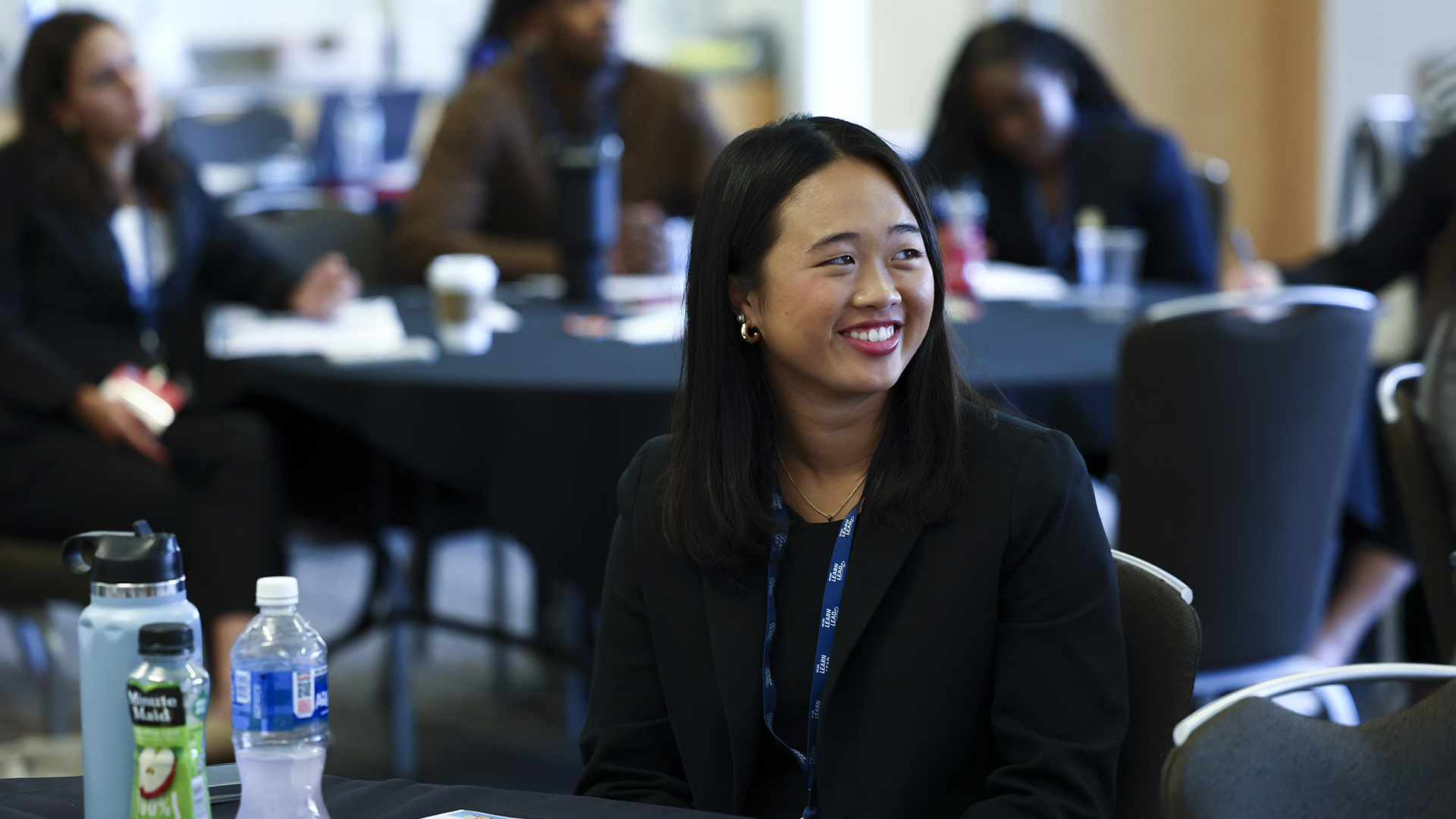
As a campus leader and Detroit Pistons intern, Wang put lessons from NCAA leadership programs into practice
Leah Wang has spent her college years proving that impact in sports isn’t limited to a scoreboard. The Emory women’s soccer player and founder of the Asian and Pacific Islander Student-Athletes group has drawn on her Taiwanese American heritage and NCAA leadership experiences to advocate for others, build community and create change.
As a learning and development intern with the Detroit Pistons over the summer, she tested herself far from home — designing mentorship programs, building networks across organizations, and shaping a future that could include law school and making sports safer and more inclusive.
She’s turned that mix of heritage, curiosity and courage into action — founding communities, advocating for her peers, and choosing environments where she and others can grow. She studies the culture around her and looks for spaces where people can be seen and heard.
“You’re also judging where you want to be,” Wang shared. “The culture is just as important, and you need to feel energized and supported and have a voice within a company. And that’s definitely something I felt as an intern coming into the Pistons.”
Before she ever walked into Little Caesars Arena as a learning and development intern, the NCAA was already reshaping how Wang saw her future. The Division III Student Immersion Program in Nashville, Tennessee, and the Career in Sports Forum in Indianapolis expanded her view of the opportunities available in sports.
In session rooms and breakout discussions, she learned to look beyond job titles and logos and to ask deeper questions about values, fit and support.
Those lessons became real when she met Lamarr Pottinger, now the director of performance and organizational development for the Pistons and previously an associate director of leadership development at the NCAA. Wang saw what intentional culture could look like in practice. The NCAA programs showed her she didn’t have to shrink her identity or ambitions to belong in sports. She could instead seek places where her voice and perspective were valued.
That mindset guided her toward the Pistons and a role she “didn’t really see elsewhere,” one that let her help build a mentorship program for employees and advocate for her intern cohort with human resources. She also designed a half day of activities to bring together interns for the Pistons and StockX, a Detroit-based online resale marketplace. She helped create the type of environment she once sought for herself.
“Leah is a special individual and has many talents,” Pottinger said. “What makes her stand out is her ability to not only complete projects at a high level, but her critical thinking and creative skills as well. Working with Leah has been amazing because she knows how to manage up and is a true team player. Leah has created and helped implement crucial components of our talent development strategy this summer, and we are grateful she chose to be a Pistons employee with us this summer.”
Those experiences have also sharpened her sense of what she wants to fight for next. Wang sees law school as a way to gain tools to protect people inside the sports she loves.
She’s drawn to players associations, athlete advocacy and especially building stronger frameworks around sexual violence prevention and accountability so that athletes and those who work around them are safer. The same instincts that led her to found an affinity group at Emory and to advocate for her intern cohort in Detroit now point her toward a career where policy, protection and people intersect.
For Wang, that future is rooted in who she’s always been. The youngest child in a Taiwanese American immigrant family, Wang grew up watching her parents and older siblings navigate major transitions and ambitious goals. She carried their example onto the soccer field, into Emory’s Asian and Pacific Islander student-athlete community and eventually into an NBA front office. She laughs about learning to cook for herself, do laundry and find the best matcha in a new city, but beneath those everyday details is a quiet resolve: to show up fully as herself and make room for others to do the same.
“Just having them be an open ear and listening has definitely been something that I’ve really appreciated with my parents,” Wang said. “I credit a lot of my success and the way I think to conversations with my siblings. Being able to talk about it and not feel bad for how ambitious the goal is and having that support is core to who I am.”
It’s why she collects decks of playing cards from every place she visits — more than 30 so far, including several national parks. Each one is a small reminder of where she’s been and the people she’s met along the way: teammates, cohort members, mentors and now colleagues in Detroit. Her mission is to protect and uplift the communities that helped shape her, a purpose strengthened through her NCAA leadership development experiences.
That, more than any title or internship, is the superpower she’s intent on carrying forward.
This story is part of the NCAA’s Tomorrow’s Leaders, Today campaign, which showcases how the college sports experience helps student-athletes build the skills and character traits that contribute to lifelong success.
Through leadership development opportunities such as the Division III Student Immersion Program and Career in Sports Forum, the NCAA helps student-athletes explore careers, build professional relationships and develop skills they can carry into life after college sports.
Learn more about NCAA programs.
