
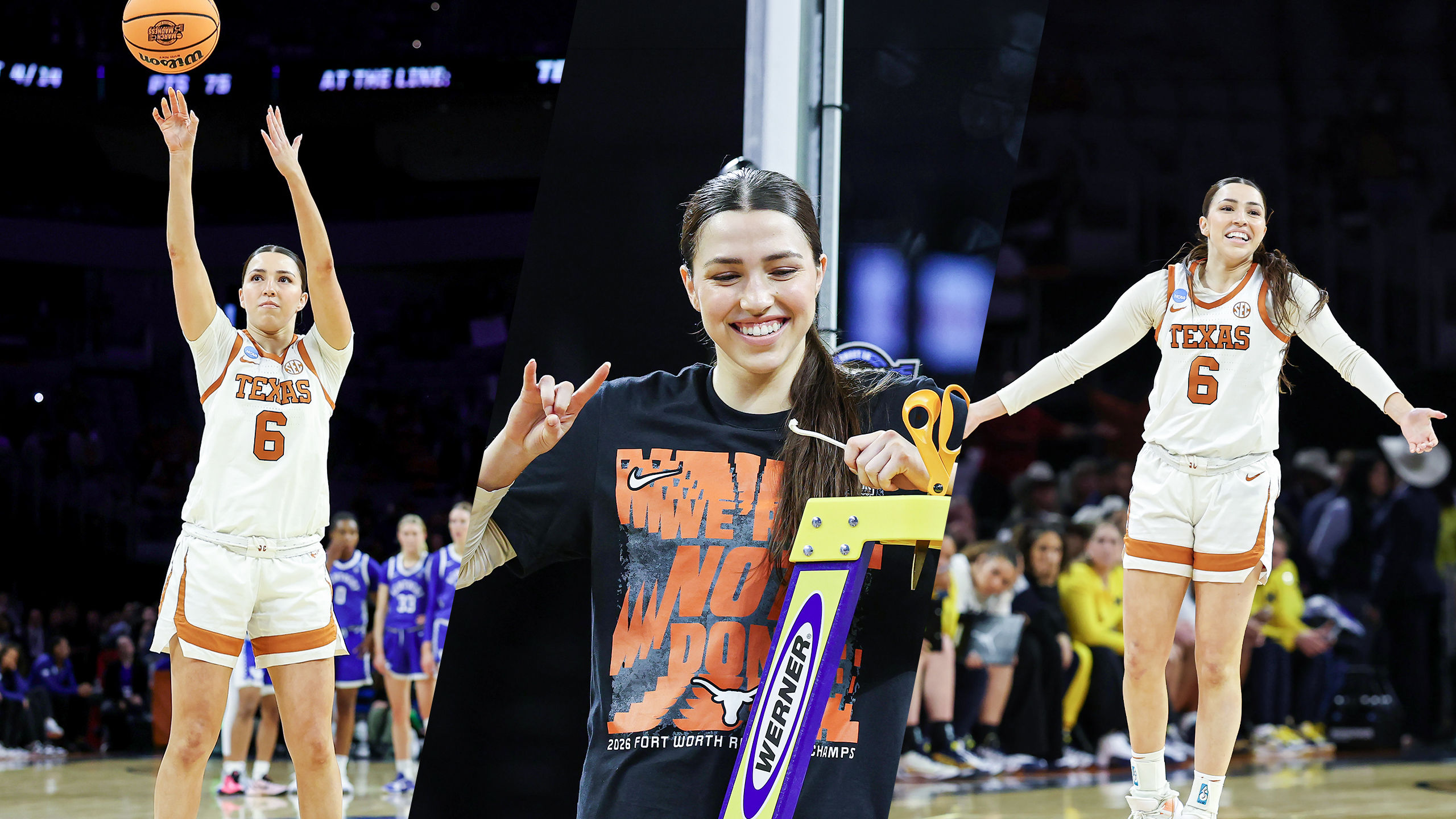
The women’s basketball social media star illustrates lessons, value of college athletics
When I called Sarah Graves, her workday had begun three hours before.
Graves was living in New York for a summer internship, squeezing the monthlong role working in private equity for sports and media between summer sessions with Texas basketball.
By the way, the call started at 8:45 a.m. Graves started work at 5:30 a.m. Her day typically ended at 8 p.m.
“That’s just what you learn as a college athlete,” she said. “It’s fun.”
Posters, fans and a sold-out arena introduced me to Graves. I traveled to Fort Worth, Texas, to watch my younger sister, who plays for Michigan, compete against Texas in the 2026 Elite Eight.
Before the game, I noticed hordes of Texas fans with posters of Graves. It ignited my curiosity. Who is she?
At the arena, Longhorns fans significantly outnumbered Michigan fans, and in a sea of burnt orange, I saw even more Graves posters.
During the game, I watched Graves on the bench. She jumped up when her teammates scored, made eye contact with her coaches, leaned over to whisper to a subbed-out teammate. In the fourth quarter, fans began chanting, “Put! Sarah! In!”
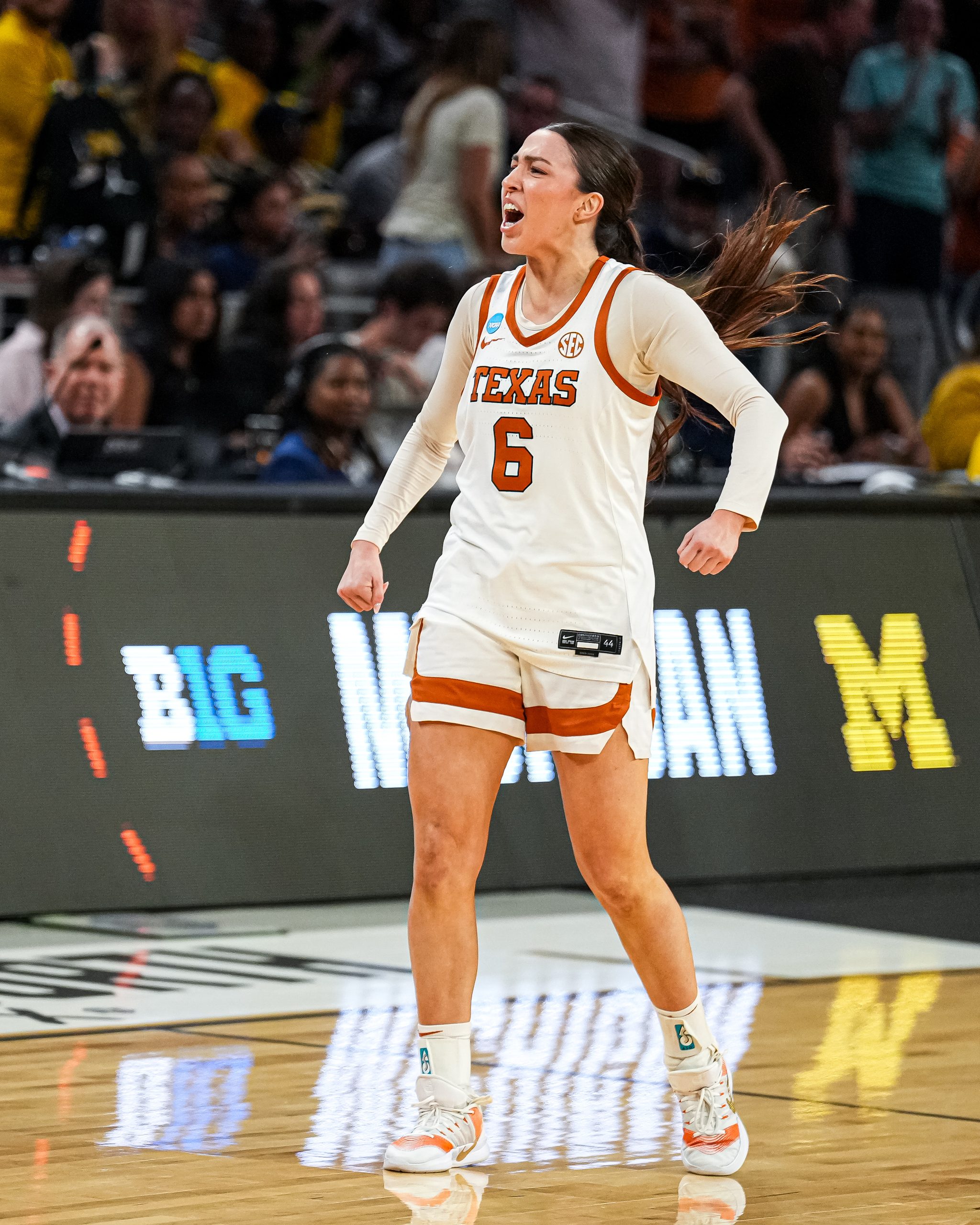
Coach Vic Schaefer agreed with his fans, who stood to cheer as Graves jogged to the scorers table. When she hit a 3, the crowd erupted in a deafening noise.
One thing became clear: Texas loved her.
After Graves gained social media stardom for a LinkedIn post about being her team’s “personality hire,” the Longhorns and the greater basketball community fell into adoration of the 5-foot-9-inch guard from Keller, Texas, who walked on to the basketball team her freshman year and eventually earned a scholarship.
“Sarah is one of those people whose impact goes far beyond what you see in the box score,” Texas associate head coach Elena Lovato said. “What we saw during the NCAA tournament. … When Sarah got her opportunities, the excitement from our bench, our team and our fans was incredible. Everyone knew how much she had poured into our program behind the scenes. She had earned the love and respect of everyone in that locker room.”
This season, when deciding to use her fifth year of eligibility, Graves’ love for Texas brought her back.
“The more and more I heard from people that were impacted by my story, it made me realize … one more year of college basketball would provide me with a very unique platform to make an impact,” Graves said.
Personality-hire stardom
Graves has always been a creative person. She had a YouTube Channel growing up and creates artwork. But her viral status on LinkedIn resulted in 4,000 people directly messaging her, inspired by her unconventional wisdom.
“I had a strategy to build my personal brand, but I never expected it to be so overwhelming,” she said. “Whenever you’re in athletics for a long portion of your life, it’s acceptable to have such a narrow focus. You start to lose sight of, ‘Oh, I have to position myself for a career after this or, oh, I have to have a reputation beyond basketball.’”
She wanted to be known as a multidimensional personality online, taking lessons as a college athlete beyond cliches, like embracing being a “try hard” and building a “trust fund” with your team.
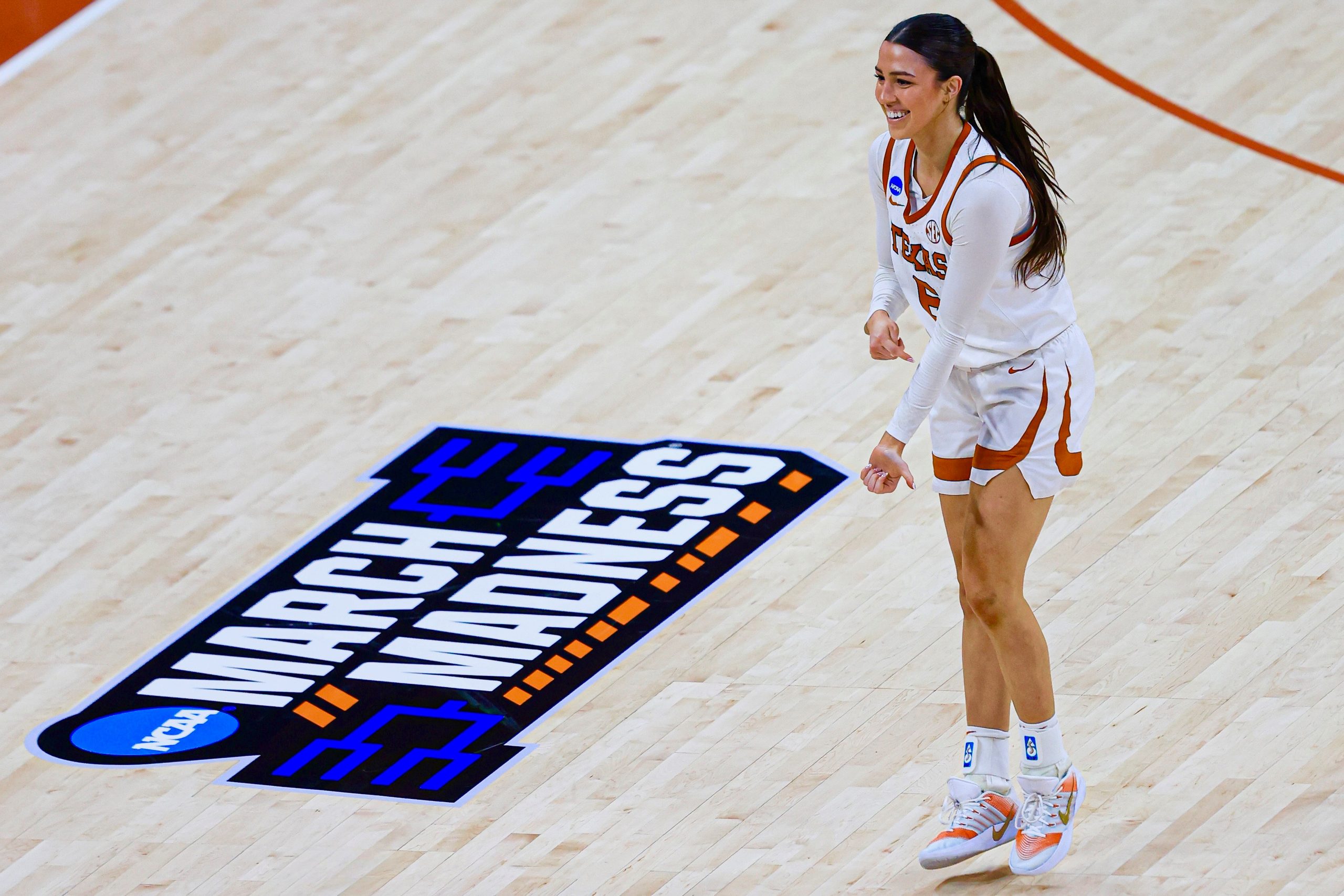
Graves’ reputation extends beyond her digital footprint, though.
Lovato said she hasn’t seen Graves have a bad day in the four years she’s known her.
“Sarah has taught us that how you show up every day matters,” Lovato said. “The way you treat people when nobody is watching matters. She has never allowed her role to define her value, and I think that’s a powerful lesson for young athletes.”
Lovato said Graves’ authenticity — her fun personality, her sense of humor and her genuine ability to connect with others — naturally allow people to gravitate toward her in person and online.
“It was cool to see people resonate from every walk of life,” Graves said. “It might not be popular in athletics still. People might think I’m a bench player trying to get attention, but to me, it’s a lot more significant than that.”
As a freshman walk-on, Graves’ role in impacting the team was uncertain.
“I never thought I’d take a leadership role or, I don’t know, being known for using my voice,” she said. “I’m so, so competitive. I’m always looking to add any small detail that can help the team win. For our team, I saw that as communication. So basketball kind of naturally transformed me into having that mindset: of being a vocal leader every day.”
Graves is a competitor. Of course, she wants to contribute on the court, too. Her optimism isn’t contentment.
“Default optimism. That’s my message to the team this year,” she said. “Regardless of what’s happening, you always snap back to optimism. For me, that’s being happy even when you’re on the bench or frustrated in practice. Build internal optimism, even when you’re not happy with your circumstances.”
Graves has extended this mentality to her online presence, too, and she is generous in her impact. She has responded to more than 90% of her DMs and emails.
“I know that sounds crazy,” she admits. “I feel like it’s my duty, my privilege, to give back to what people gave back to me.”
Social media’s dark side
During the Final Four, Graves deleted her social media.
She had created a habit of spending the first hour of the day responding to fans’ messages. But as her popularity grew, so did the harassment.
She tried not to give it attention or let it affect her.
“But the more you read through it yourself, it just kind of gives you an icky feeling,” she said.
Graves said the messages were “just over-the-line inappropriate comments.”
“I wasn’t able to have fun,” she added. “But I just was like, ‘Wow, I’m at a really privileged place in my life where we’re going to the Final Four, and I don’t want to be spending even more than 10 minutes on my phone.’ So it was more so just being disappointed at the messages but also being really intentional about being present in that moment.”
Student-athletes like Sarah Graves have received harassment during NCAA championships. A 2023-24 NCAA study by Signify Group showed women’s basketball student-athletes receiving approximately three times more threats than men’s basketball student-athletes during March Madness. The NCAA is continuing to take steps to monitor, identify and respond to online abuse directed at student-athletes. Learn how you can Draw the Line against sports betting abuse and harassment.
She has since redownloaded social media but has created boundaries, like having the apps only on her computer, not her phone.
Still, Graves understands the power of her platform, something I experienced firsthand. As a fan of an opposing team, I went from wondering who she was, to getting chills as the whole arena rallied behind her. Watching her make a 3 and laugh as the crowd erupted, seeing her teammates lose their minds as they supported her success, and later following her persona online, I found it easy to understand why Graves has become a symbol of the joy of competition and the beauty of college sports.
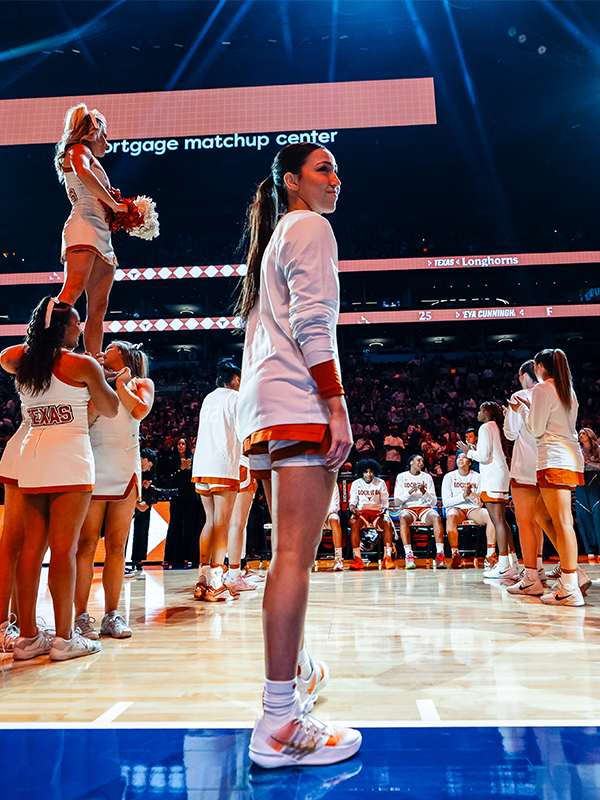
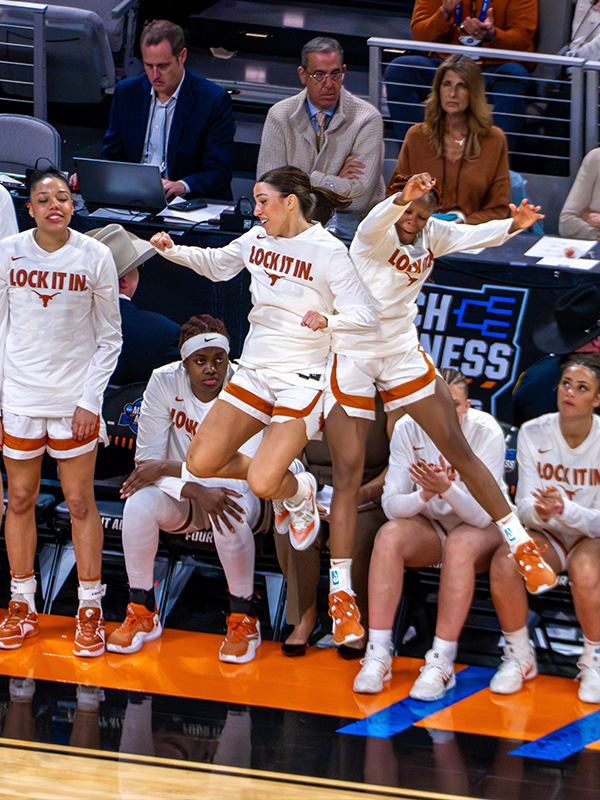
With her default optimism, she wants to continue to share positive messages about the meaning of being a student-athlete.
“I was given the opportunity to come back,” Graves said of the current season. “It is my responsibility to use my platform and continue to spread some joy in my last year of college athletics.”
The NCAA is working to protect student-athletes through education, integrity monitoring, advocacy and resources designed to keep college sports safe and fair. Learn how you can Draw the Line against sports betting abuse and harassment.
