
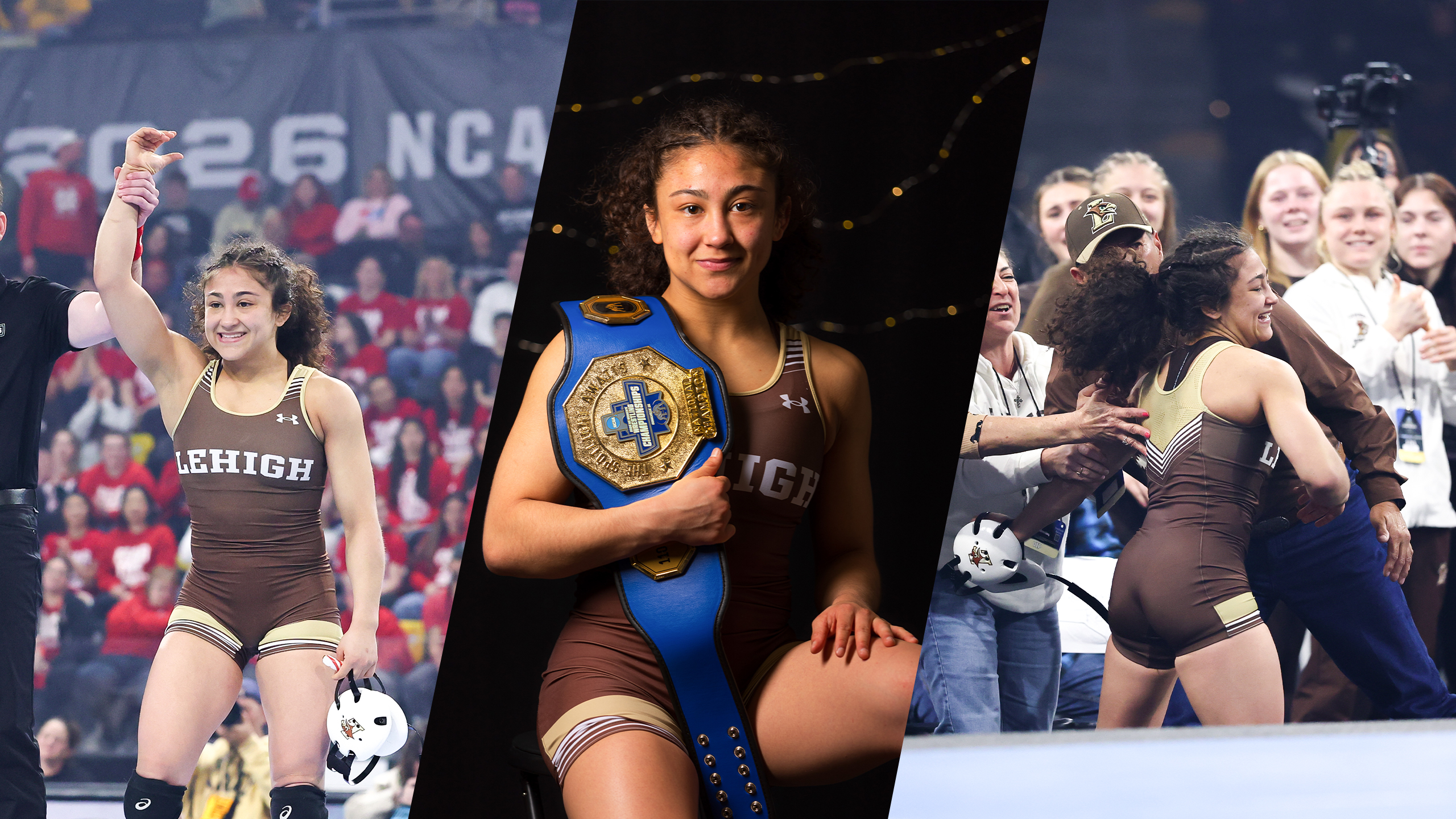
The 2-time U.S. Open Wrestling champion wanted to quit. Instead, she won the 110-pound title at the NCAA’s first women’s wrestling championships.
Audrey Jimenez was winning. But it didn’t feel like it.
The Lehigh sophomore women’s wrestler was well on her way to finishing the 2025-26 season with a perfect 21-0 record and an individual title at the NCAA’s inaugural women’s wrestling championships. She wanted to be anywhere else.
“I would go to practice, and I would get so much anxiety. I would be warming up, we didn’t even start wrestling yet, and my mind, I could not get my thoughts off of, like, ‘I don’t want to wrestle. I don’t want to be here.’ That’s all that was going through my head, and I would get these crazy anxiety attacks,” said Jimenez, the 2026 USA Wrestling Anthony-Maroulis Trophy winner, given to the top women’s college wrestler.
The year prior, she was sidelined by an ACL and meniscus injury. She arrived at Lehigh as a freshman one month post-op, unable to do the thing most fundamental to her identity.
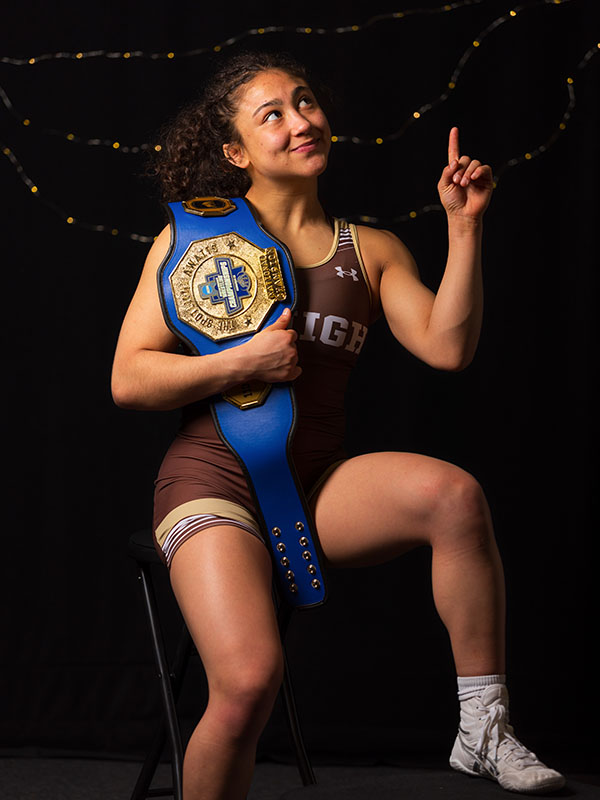
“I remember being so worried about making friends because I was like, well, I’m not on the mat. Like they don’t know how hard I work. They don’t know how good of a wrestler I am. I just felt like because I didn’t have wrestling, I couldn’t prove to them how good of a person I was,” Jimenez said.
Once Jimenez identified these thoughts, she knew they weren’t right. She grew up a Mexican American Catholic, leaning on her faith in good times and bad. Her time away from the mat helped her realize that her worth lay in God, not in her ability to win wrestling matches.
“I just prayed that (God) would free me from (my negative thoughts), take them, I surrender that and give it up to him. And I knew that he would fill me with peace and fill me with rest. I really do think, I know because I felt it, the more I prayed those prayers and surrendered everything I was thinking and feeling to God, that he really did bring me peace,” Jimenez said. “Eventually, I stopped having those thoughts. They weren’t in my heart anymore.”
Jimenez recovered from her injury and found herself as close to on top of the world as she could be ― just one step down. Jimenez finished second at the 2025 U23 World Wrestling Championships in Serbia. It was Jimenez’s fifth second-place finish at Worlds, and the loss had her second-guessing herself.
“I was really torn apart, getting another silver and not reaching my goal, per se, of winning Worlds. And I remember it would just really, really hurt thinking about, like, ‘Man, another year I was in this position. I worked hard to get here and I folded under pressure, right? I couldn’t get it done. I couldn’t get the gold medal.’
“I kept on thinking, ‘Man, I’m just not good enough,” Jimenez said.
She went right into her NCAA season, wrestling through lingering physical and emotional pain from her summer of international competition. 2025 was the Lehigh women’s wrestling program’s first season as a varsity sport and the NCAA’s first year sanctioning the National Collegiate Women’s Wrestling Championships. Jimenez was a powerhouse in the 110-pound weight class.
Her record was stellar, but her joy was absent.
“I want to win so bad that I almost hate doing it,” she said.
She was candid with her coaches about how difficult it was to show up each day.
“I remember them telling me, ‘Do what you can. Focus on doing your best. Show up when you can, and things will work themselves out.’ And they had told me that no matter what I was feeling going into nationals that they were proud of me just for being there,” Jimenez said.
With support from her teammates and coaches, Jimenez worked hard to keep her focus on the present moment, not the outcome.
“I was just really, really trying to be present and separate myself from the results,” Jimenez said. “Win or lose, I’m wrestling to enjoy it, right?”
She spoke with a sports psychologist, too. He helped her apply her faith to her internal dialogue.
“You have faith in God, right? So do you think he would ever judge you? Do you think he’s judging you and thinking those things about you?” the psychologist asked her.
“I’m gonna be like, ‘Well, no, of course not.’ So then he’d be like, ‘Well, then why are you judging yourself?’” Jimenez said.
She found the freedom to wrestle with joy just in the nick of time. After she finished her warmup before the national championship match, she “play-wrestled” with her coach. At that moment, Jimenez decided she wasn’t going to hold anything back.
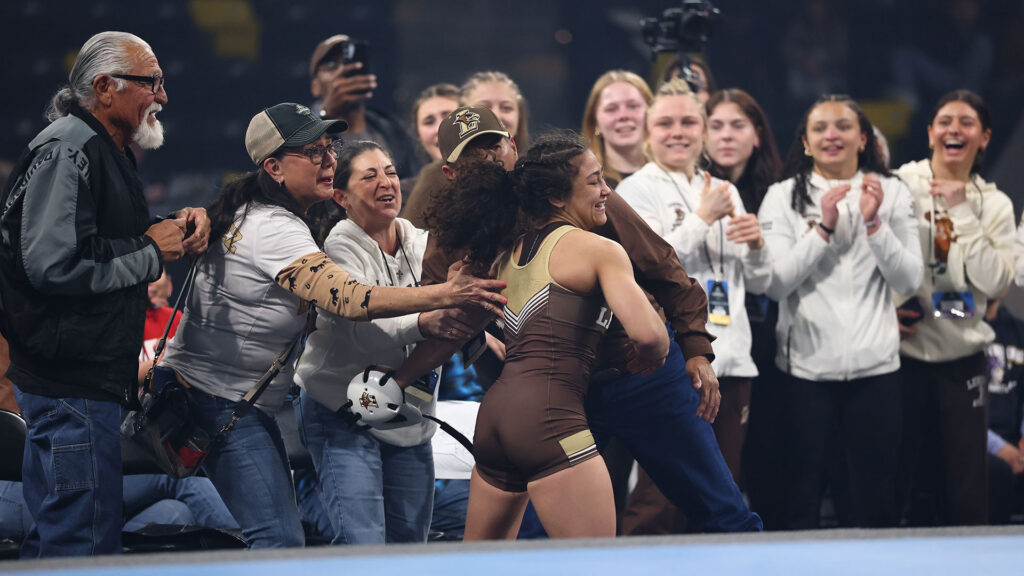
She was facing Grand Valley State’s Sage Mortimer, a two-time world championship team member for Team USA who finished third at the 2024 Olympic Trials. Despite Mortimer’s reputation as a strong upper-body wrestler, Jimenez went for an arm spin, a position she “never hit.”
“I’d much rather just go and wrestle and maybe get in some bad positions,” Jimenez said. “I would much rather do that than stay super hesitant and not really wrestle.”
Jimenez was able to wrestle through the arm spin. She locked Mortimer up in a cradle. The official called the pin, and the match was over. Audrey Jimenez was the first national champion at 110 pounds in NCAA women’s wrestling history.
“I just remember being so happy, especially going up to hug my coaches in the corner because it was such a difficult season, but so rewarding. That entire year, I was so emotional,” Jimenez said.
The emotions were compounded by Jimenez’s awareness that she was creating history. Ahead of the championship, head coach Brazel Marquez told the Mountain Hawks to remember the people who had worked to get women’s wrestling to the NCAA’s biggest stage.
That season also earned Jimenez the 2026 USA Wrestling Anthony-Maroulis Trophy, presented annually to the nation’s top women’s college wrestler. The award is named for Victoria Anthony and Helen Maroulis, who became the first four-time women’s college national champions in 2014. Maroulis later became the first U.S. woman to win an Olympic gold medal in wrestling.
“Just knowing that so many women had worked so hard to get us there in the first place, and now we’re finally here. And I get to experience this, and I get to be here with my coaches, who had done so much for me all season. And then going off to hug my family and my teammates, it was just such a special moment,” Jimenez said.
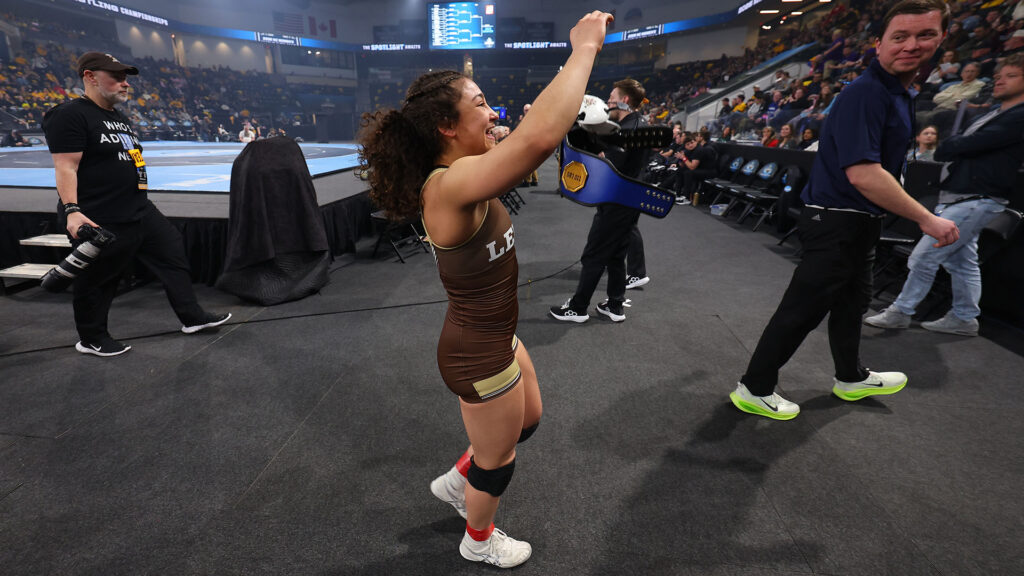
“It was one of the best feelings ever, really.”
Jimenez became a champion with joy, not judgment, in her heart.
“When I’m wrestling with joy, I just feel like I want to smile all the time,” Jimenez said. “Sometimes, if my nerves are really getting to me, I kind of have to force myself to smile. And then just smiling reminds me about the joy.”
Jimenez’s journey from injured freshman to undefeated but unhappy sophomore to radically free national champion taught her that smiling begets joy, prayer begets peace and presence begets freedom.
When asked about her plans for the 2028 Olympics, it’s clear she’s learned her lesson.
“I really do want to just leave it in God’s hands,” Jimenez said. “Because at the end of the day, his plans are good for us.”
Love women’s wrestling? Stay up to date with championship tickets and key dates throughout the season.
Buy your tickets now and experience NCAA Championship action live.