
March Madness is getting bigger, but the heartbeat of the NCAA Division I Men’s and Women’s Basketball Championships is staying the same.
Beginning in 2027, both tournaments will expand from 68 to 76 teams, creating more championship opportunities for student-athletes, adding more high-stakes games for fans and increasing investment in men’s and women’s basketball programs across Division I.
The change adds eight teams to each championship field. After the expanded Opening Round, 64 teams will remain, meaning the traditional First Round rhythm — 32 games across two days, followed by the round of 32 — remains intact.
In practical terms, the Opening Round adds more access without significantly altering the schedule fans have loved for years.
That means more teams will hear their names called on Selection Sunday. More student-athletes will experience the stage that defines college basketball. More schools will benefit from the national exposure that comes with playing in an NCAA tournament. And fans will get more March Madness without losing the opening-weekend format that has long made the tournament one of the most popular events in sports.
NCAA Tournament Expansion: What to Know
What Will the 76-team Brackets Look Like?
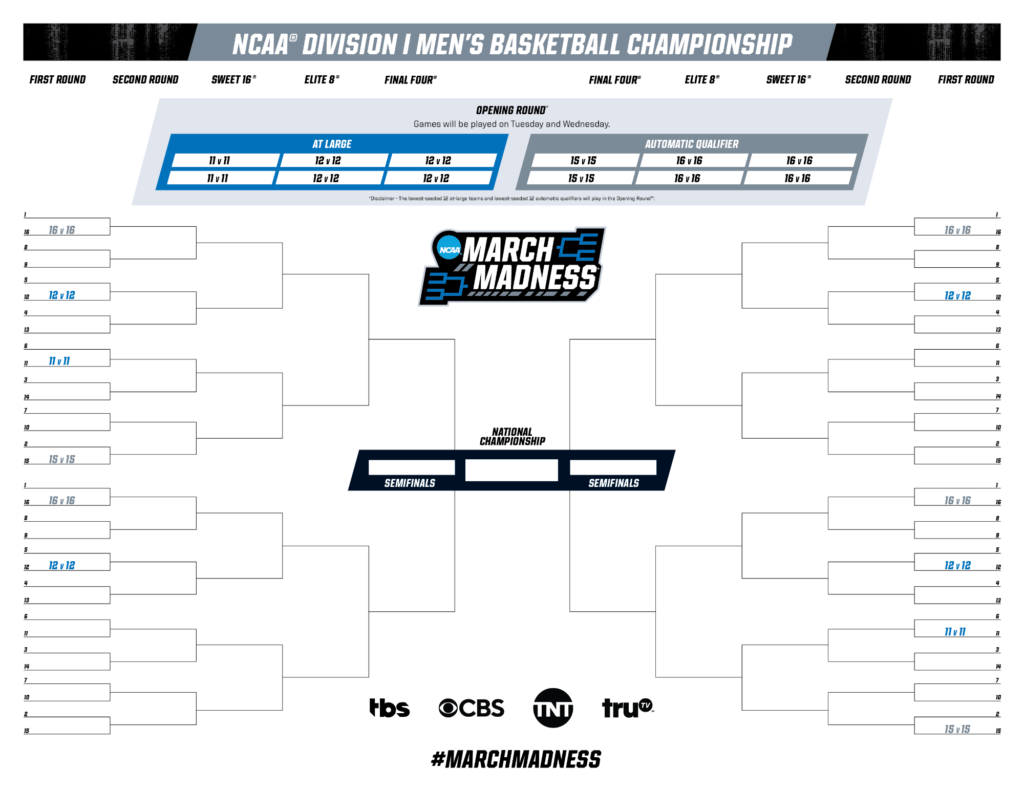
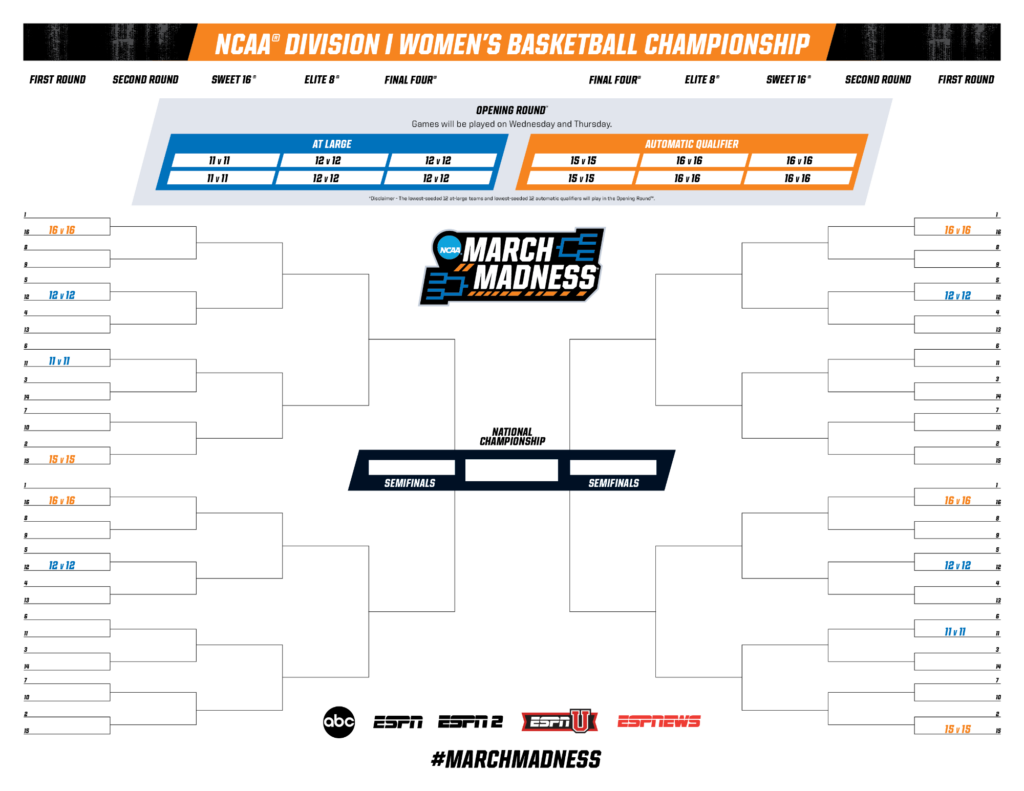
The expanded Opening Round is visually added to the top of the bracket, creating a clear entry point for the additional teams before the traditional field begins. These games feed directly into the standard 64-team layout, so once those results are finalized, the bracket flows exactly as fans expect through each round. The visual below illustrates how the new Opening Round connects into the familiar bracket structure, showing both what’s new and what stays the same
First Four Teams Already Have Made March Madness History
The expanded format also builds on a recent history of teams using the opening stage of the tournament as a launching point.
In the 15-year history of the First Four on the men’s side, a team advanced to at least the Second Round 14 times. In addition to the two First Four teams to make it to the Final Four — VCU in 2011 and UCLA in 2021 — four schools advanced all the way to the Sweet 16 from the First Four, with Texas being the most recent example in the 2026 tournament. Fairleigh Dickinson became the first automatic-qualifying First Four participant to win a game in the First Round when it stunned No. 1 seed Purdue in 2023, becoming only the second No. 16 seed to beat a No. 1 seed in men’s tournament history.
The women’s tournament has started to build its own history in the 68-team format, which began in 2022. In 2026, Virginia became the first women’s team to advance from the First Four to the Sweet 16, turning a place among the final teams selected into a second-weekend run. The Cavaliers began their run with a win against Arizona State, then beat Georgia in overtime and won at Iowa in double overtime to extend their tournament stay.
Those runs show why access matters. A team that begins in the Opening Round is just one hot stretch from reshaping the bracket.
Clearing Up Common NCAA Tournament Expansion Questions
More Basketball, Same March
The NCAA basketball tournaments have always balanced tradition with evolution.
The bracket has changed before. The audience has grown. The women’s game has reached new heights. In 2026, the men’s and women’s tournaments delivered strong television audiences and combined for more than 61 million social engagements across March Madness basketball accounts.
Through those changes, the core appeal has stayed the same: one stage, one bracket and one chance for teams to create a moment that lasts.
The 76-team format builds on that foundation.
It gives more student-athletes access to the championship experience. It gives more schools the platform and financial support that come with playing in March Madness. It gives fans more win-or-go-home basketball at a time when interest in both tournaments remains high. And it does so while preserving the 64-team First Round, the familiar weekend rhythm and the drama that makes the NCAA tournament one of the defining events on the sports calendar.
The result is a bigger championship stage, not a different championship identity.
March Madness is growing again.