
Women’s triathlon is an NCAA Emerging Sport for Women that is nearing the threshold for consideration for NCAA championship status.
The sport could reach a key sponsorship milestone in 2026, with 40 schools projected to sponsor the sport in the 2026-27 academic year. If 40 schools meet the sport’s minimum contest and participation levels — four contests with at least three participants — then the Committee on Access, Opportunity and Impact could recommend creating an NCAA National Collegiate Championship. All three divisions would then have to sponsor and approve that legislative proposal.
Women’s triathlon combines swimming, cycling and running and provides varsity opportunities across all three NCAA divisions.
USA Triathlon serves as the sport leader. Competition primarily takes place in the fall and can include sprint and super sprint distances as well as other event formats during the regular season.
Triathlon at a glance
PROJECTED NCAA VARSITY PROGRAMS IN 2026-27
NCAA TRIATHLON STUDENT-ATHLETES IN 2025-26
DISCIPLINES: SWIM, BIKE AND RUN
Is triathlon an NCAA emerging sport?
Yes. Triathlon is an NCAA Emerging Sport for Women sponsored by NCAA member schools in Divisions I, II and III.
The Emerging Sports for Women program is designed to increase athletics participation opportunities for women, provide schools with additional sport-sponsorship options and help develop sports working toward NCAA championship status. Since the program started in 1994, eight sports have become championship sports — beach volleyball, rowing, ice hockey, water polo, bowling, women’s wrestling, acrobatics and tumbling, and stunt.
Once in the Emerging Sports for Women program, a sport must have a minimum of 40 schools sponsoring the sport at the varsity level and meet minimum contest and participation requirements to be considered for NCAA championship status. For triathlon , its minimum requirements for all three Divisions are four contests with at least 3 participants.
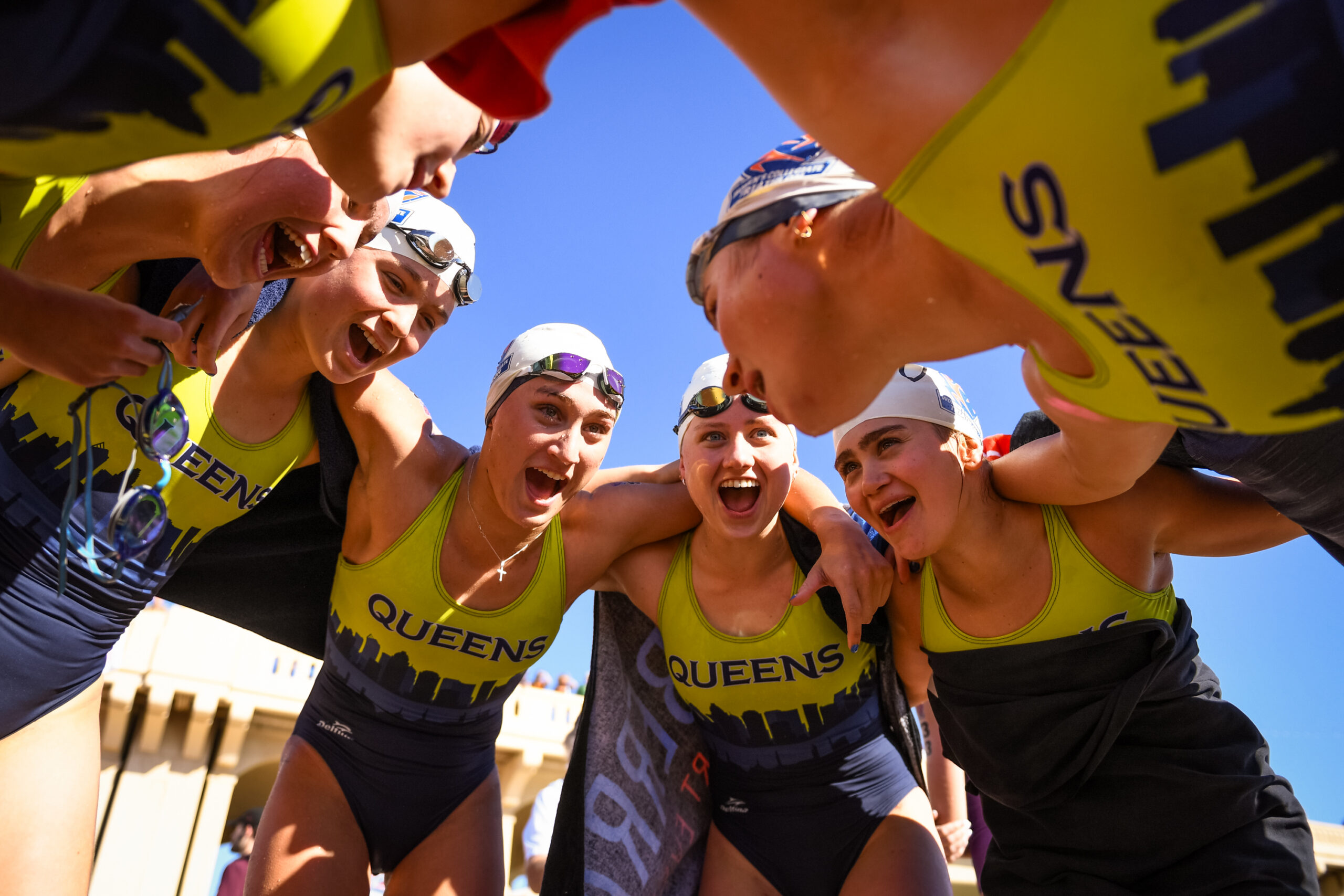
Triathlon breakdown by division
Triathlon had 38 NCAA varsity programs compete in 2025-26, and 40 are projected to compete in 2026-27.
According to USA Triathlon surveys, 98% of student-athletes are recruited specifically for triathlon. Some triathlon student-athletes also participate in sports such as swimming and indoor or outdoor track.
DIVISION I
DIVISION II
DIVISION III
How triathlon competition works
NCAA programs competing in triathlon can use several race distances and competition structures.
Outside regional and national championships, schools also can compete in formats combining two disciplines, such as swim-run, run-swim, bike-run or run-bike.
A typical sprint consists of a 750-meter swim, 20-kilometer bike ride and 5-kilometer run.
A super sprint is generally about half the sprint distance or shorter.
Competitions can include duals, triangulars or quads, allowing multiple athletes to compete at the same time.
Events can take place outdoors, indoors or in hybrid settings.
About playing rules
The NCAA does not develop, administer, or oversee the playing rules for emerging sports. All playing rules governing competition in these sports are created, maintained, and published solely by each sport’s national governing body or designated sport leader. The NCAA assumes no responsibility for the content, enforcement, or interpretation of such rules.
Triathlon leadership
USA Triathlon serves as the sport leader for collegiate triathlon.
In addition to supporting the collegiate sport, USA Triathlon conducts annual surveys that help track recruiting, participation and student-athlete trends.
Triathlon roster sizes and Division I limit
USA Triathlon reports an average roster of approximately 10 to 12 student-athletes, with a target roster of 12 to 15 to provide two squads of seven.
For Division I schools that are members of a defendant conference or opt in to the House settlement, the women’s triathlon roster limit is 14 student-athletes.
Schools should consult current divisional legislation for applicable roster and sport-sponsorship requirements.
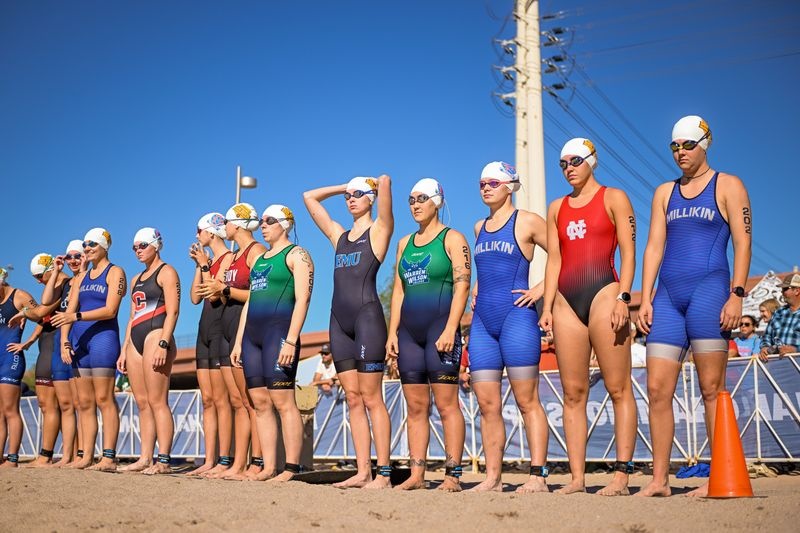
Current collegiate triathlon championship
Student-athletes can qualify for the national championship through regional championships or through the Collegiate Triathlon Cup Series.
The national championship uses three waves of athletes. Team titles are based on individual race scores, with team scoring determined by the total points earned by up to the first five scoring athletes from each varsity program.
The top three competitors in each division also earn individual awards.
The NCAA does not sponsor or host the Women’s Collegiate Triathlon National Championship.
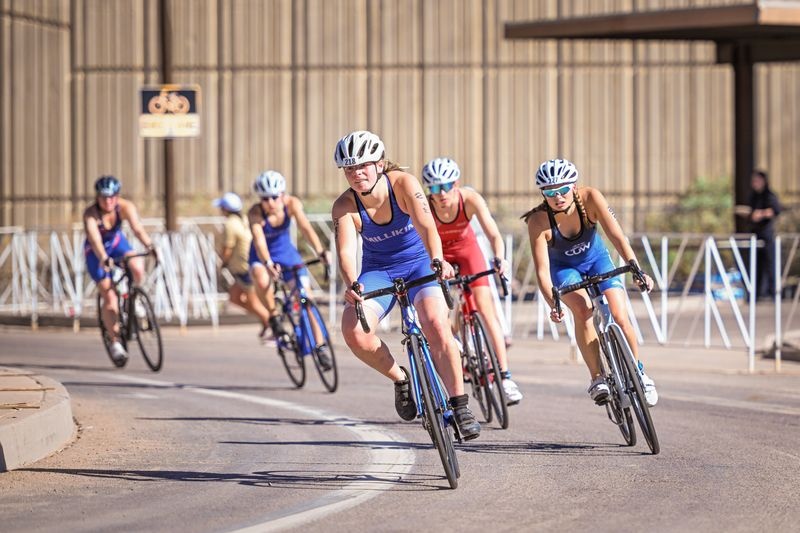
Conference sponsorship of triathlon
Conference Carolinas became the first NCAA conference to sponsor triathlon. The conference’s first championship was held Oct. 4, 2026 in Wingate, North Carolina.
Is triathlon an Olympic sport?
Yes, triathlon debuted at the 2000 Olympics and has been included in every Summer Games since then. At the 2021 Olympics, a mixed team relay event was held for the first time. Multiple former NCAA athletes competed in Olympic triathlon events at the 2020 and 2024 Games.
Next steps for triathlon in the NCAA
If 40 schools meet the sport’s minimum contest and participation levels — four contests with at least three participants — then the Committee on Access, Opportunity and Impact could recommend creating an NCAA National Collegiate Championship. All three divisions would then have to sponsor and approve that legislative proposal, while appropriate budget allocations would need approval by the NCAA Board of Governors and the Division I Finance Committee.