
Flag football is an NCAA Emerging Sport for Women that could hold its first National Collegiate championship in spring 2028.
Flag football is one of the fastest-growing women’s sports in college athletics, with more than 130 NCAA schools expected to compete in 2026-27 and a potential NCAA championship on the horizon.
The sport joined the NCAA Emerging Sports for Women program in January 2026, creating a formal pathway toward NCAA championship status. During the spring 2026 season, flag football met the sponsorship, participation and competition thresholds required for the championship process to move forward.
In May 2026, the NCAA Committee on Access, Opportunity and Impact recommended that Divisions I, II and III sponsor legislation to establish a National Collegiate Flag Football Championship. In August, the NCAA Board of Governors approved funding to support the championship and a sport committee.
All three divisions are expected to vote on championship legislation in January 2027. If each division approves the proposals on the projected timeline, the first NCAA flag football championship could be held in spring 2028.
College flag football at a glance
NCAA SCHOOLS EXPECTED TO COMPETE IN 2026-27
STUDENT-ATHLETES PARTICIPATED IN 2025-26
NCAA PROGRAMS SPONSORED FLAG FOOTBALL IN 2025-26
POTENTIAL FIRST NCAA CHAMPIONSHIP AND OLYMPIC DEBUT IN LOS ANGELES
Is flag football an NCAA emerging sport?
Yes. It will remain an Emerging Sport for Women until all three NCAA divisions approve championship legislation. If adopted, its first year as an NCAA championship will be 2027-28
The Emerging Sports for Women program is designed to increase athletics participation opportunities for women, provide schools with additional sport-sponsorship options and help developing sports advance toward NCAA championship status.
Eight sports have advanced through the program to become NCAA championship sports: beach volleyball, rowing, ice hockey, water polo, bowling, women’s wrestling, acrobatics and tumbling and stunt.
Flag football has reached the sponsorship, participation and competition benchmarks necessary to advance in that process. However, it will remain an Emerging Sport for Women until all three NCAA divisions approve championship legislation.

Flag football's growth at the college level
Flag football has grown rapidly across NCAA divisions as participation opportunities also expand at the youth and high school levels.
That number is expected to grow quickly. When the NCAA championship recommendation was announced in May 2026, more than 100 NCAA schools were planning to compete during the 2026-27 academic year.
The prospective student-athlete pipeline is expanding as well. According to information provided by the sport leaders in spring 2026, girls high school flag football was offered in 40 states, including 25 where it was sanctioned and 15 where it was being piloted.
More than 100,000 participants were reported in sanctioned states during the 2025-26 school year, with year-over-year participation increasing nearly 50%.
Flag football’s growth also fits a broader expansion of women’s athletics opportunities. Emerging sports accounted for nearly 7,000 NCAA student-athlete participation opportunities in 2024-25, an increase of more than 20% from the previous year.
How the game works
Teams compete 7-on-7.
Games consist of four 15-minute quarters.
The offense has four downs to advance at least 20 yards for a first down.
Teams use a 30-second play clock.
The standard field is 80 yards long and 40 yards wide, plus two 10-yard end zones.
About the playing rules
The NCAA does not develop, administer, or oversee the playing rules for emerging sports. All playing rules governing competition in these sports are created, maintained, and published solely by each sport’s national governing body or designated sport leader. The NCAA assumes no responsibility for the content, enforcement, or interpretation of such rules.
The college flag football roster limit
In Division I, legislation adopted in August 2026 established a 25-player roster limit for schools that are members of a defendant conference or opt in to the House settlement. The 25-player limit does not apply universally to every college flag football program.
Sport sponsorship, financial aid, roster limits and other requirements can differ by NCAA division. Schools should consult current divisional legislation for applicable requirements.
RCX Sports Foundation reported average roster sizes of approximately 20 student-athletes in Division I and 18 in Divisions II and III.
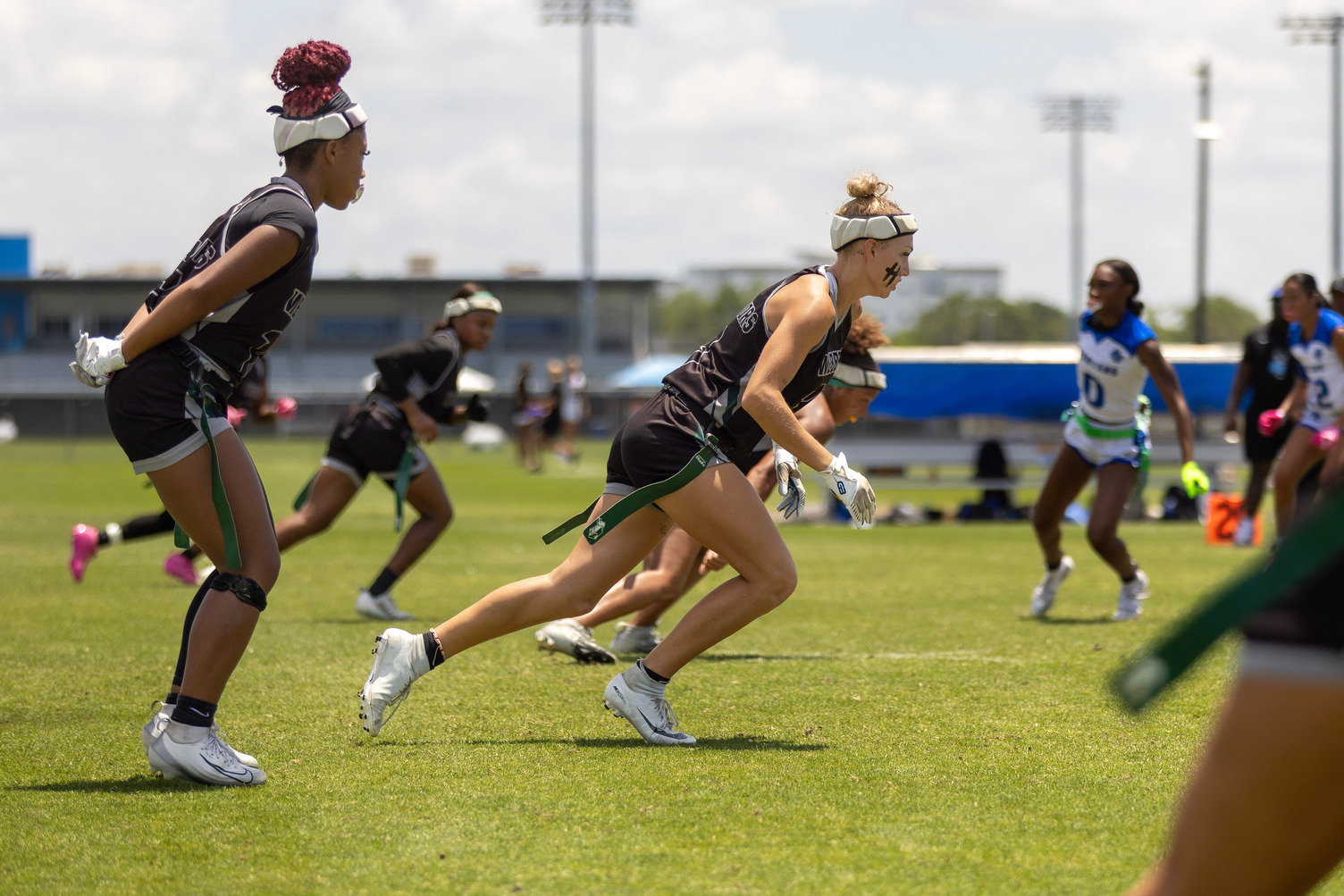
Key players in growing flag football
The growth of college flag football is supported by sport leaders, member schools and organizations working to create competitive opportunities from the youth level through international competition.
Flag football – another NCAA to Olympics pipeline
Yes. Flag football will make its Olympic debut at the 2028 Olympic Games in Los Angeles.
The Olympic addition creates another high-level competitive pathway for college flag football student-athletes and adds momentum to the sport’s growth in the United States.
USA Football has identified the college game as an important part of developing the talent pipeline for future U.S. national teams.
The current NCAA championship timeline creates the possibility of two landmark moments in the same year: a first NCAA National Collegiate Championship in spring 2028 and flag football’s Olympic debut later that year.
Path to an NCAA flag football championship
The first National Collegiate Flag Football Championship could be held in spring 2028 if the remaining governance steps are completed on the projected timeline.
What comes next for college flag football?
The next major step is expected in January 2027, when each NCAA division considers legislation to establish the National Collegiate Championship.
Until then, flag football remains an Emerging Sport for Women.
If all three divisions approve the proposals, flag football would become the ninth sport to advance from the Emerging Sports for Women program to NCAA championship status.
For the student-athletes who helped build the college game, that potential championship represents the next stage in a pathway that did not exist for many of them just a few years ago.
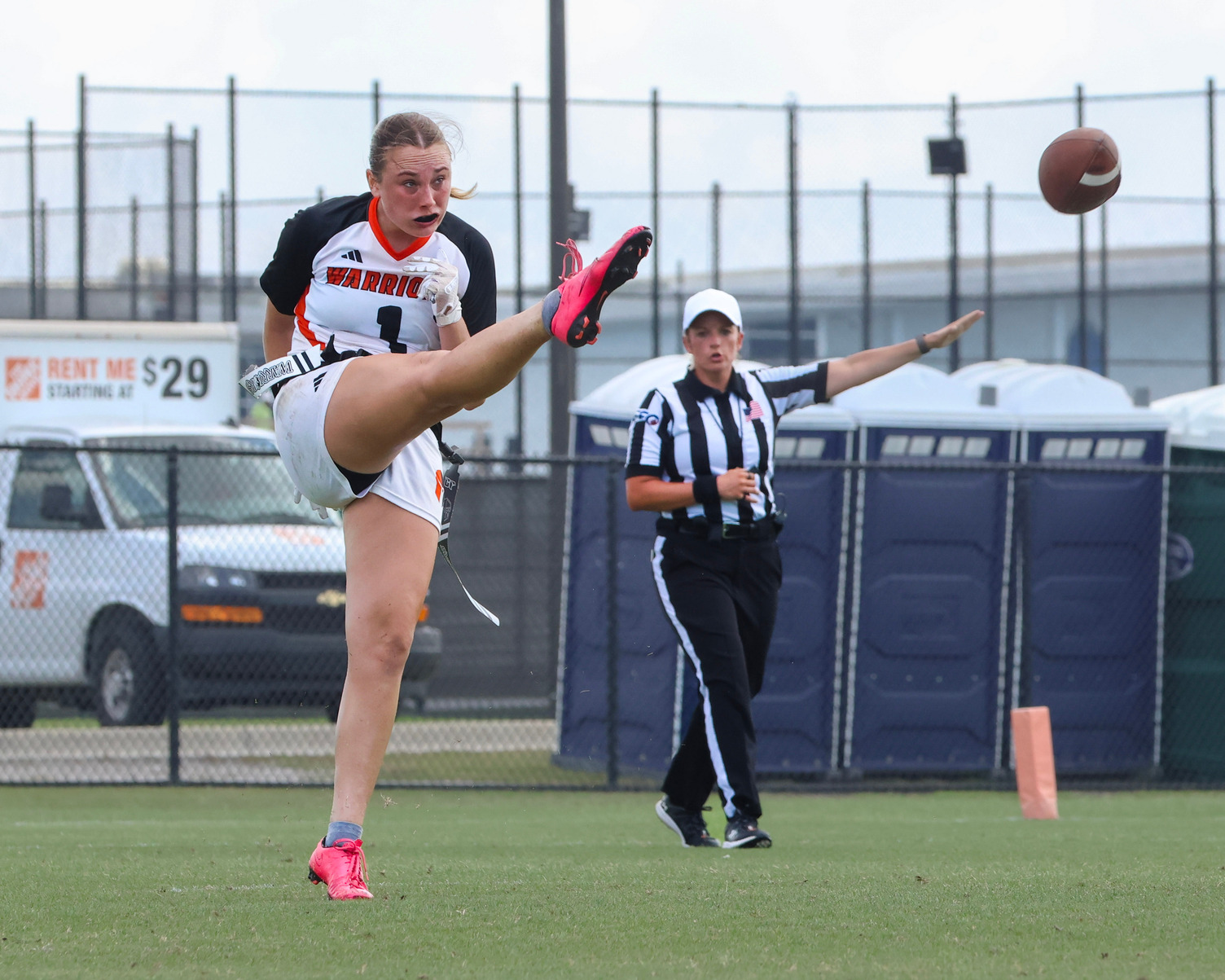
“We started from the ground up. Seeing it grow past the Central Intercollegiate Athletic Association and growing it at the NCAA would mean a lot because future players can succeed on the path we started, and it will give them the opportunity to go further.”
Akeylah James, Winston-Salem State