

Craig Skinner remembers the Kentucky volleyball locker room when he arrived in Lexington more than two decades ago.
The most prominent feature was a stacked washer and dryer beside a giant tub of powdered laundry detergent.
The crowd at Skinner’s first match as head coach in 2005 wasn’t much more impressive. He estimates about 75 fans were in the stands.
In time, he persuaded administrators to sell tickets. Getting the band to attend Sunday matches took another push. Skinner offered to buy the musicians pizza if that would help.
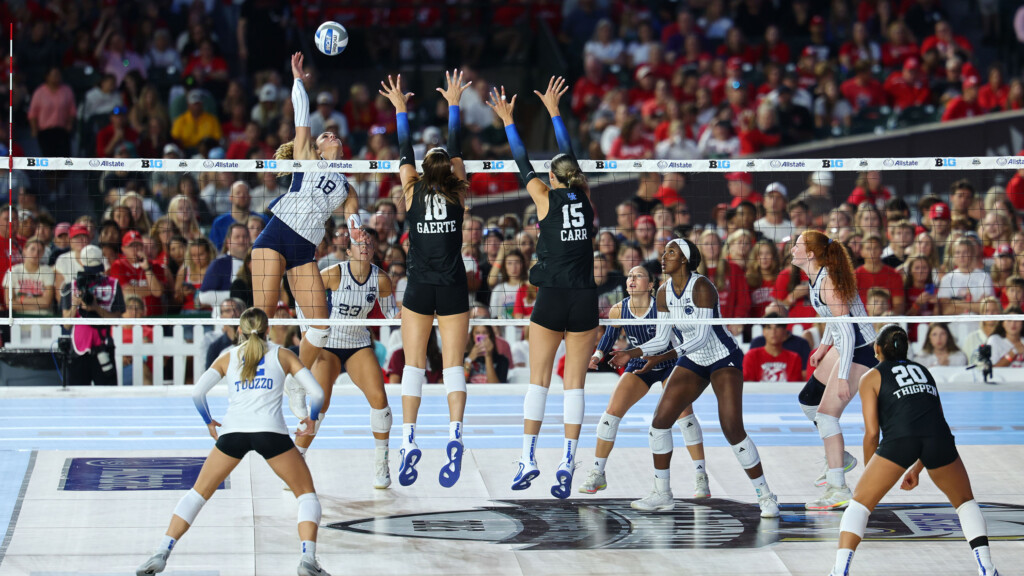
More than 20 years later, his Wildcats were playing Penn State at Wrigley Field.
The Sept. 6 match was part of an outdoor doubleheader that drew 43,067 fans, the second-largest crowd in the Chicago ballpark’s history.
Quite a difference from those early days in Lexington. And Wrigley Field was hardly the only sign of volleyball’s growth in 2026.

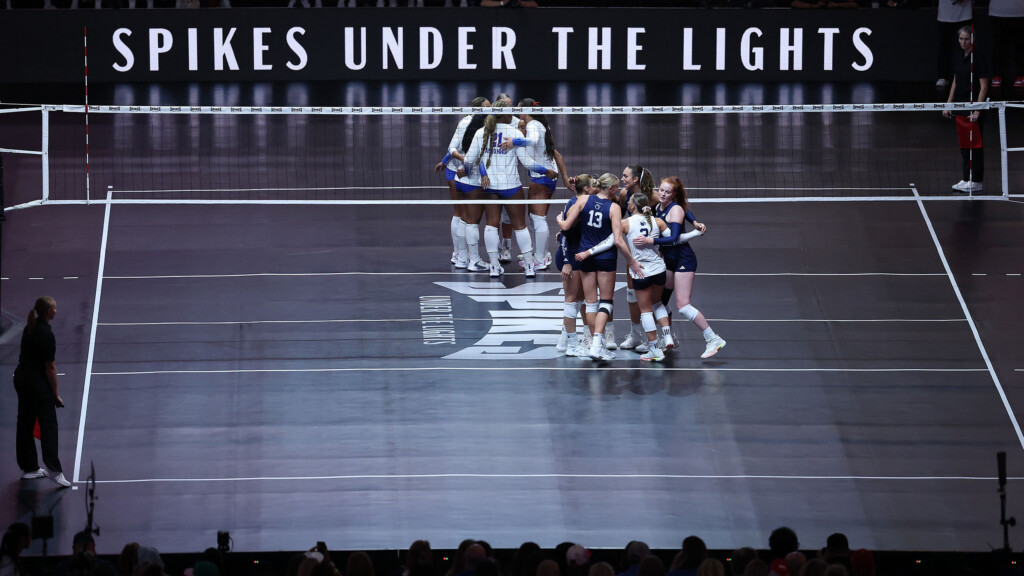
Four teams played at the Dallas Cowboys’ AT&T Stadium in Spikes Under the Lights, an exhibition showcase with a $1 million prize pool. The inaugural Paradise Invitational brought NCAA women’s volleyball to the Bahamas. By Nov. 14, the American Volleyball Coaches Association had documented home attendance records at 29 programs. The inaugural Allstate Big Ten Volleyball Tournament concludes Wednesday night on FOX.
Another potentially historic event awaits.
On Sunday, Nov. 29, the 64-team field for the NCAA Division I Women’s Volleyball Championship will be revealed at 6 p.m. Eastern time on ESPN. The tournament concludes Dec. 17 and 20 at San Antonio’s Alamodome, where organizers expect to see a new championship attendance record.
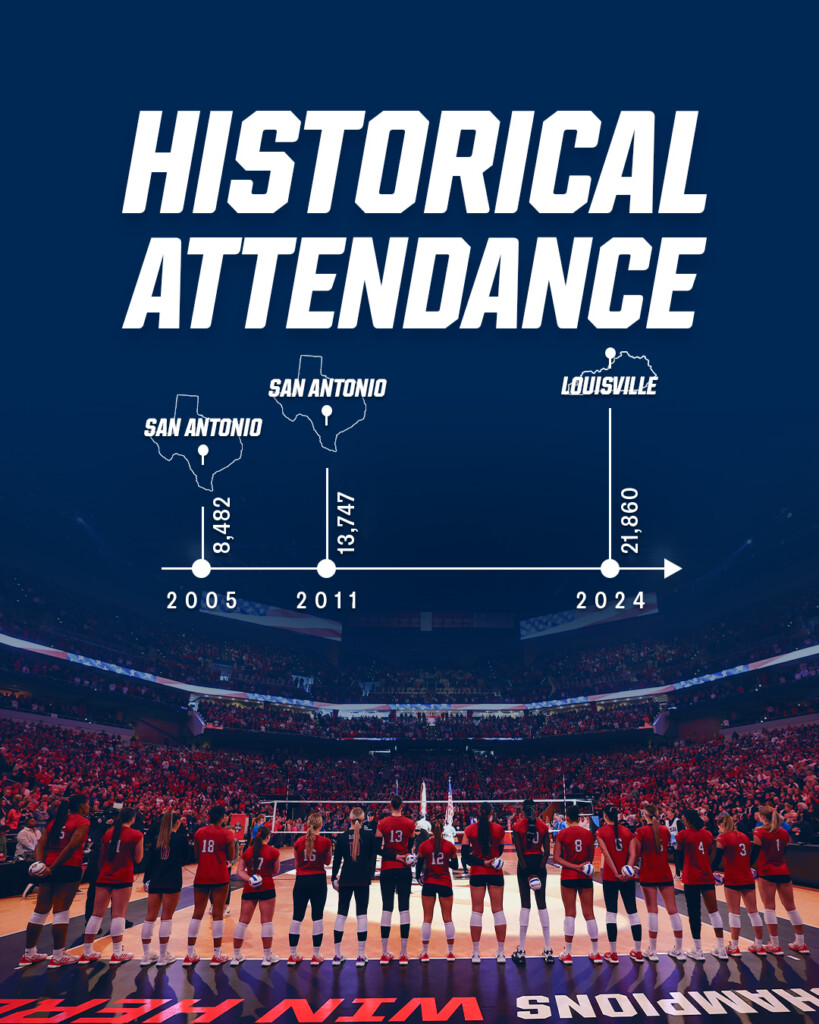
The current mark is 21,860, set during Penn State’s victory over Louisville in the 2024 Division I national championship match.
“We need to break the record, not just by a couple people,” Skinner said. “We need to break it significantly.”
For Jennifer Saxon, chair of the Division I Women’s Volleyball Oversight Committee and senior woman administrator at Ole Miss, another record would reinforce something she has believed for years.
“I don’t like to refer to it as a moment,” Saxon said of volleyball’s growth. “I like to refer to it as the opportunity for everyone else to see what a large amount of us have known for a really long time.”
Years of building a better product
Skinner arrived at Kentucky after coaching at Nebraska and Wisconsin, programs where he had seen what a strong volleyball culture could become with institutional support.
“I’m going to Kentucky to build a national championship program,” he remembers thinking.
But that required investment.
“I didn’t come here to be OK. I didn’t come here to be average. And if we want to be really good, then we need to invest in the sport,” Skinner recalled telling then-Kentucky Athletics Director Mitch Barnhart, who retired this summer after more than 20 years in the role.
“I don’t like to refer to it as a moment, I like to refer to it as the opportunity for everyone else to see what a large amount of us have known for a really long time.”
Jennifer Saxon
The changes came incrementally, from ticket sales and a better match-day environment to a stronger program on the court. Kentucky won the 2020 NCAA championship, held in spring 2021, becoming the first Southeastern Conference school to claim the title. The Wildcats returned to the national championship match in 2025, falling to conference foe Texas A&M.
Skinner believes the same persistence he has shown, repeated by coaches and administrators across the country, laid the groundwork for the sport’s wider growth.
“We’ve kind of been annoying to the powers that be, whether that’s commissioners, administrators, and just pounding our fists on the table,” said Skinner, who is also president-elect of the AVCA.
Skinner said the message from coaches was straightforward: Volleyball would keep growing.
“You’ve got to keep investing,” he said of the consistent message coaches were bringing to administration.
As programs gained support and visibility, the level of competition kept improving.
Skinner remembers coaching at Wisconsin in 1994, when one player on his team could touch 10 feet. He says 10 players on his current Kentucky roster can reach that mark.
ESPN analyst Holly McPeak has seen that evolution from another perspective. A former NCAA indoor volleyball champion at UCLA in 1990 and three-time beach volleyball Olympian, she remembers playing in front of passionate college crowds long before today’s attendance surge. The game itself, though, looks different now.
“It’s always been an incredible sport,” McPeak said. “But the evolution and advancement of the speed, the power, the athleticism — it’s a lot faster and more dynamic than when we used to play.”
That pace is part of what Skinner believes makes volleyball appealing to new viewers. A rally can change direction in an instant. The next serve can produce another highlight. Every point has jaw-dropping potential.
“Every single time the whistle blows, there’s a chance for a top-10 play,” he said.
The talent and entertainment value were there. The challenge was getting more people to watch.
Expanded television coverage offered a way to do that.
How volleyball found a bigger audience
Ericka Galbraith remembers a Wednesday night in September 2022 that helped change the trajectory of ESPN’s women’s college volleyball coverage.
Louisville was playing Kentucky in a rivalry match that had landed on ESPN, a more prominent regular-season window than volleyball typically received. Galbraith, ESPN’s coordinating producer who took over its volleyball coverage in 2022 after working with college football, remembers the scheduling opportunity as somewhat unexpected.
The match delivered. Louisville won in five sets, the competition generated attention online and the broadcast averaged 302,000 viewers — then a regular-season record for ESPN networks.
“It was one of those pivotal moments when you just know things are about ready to happen because the audience got behind it,” Galbraith said. “We built off of that momentum and pushed to give (volleyball) as many high-profile windows as we could from that moment forward because I think we delivered, like, three times the audience of what we (expected) during that regular Wednesday night programming window.”
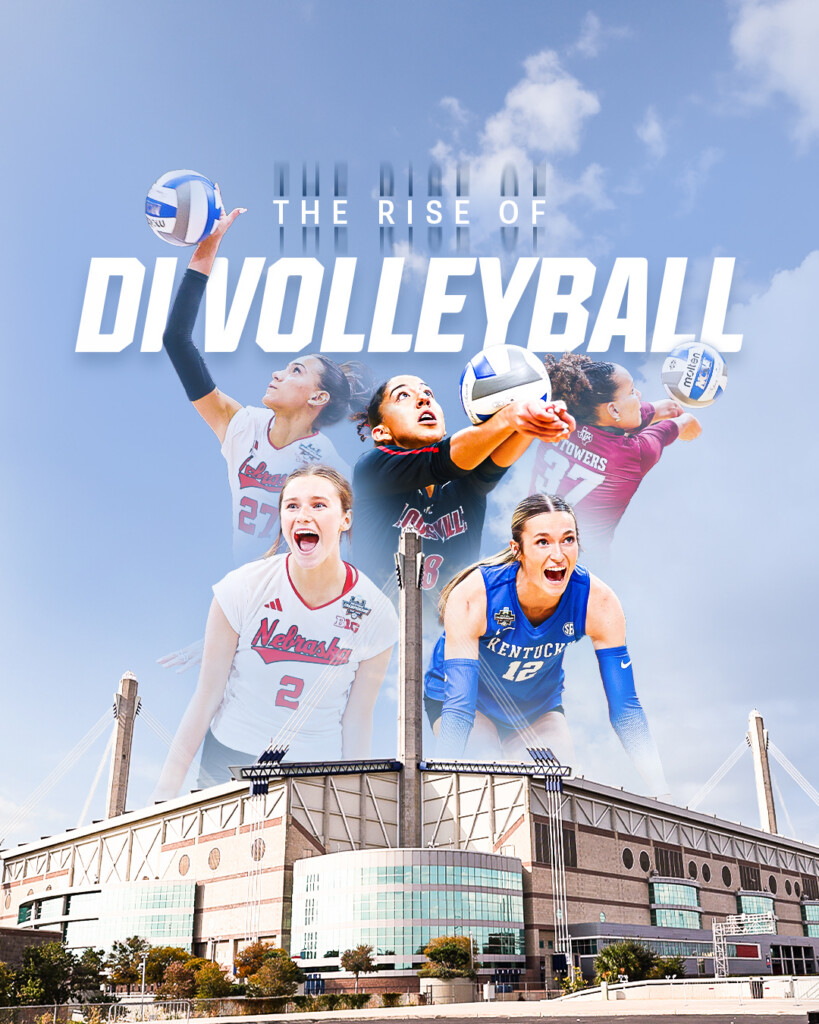
The response helped support a push for more prominent television windows, stronger production and programming that could reach viewers unfamiliar with the game.
The results have become increasingly evident.
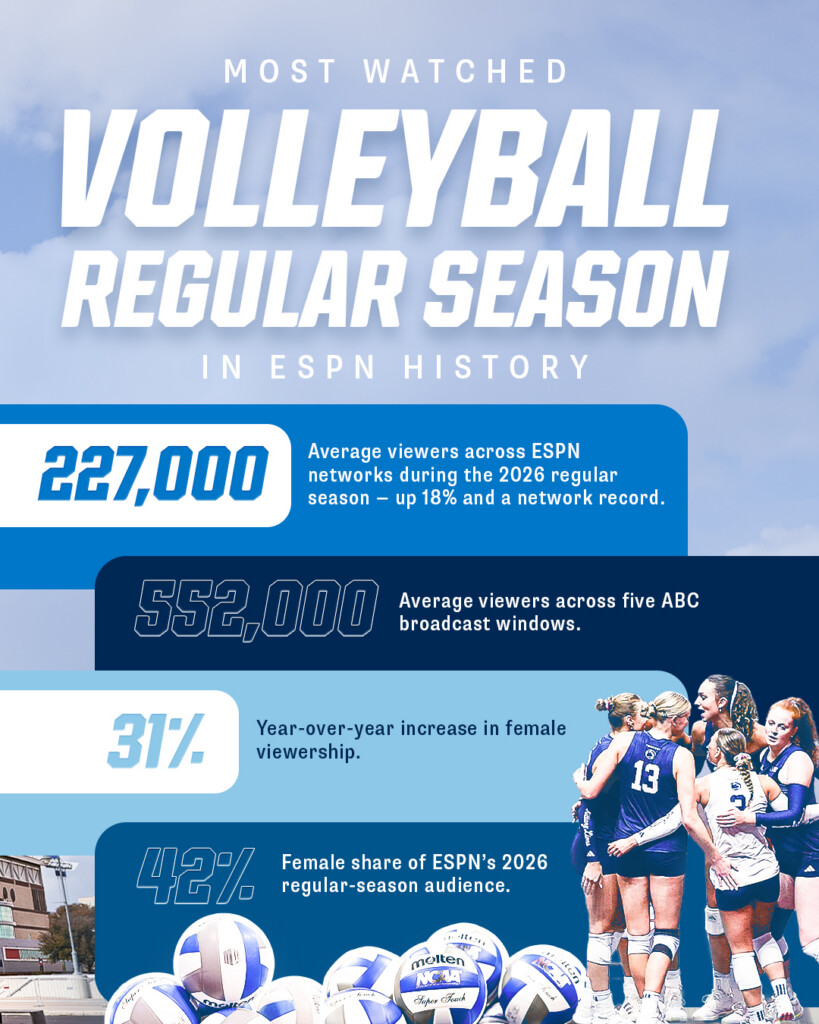
ESPN’s women’s college volleyball regular-season coverage averaged 227,000 viewers in 2026, up 18% from 2025 and marking the most-watched regular season in network history. A record five ABC broadcast windows averaged 552,000 viewers, while viewership on ESPN’s cable networks increased 17%. The audience has expanded beyond ESPN, too. Nebraska’s Aug. 30 match this season against Texas averaged 1.04 million viewers on FOX, the network’s second-most-watched volleyball telecast on record.
The gains followed a record-setting 2025 regular season and NCAA tournament on ESPN. The tournament averaged 666,000 viewers across 15 measured matches, up 13% from 2024. Four matches attracted at least 1 million viewers, including the national championship between Texas A&M and Kentucky, which averaged 1.4 million.
The audience is changing, too. Female viewership during ESPN’s 2026 regular-season coverage increased 31% from the previous year, with women accounting for 42% of viewers. During the 2025 NCAA tournament, viewership among adults ages 25–34 jumped 83%, while viewership among children ages 2–17 increased 40%.
“Because we’re skewing younger and more female, it’s really encouraging,” Galbraith said.
That growth has come alongside greater television exposure. ESPN scheduled a record 106 regular-season matches on its linear networks in 2026, including 21 on ESPN itself. Volleyball also became part of the network’s fall Women’s Sports Sundays programming. The broader television presence has created more opportunities not only to showcase matches, but also to introduce the student-athletes playing them.
Galbraith has emphasized both goals.
“We want to make things easy for the viewer to understand and tell the best stories,” she said.
One example is “The Fifth Set,” ESPN’s NCAA tournament whip-around show. Inspired by the ability to move between live events in other sports, the program allows viewers to follow multiple matches and catch the biggest moments during the early rounds. In 2025, “The Fifth Set” averaged 183,000 viewers during its ESPN2 telecasts, up 60% from the previous year.
ESPN has also expanded “Game On: Journey to the NCAA Championship,” which profiles athletes, coaches and teams ahead of postseason competition. A women’s volleyball installment is scheduled to premiere Dec. 2 on ESPN2.
“We start the conversation before the season even begins: What are going to be the biggest stories of the year? What are the stories we want fans at home to know?” Galbraith said. “There are five or six features that are cut to showcase some of the best and brightest stories of the season.”
For Nebraska All-American setter Bergen Reilly, the difference in access is personal. Growing up in Sioux Falls, South Dakota, she admired Taryn Kloth, a player from her high school who went on to compete at Creighton for indoor before spending one season of beach volleyball at LSU to springboard a path to the Paris 2024 Olympics. But Reilly never saw her play college matches on television. Today, most of Reilly’s own matches are available through national or conference network coverage.
Reilly jokes that even “a bunch of ranchers in western South Dakota that have never watched a volleyball game in their life” now plan their evenings around Nebraska matches and cut hunting trips short to watch.
“Volleyball is just one of those sports that can hook you,” Reilly said. “Having that exposure has helped so much because maybe it takes one really good game that someone sees on TV … and now they’re hooked and they come back and they keep watching.”
That growing attention is showing up in the stands, too.
Bigger crowds, bigger stars and new opportunities
Reilly knew Nebraska’s Volleyball Day would be a big event. How big was harder to imagine.
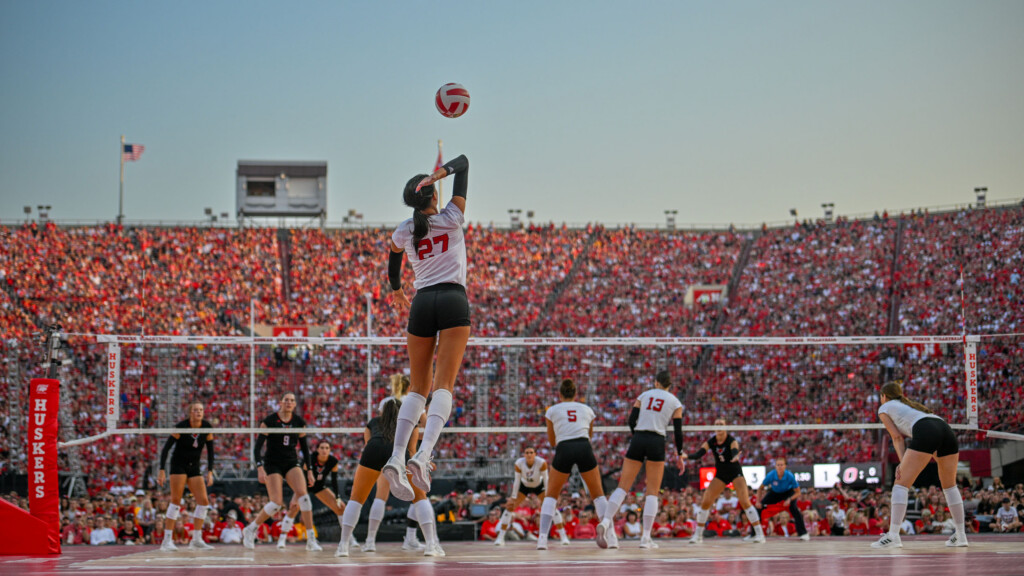
She was a freshman in 2023 when Nebraska announced plans to play Omaha in Memorial Stadium, the school’s football venue. Reilly recalls initial expectations of 30,000 or 40,000 spectators.
Then the tickets sold out.

On Aug. 30, Reilly and her teammates ran onto the field before 92,003 fans, setting an NCAA volleyball attendance record and what was then recognized as a world record for a women’s sporting event.
“I don’t know. I kind of blacked out,” she said of the experience.
One image stayed with her. As Nebraska’s players approached the field, Reilly saw volleyball alumni gathered in the tunnel and young girls waiting just beyond them.
“Wow, I’m seeing the past of volleyball and the future of volleyball,” she remembered thinking.
Three years later, Reilly says the attention hasn’t faded. She sees Nebraska fans filling road venues and waiting near the team bus and hotel when the Huskers travel.
“Coast to coast, whether it’s Washington or Rutgers, like we’re sold out with a lot of Nebraska fans for the most part,” Reilly said. “You see people waiting at our bus. People will find out what hotel we’re at now.”
Nebraska was the visiting team for five of the home attendance records documented by the AVCA through Nov. 10, including crowds of 15,127 at Maryland, 12,707 at Michigan and 12,364 at Oregon.
But the records extend beyond the Huskers road schedule. Tennessee attracted 9,226 against Texas, Kansas drew 8,058 against Kansas State and NC State welcomed 5,500 for its rivalry match against North Carolina. The AVCA’s list also includes several smaller programs setting their own marks.
For McPeak, the breadth of the college game’s reach creates possibilities that weren’t available during her professional beach volleyball career, when fans often needed to live near or travel to an event to watch in person.
“Here you get to see so many different schools and so many different platforms broadcasting the sport,” she said. “I just think it’s ripe to explode. Everybody’s been talking about it, but we’re in it.”
The potential for continued growth is evident among younger athletes, too. Girls high school volleyball participation reached 502,056 in 2025-26, according to the National Federation of State High School Associations. That made volleyball the most popular girls high school team sport and second among girls sports overall, behind track and field.
The increased visibility is also creating opportunities for college players to build audiences and personal brands beyond their campuses.
Nebraska’s Harper Murray had more than 1.1 million TikTok followers and more than 460,000 Instagram followers. Her teammate Reilly, who has put her business and law degree to work navigating name, image and likeness opportunities, has more than 200,000 followers on Instagram. The commercial opportunities have grown, too. According to Opendorse, women’s volleyball NIL compensation increased 365% in 2022-23, followed by gains of 123% in 2023-24 and 146% in 2024-25. (Note: The figures reflect Opendorse’s reporting, not a nationwide total of athletes’ earnings.)
“I think the level of play is incredible, but I do attribute a lot (of volleyball’s recent growth) to social media, as well,” Galbraith said.
McPeak has noticed another change: Fans and influencers are increasingly discussing volleyball on TikTok, Instagram and X. Match reactions and opinions are reaching audiences far beyond the people inside an arena.
“This is the first time I can truly say we’ve seen it across every platform: people talking about the sport,” McPeak said.
A bigger stage awaits in San Antonio
Saxon remembers leaving the 2023 Division I Women’s Volleyball Championship in Tampa, Florida, and noticing families at the airport who had attended the event. Some had brought young daughters to see college volleyball at its highest level.
“This is why we do it. That’s the future,” she recalled thinking.
The experience has stayed with Saxon as the chair of the Division I Volleyball Oversight Committee.
Saxon said the sport’s growing popularity has changed how the committee evaluates potential championship sites. Even returning to a familiar venue can be a difficult decision if it means sacrificing thousands of seats. With demand growing, that difference matters.
When San Antonio last hosted the championship in 2011, UCLA defeated Illinois before 13,747 fans. The return to the Alamodome this December comes with expectations considerably higher than those of 15 years ago.
“Volleyball is not what it was even five years ago,” she said. “We are not the sport that we used to be, so some of our behaviors and the way that we operate can’t be the same.”
The competition is changing expectations, too.
Texas A&M entered the 2025 tournament as a No. 3 seed and produced an unlikely championship run, beating top-seeded Nebraska in Lincoln before eventually sweeping Kentucky for the program’s first national title. Texas A&M’s breakthrough continued a recent trend. Three of the past six national championships have been won by programs claiming their first titles: Kentucky in 2020, Wisconsin in 2021 and the Aggies in 2025.
“Do you dream about playing at Wrigley Field? No. But I dream about playing in front of sold-out venues. Then when the venues get sold out, then what? You have to dream bigger.”
Craig Skinner
Saxon sees that result as evidence of a sport with more programs capable of challenging established powers. She points to coaching, student-athlete development, transfers and institutional investment rather than any single factor.
“You can come from what people believe to be obscurity and be competitive,” she said.
Vanderbilt provides another example of how quickly a program’s trajectory can change. The Commodores resurrected its volleyball program in 2025 after the sport had been absent since 1979. They finished 9-18 in their first season back. In the Nov. 17 AVCA poll, Vanderbilt was 21-3 and ranked No. 14 nationally.
The growing number of programs capable of making a championship run adds another layer of intrigue as the 2026 tournament approaches. And with the sport attracting larger audiences, the expectations surrounding its biggest event continue to rise.
For Saxon, the opportunity in San Antonio goes beyond breaking an attendance record. It’s about providing a championship experience that reflects how far the sport has come, particularly for the student-athletes competing on its biggest stage.
Skinner has seen those expectations change firsthand. More than two decades after pushing for greater investment in Kentucky volleyball, he’s watching the sport fill venues he once couldn’t have imagined hosting a college match.
“Do you dream about playing at Wrigley Field? No. But I dream about playing in front of sold-out venues,” Skinner said. “Then when the venues get sold out, then what? You have to dream bigger.”
Reilly, recalling Volleyball Day as a freshman, knows what that looks and feels like.
“All these little girls get to dream of playing in a football stadium, playing in an MLB stadium, and that’s just one of the coolest parts to me. One of the things we always say at Nebraska is dream big,” Reilly said. “Now little girls can see that, they can dream of that and they can dream of even bigger things.”
2026 NCAA Division I Women’s Volleyball Championship
The 64-team field will be announced at 6 p.m. Eastern time Sunday, Nov. 29, on ESPN. The national semifinals are Dec. 17, and the national championship match is Dec. 20 at the Alamodome in San Antonio.
