
Equestrian is part of the NCAA Emerging Sports for Women program in Divisions I and II.
STUDENT-ATHLETES PARTICIPATED IN 2025-26
NCAA PROGRAMS SPONSORED EQUESTRIAN IN 2025-26
COMPETITORS PER TEAM IN EACH EVENT
Is equestrian an NCAA emerging sport?
Yes, equestrian is part of the NCAA Emerging Sports for Women program in Divisions I and II. The sport was added to the program in 1999 in Division I and 2003 in Division II. Equestrian is not classified as an emerging sport in Division III, however, several DIII schools sponsor varsity equestrian programs.
The Emerging Sports for Women program is designed to increase athletics participation opportunities for women, provide schools with additional sport-sponsorship options and help develop sports working toward NCAA championship status. Since the program started in 1994, eight sports have become championship sports — beach volleyball, rowing, ice hockey, water polo, bowling, women’s wrestling, acrobatics and tumbling, and stunt.
Once in the Emerging Sports for Women program, a sport must have a minimum of 40 schools sponsoring the sport at the varsity level and meet minimum contest and participation requirements to be considered for NCAA championship status. For equestrian, its minimum requirements for Divisions I and II are six contests with at least 12 participants.
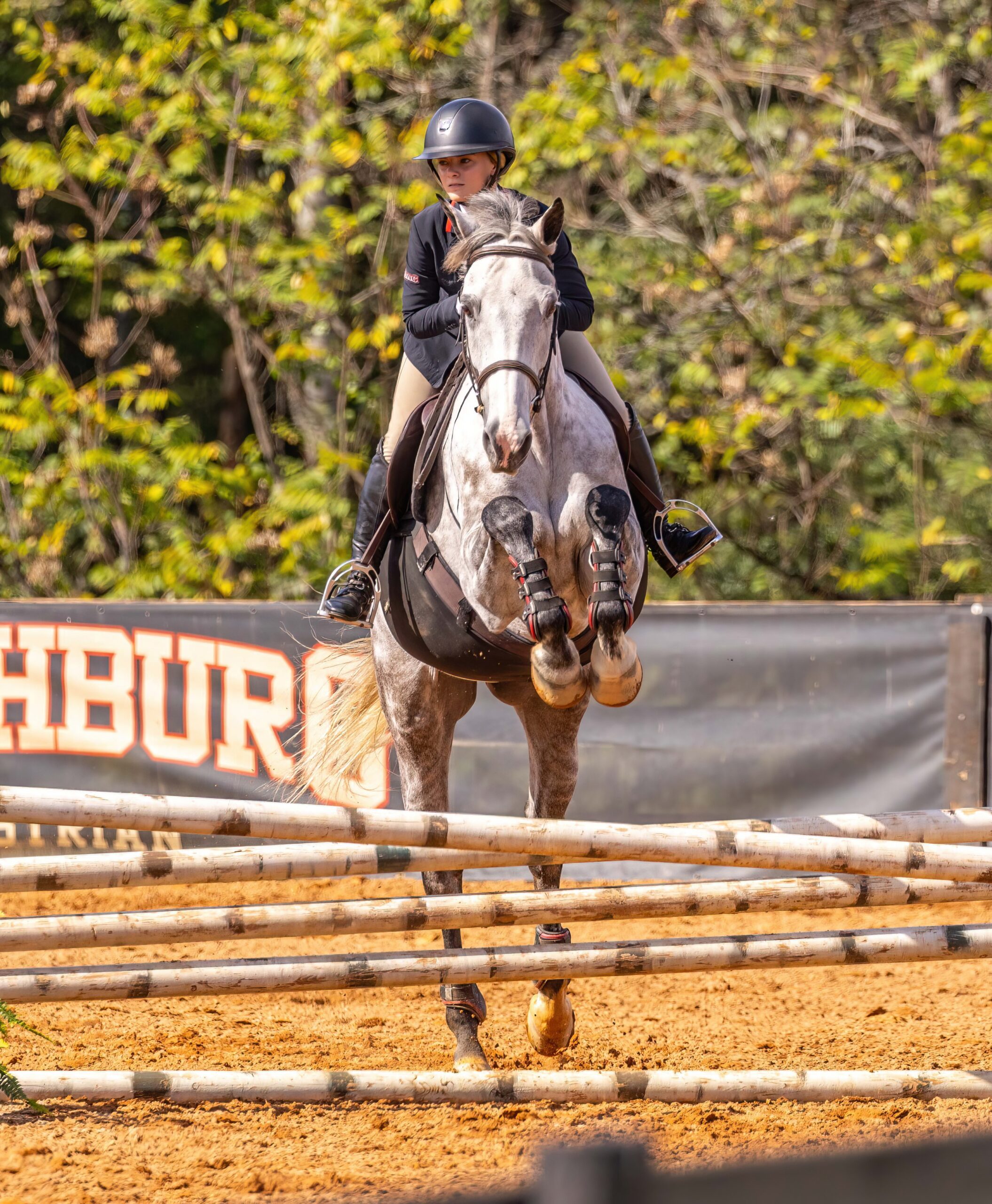
Equestrian competition format
Equestrian includes single discipline and dual discipline competition.
Competitors receive four minutes of warm-up time before competing to help promote fair and safe competition for student-athletes and horses. This format reduces travel costs for teams by having riders compete with the same horse while showcasing riders’ abilities to interact and complete the events with a neutral horse.
Teams focus on jumping seat competition in two events: flat and fences.
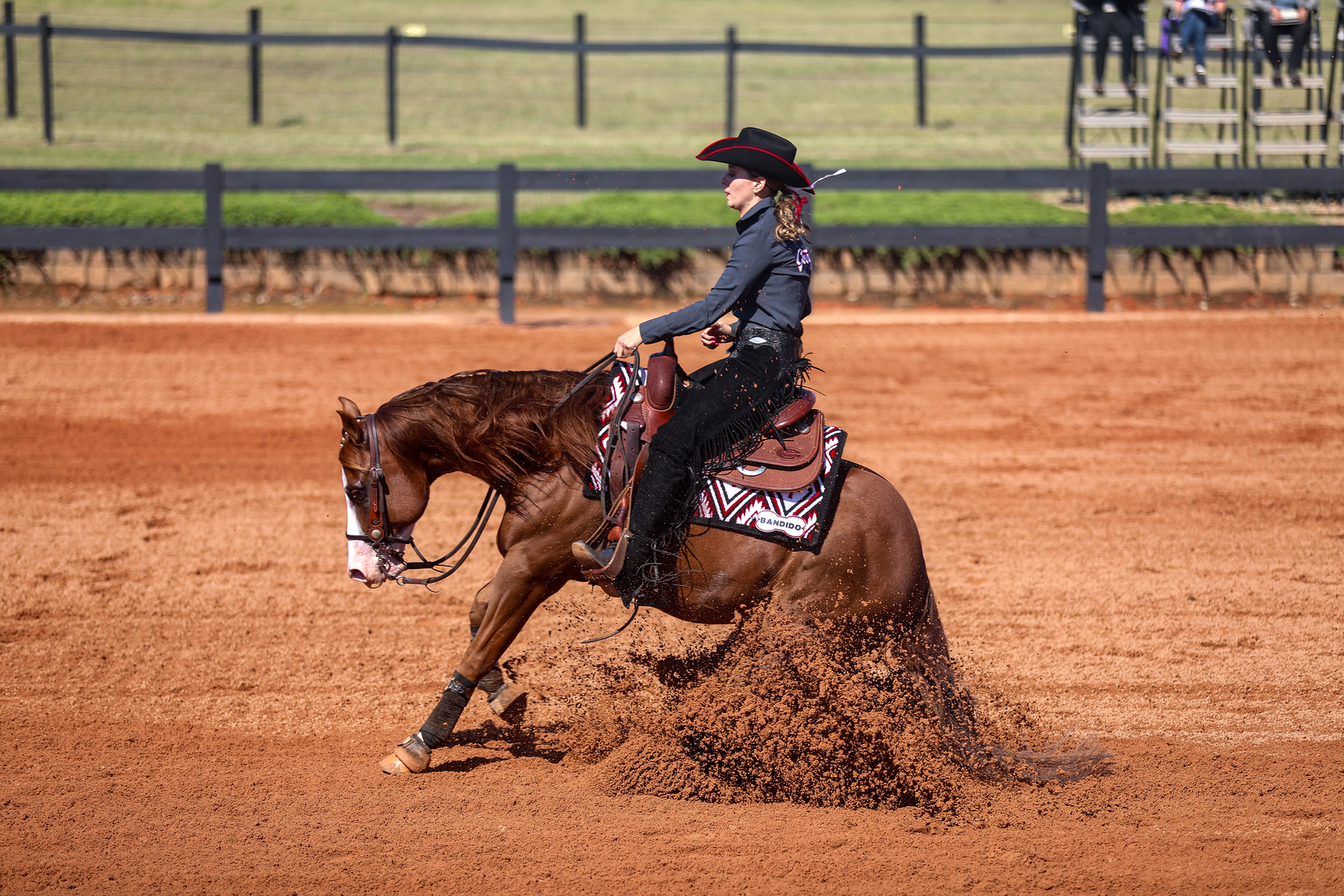
Teams compete in four events across two categories:
- Jumping seat: flat and fences.
- Western: horsemanship and reining.
Each team fields five competitors per event.
A rider from each team competes a predetermined pattern on the same horse. A licensed judge scores both performances, and the rider with the higher score earns a point for her team.
About equestrian playing rules
The NCAA does not develop, administer, or oversee the playing rules for emerging sports. All playing rules governing competition in these sports are created, maintained, and published solely by each sport’s national governing body or designated sport leader. The NCAA assumes no responsibility for the content, enforcement, or interpretation of such rules.
Equestrian leadership
The National Collegiate Equestrian Association serves as the sport’s governing body and is a representative of the United States Equestrian Federation.
The NCEA supports collegiate competition and conducts its own national championship.
Equestrian roster sizes and Division I limit
The National Collegiate Equestrian Association reports an average Division I roster of approximately 39 student-athletes. For Division I schools that are members of a defendant conference or opt in to the House settlement, the roster limit for women’s equestrian is 50 student-athletes.
The NCEA reported Divisions II average roster sizes of 25 student-athletes.
Current equestrian championship
The National Collegiate Equestrian Association conducts a national championship that awards two team titles in a head-to-head, single-elimination bracket format:
Qualifying schools compete for the championship.
Eight qualifying schools compete for the championship.
Conference sponsorship of equestrian
Is equestrian an Olympic sport?
Yes, equestrian events were first included in the 1900 Summer Olympics. Since 1912, they have been included in every Summer Olympics.
Next steps for equestrian
To be considered for an NCAA championship, at least 40 Divisions I and II schools must sponsor the sport and meet its legislated minimum contest requirements of six contests with at least 12 participants.