
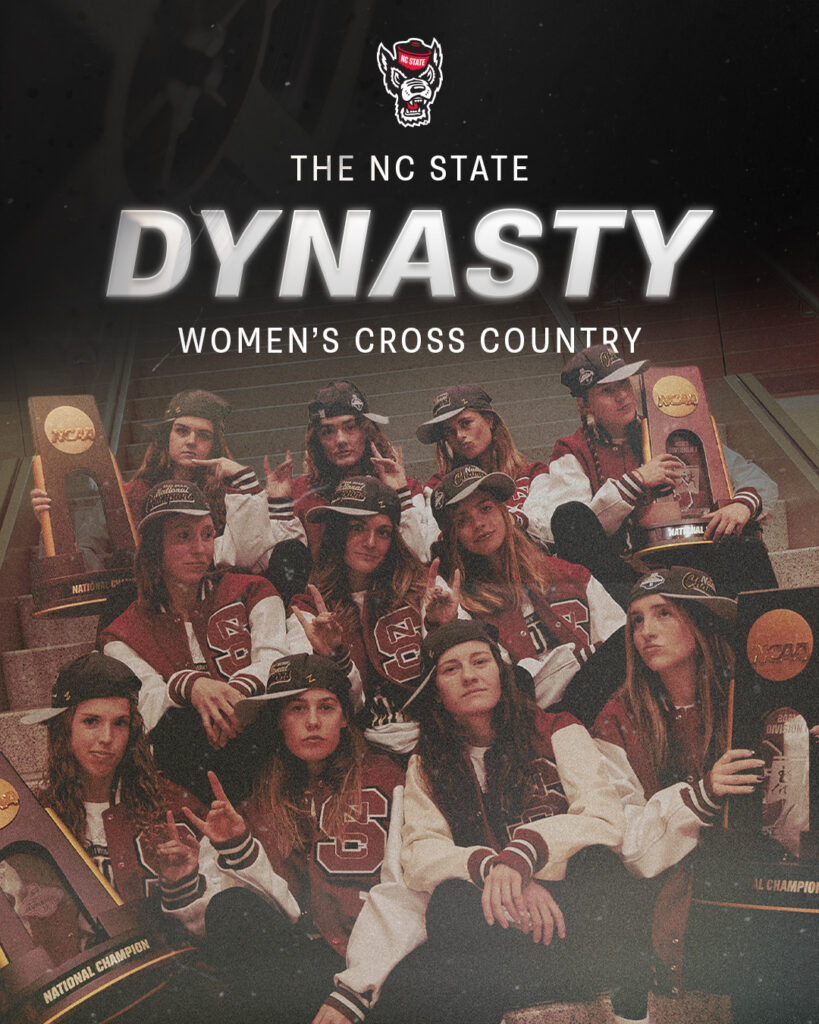
Generational, family-oriented culture has yielded 4 NCAA championships in 5 seasons
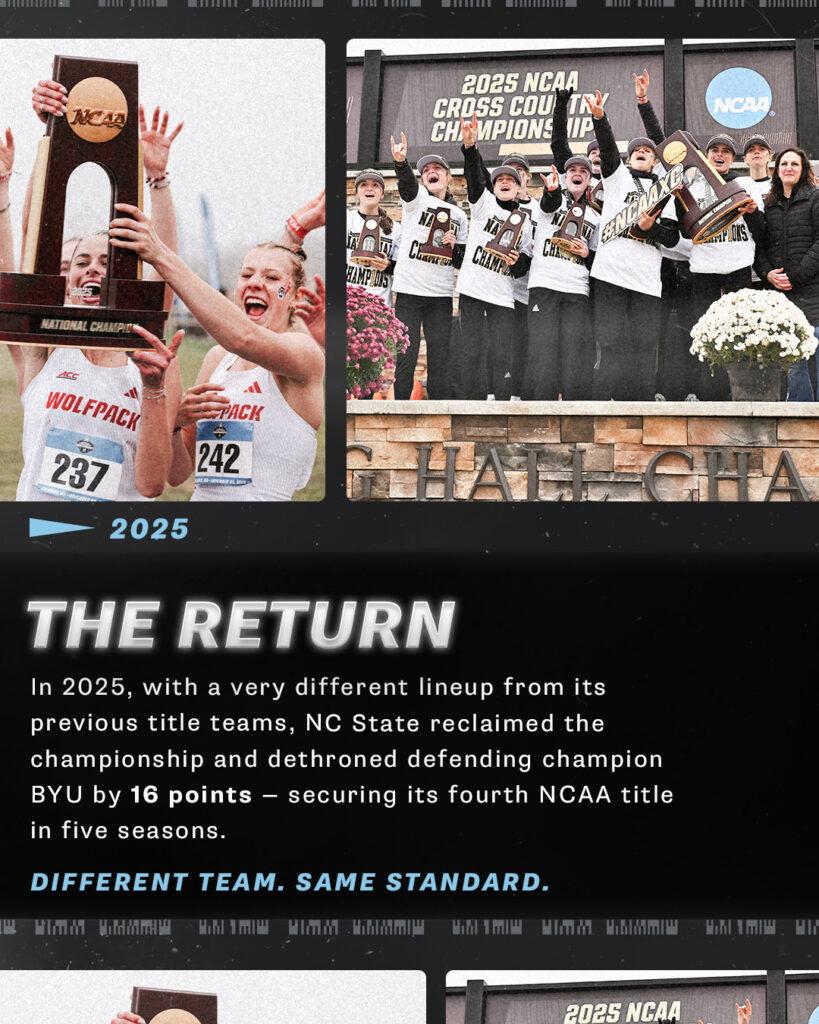
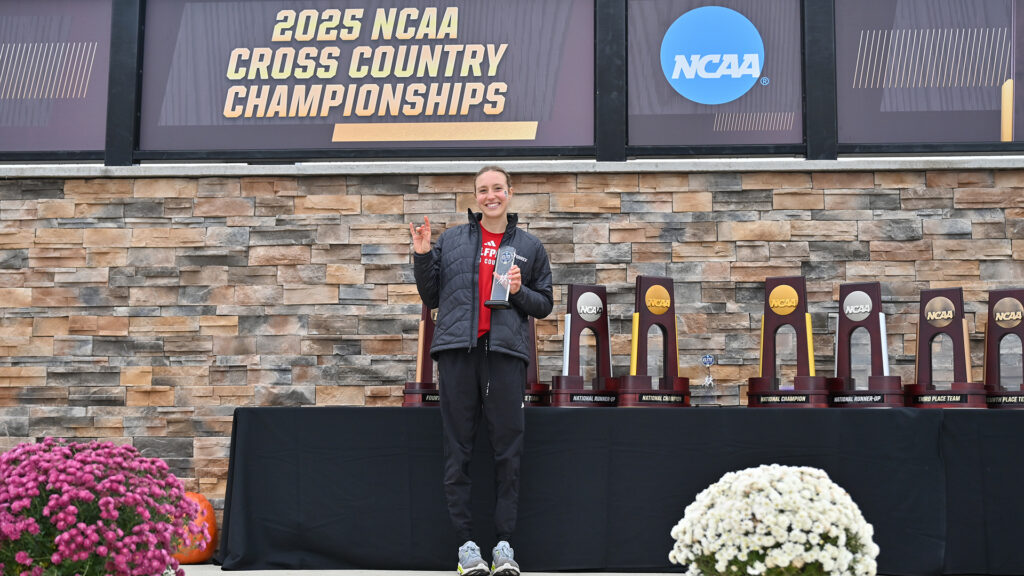
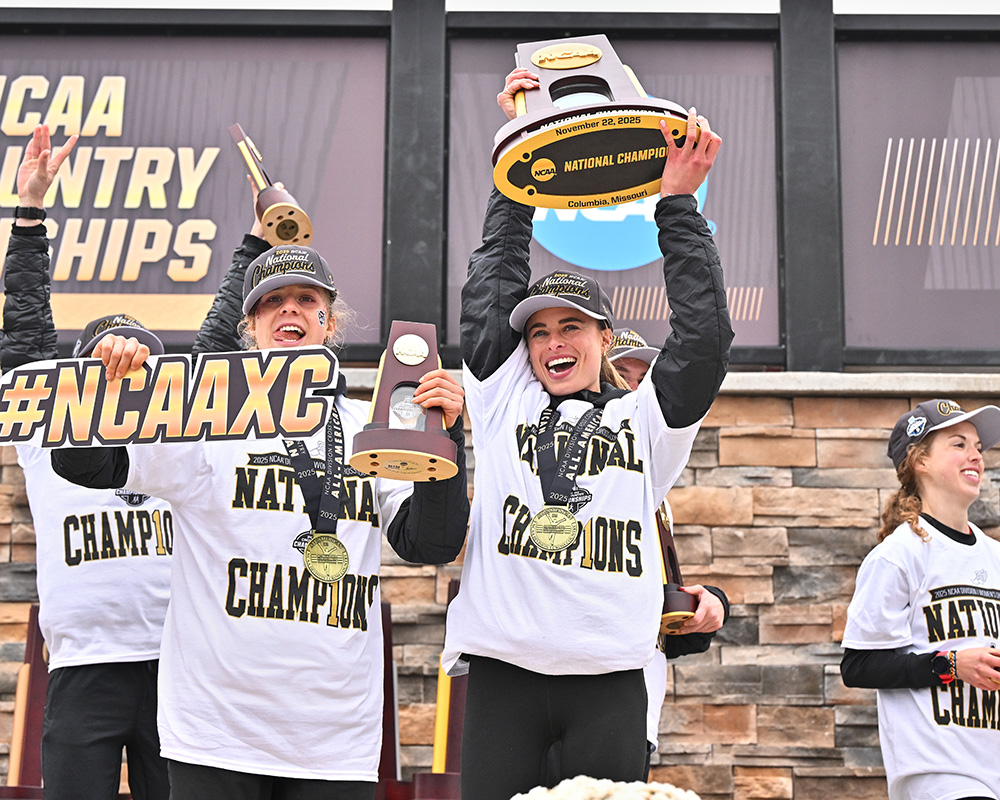
On a 45-degree, damp and misty November morning in Columbia, Missouri, Hannah Gapes and Grace Hartman crossed the finish line at the 2025 NCAA Division I Women’s Cross Country Championships.
The NC State runners placed fifth and sixth overall, earning All-America honors. The pair were ushered aside to catch their breath and cheer on the rest of the Wolfpack in the field.
One by one, their teammates came through. When freshman Sadie Engelhardt crossed, the realization settled in: NC State had won again, its fourth NCAA championship in five seasons.
While the hardware is a reflection of the program’s recent dominance, these victories are a culmination of something deeper. These NC State teammates became sisters, their coaches became lifelong mentors, and generations of athletes fostered an environment strong enough to endure long after they graduated.
The numbers tell part of this story; the people tell the rest.
NC State by the numbers since 2021
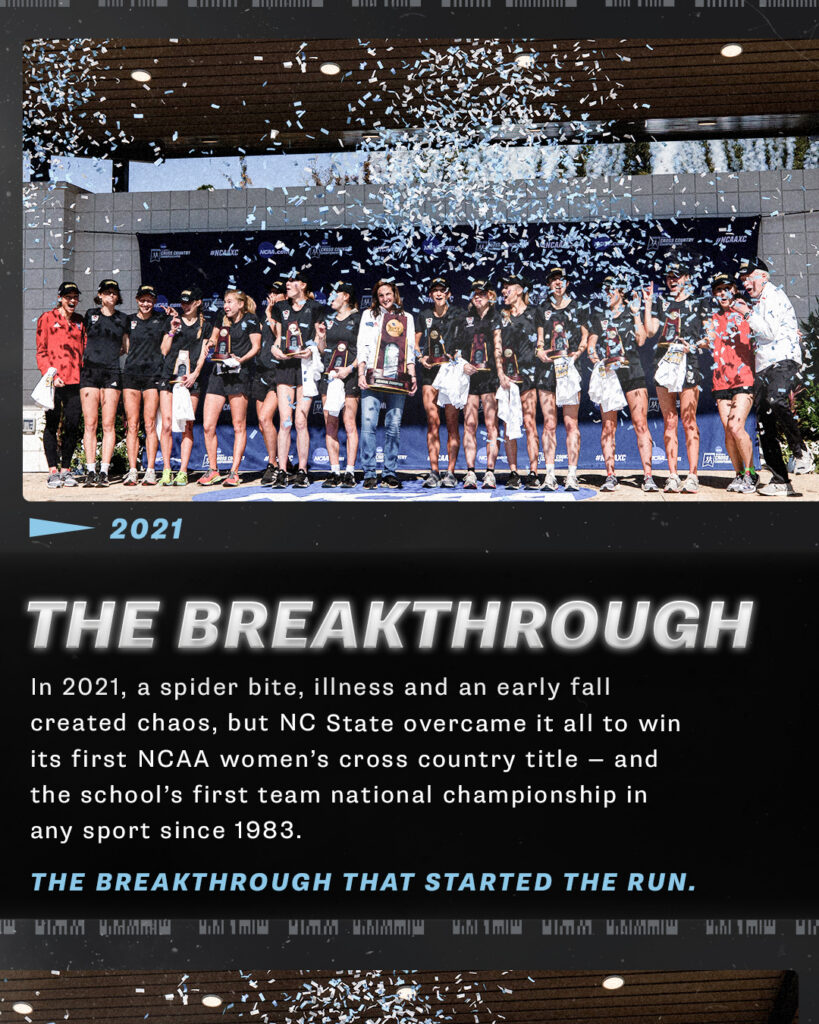
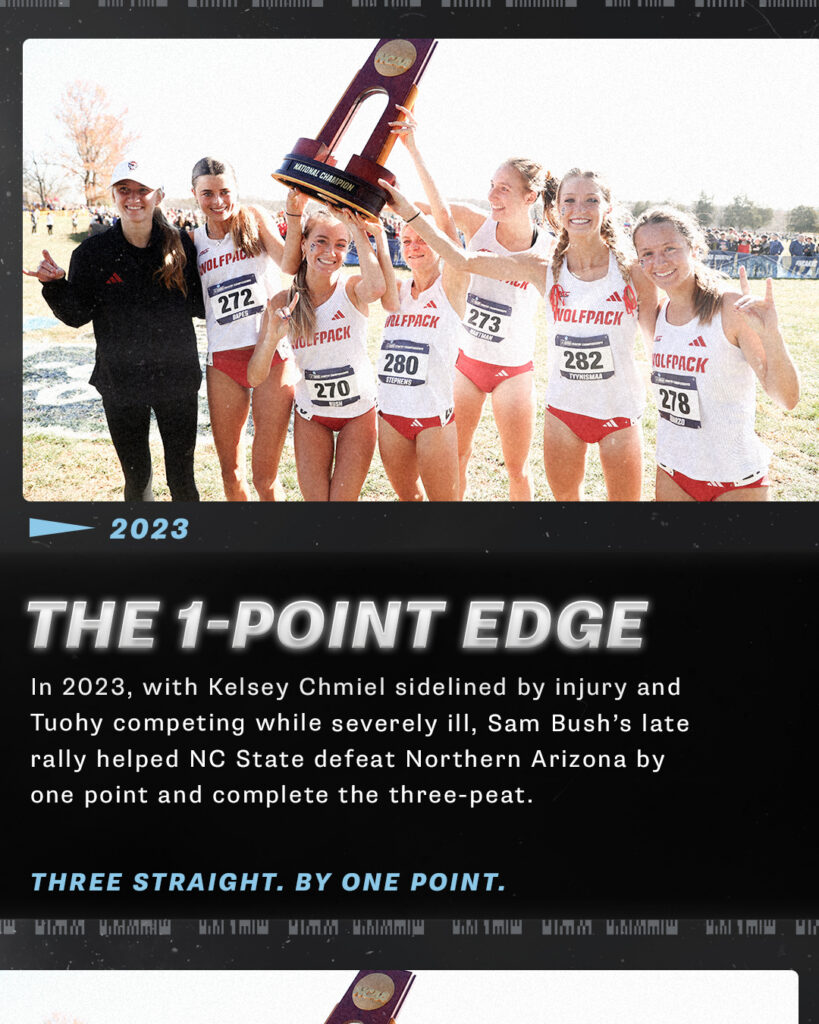
- 4 NCAA Division I Women’s Cross Country Championships (2021, 2022, 2023, 2025).
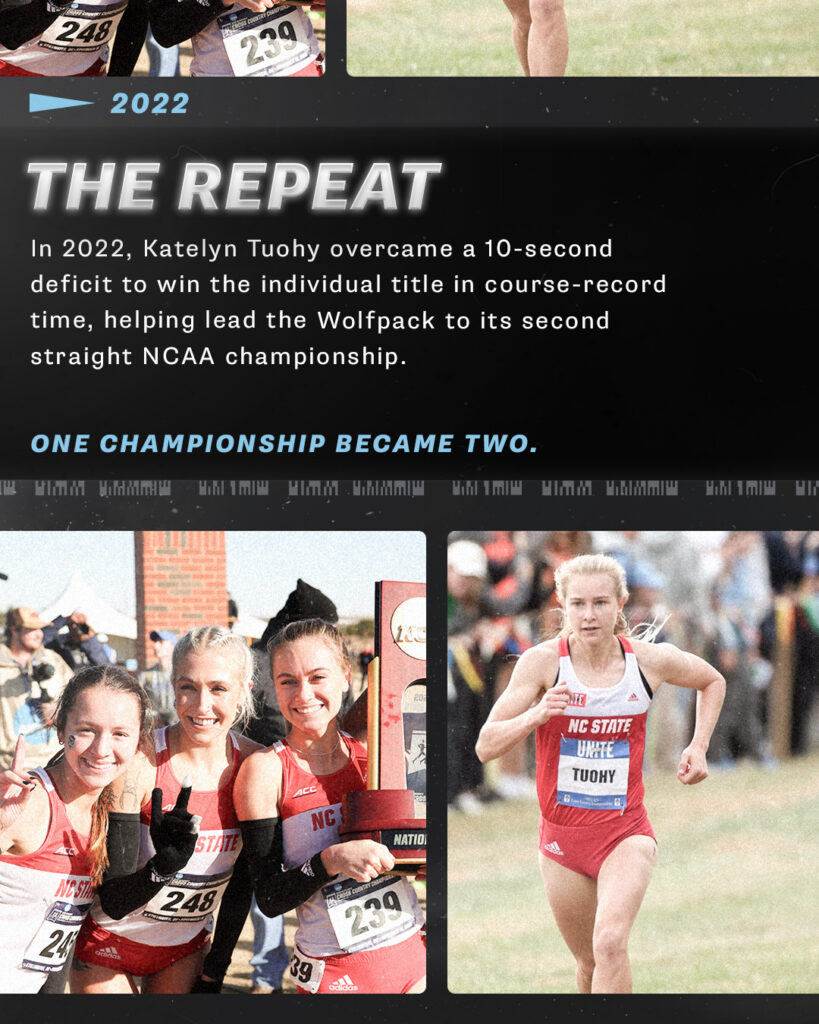
- 1 NCAA individual cross country champion (Katelyn Tuohy, 2022).
- 1 U.S. Track & Field and Cross Country Coaches Association Division I Women’s Cross Country National Athlete of the Year (Tuohy, 2022).
- 18 All-America honors.
- 5 NCAA Southeast regional titles (2021, 2022, 2023, 2024, 2025).
- 4 Atlantic Coast Conference championships (2021, 2022, 2023, 2025).
- 5 consecutive ACC individual champions.
- 4 Coach of the Year selections for Laurie Henes.
Since the first championship in 1981, only three Division I women’s cross country programs have achieved the benchmark of winning at least four titles in five seasons. Villanova from 1989 to 1994 won six straight, and Stanford won four of five from 2003 to 2007.
NC State could extend this streak at the 2026 championships on Saturday, Nov. 21, at the LaVern Gibson Championship Course in Terre Haute, Indiana.
How the culture works
The program’s identity has remained recognizable from generation to generation, one season to the next.
“Whatever we’re doing, we’re doing this for the program,” head coach Laurie Henes said. “Not just this year’s team and not just for the people who ran, but everyone on the roster and then everyone that came before you and after.”
NC State runners understand they aren’t simply joining a team; they’re entering an established program that existed long before them and is expected to endure after them. The Wolfpack’s standards are learned through experience and reinforced by accountability on a team that is purposefully designed to operate without designated captains.
Freshmen bring in new perspectives and challenge the status quo. Upperclassmen lead through their preparation, recovery and response when things get difficult. Athletes who aren’t on the starting line still push those five who score.
John Abbatoy, strength and conditioning coach, has regularly seen this play out in the weight room, where leadership occurs without title.
“No one is left behind,” Abbatoy said. “They’re lifting each other up. It’s upperclassmen lifting up freshmen, and freshmen helping to push the upperclassmen. The transfers come in and feel like family right away.”
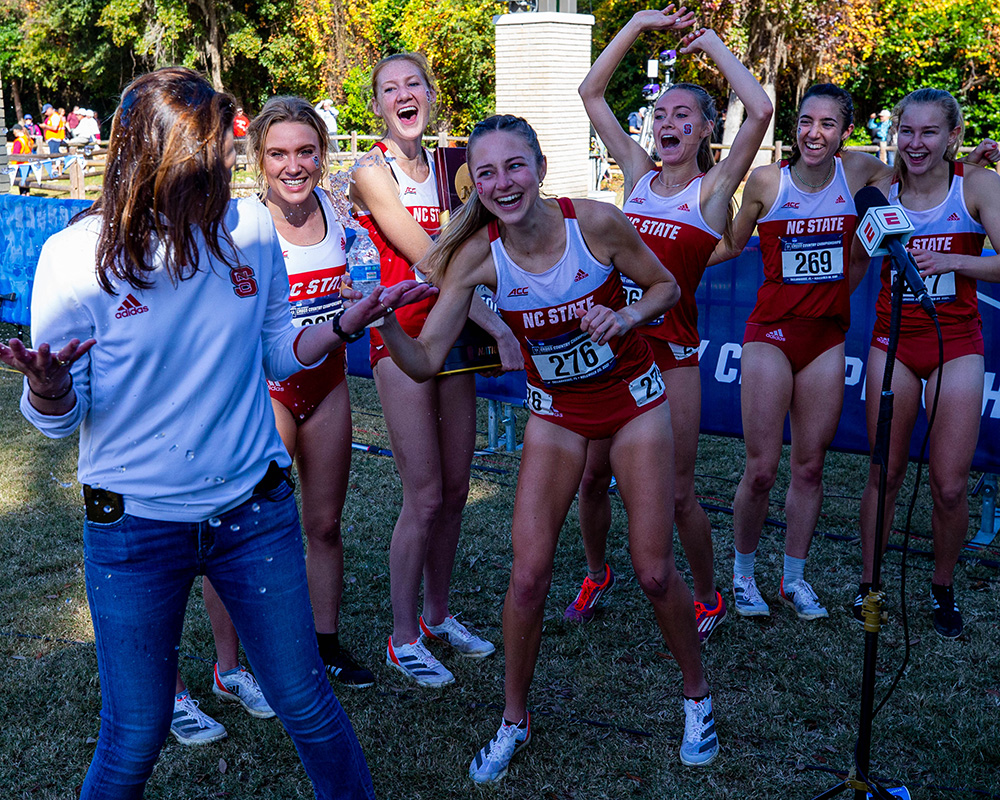
He has experienced athletes helping freshmen adjust and learn unfamiliar movements, heard teammates cheering one another through difficult workouts, and watched late-night sessions turn into dance-offs between reps.
Senior Angelina Napoleon thinks this balance would probably surprise outsiders.
“I think people would be a bit surprised on how we roll with practice,” she said. “It is serious when it needs to be serious. We know when to lock in and what we need to do. But we also know when we can joke, smile, have fun and relax. I think that balance within this program is unique.”
These experiences reinforce the habits NC State exhibits on the course: Be attuned to the person beside you, finish strong and strengthen the group through individual improvement.
“With each lift session, there’s an opportunity for them to coach each other up,” Abbatoy said. “I think it builds that relationship faster and can give everyone a little bit more confidence to know that we’re all looking out for each other.”
The same behavior appears on the course. Elly Henes, a former NC State runner and Laurie Henes’ daughter, recalls her mother telling runners to “find their pack.” Once the race begins, the Wolfpack runners work to find one another ー a racing strategy rooted in trust and a literal expression of the program’s identity.
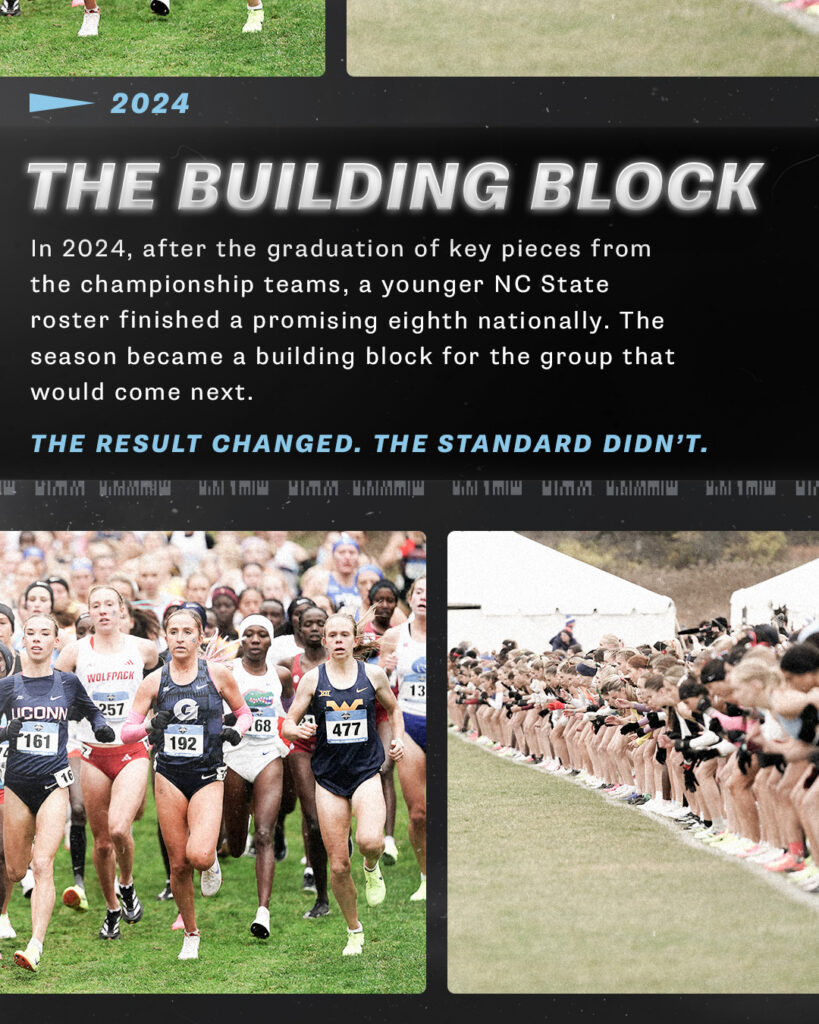
After completing the three-peat from 2021-2023, the Wolfpack entered the 2024 season with a more youthful roster. With the departures of All-Americans Kelsey Chmiel and Sam Bush and 2022 individual champion Katelyn Tuohy, NC State finished eighth at the 2024 NCAA championships that year.
Inside the program, that 2024 season is noted as a developing year. From Abbatoy’s perspective, the development of confidence was the real winning result.
“The finish, the standing aside, that was a huge year just for the confidence of our younger athletes,” he said. “They developed into the women to continue to drive the level of excellence that we’ve established. You reflect back and look at all the positives from this, look at how we did. People were counting us out, and this is what we were able to accomplish.”
NC State’s return to the top of the podium in 2025 wasn’t a re-creation of its previous title teams, as it included only nine runners who were also on the 2023 roster. Only two athletes on the 2025 roster competed for the 2023 title: Hartman, the final scorer for the 2023 championship, and Gapes, who finished just outside scoring position that year.
The 2024 year was the development of a group capable of achieving the same result. The roster looked different, but the responsibility toward one another remained.
“Talent can only bring you so far. I feel like culture is the bricks to it,” Gapes said.
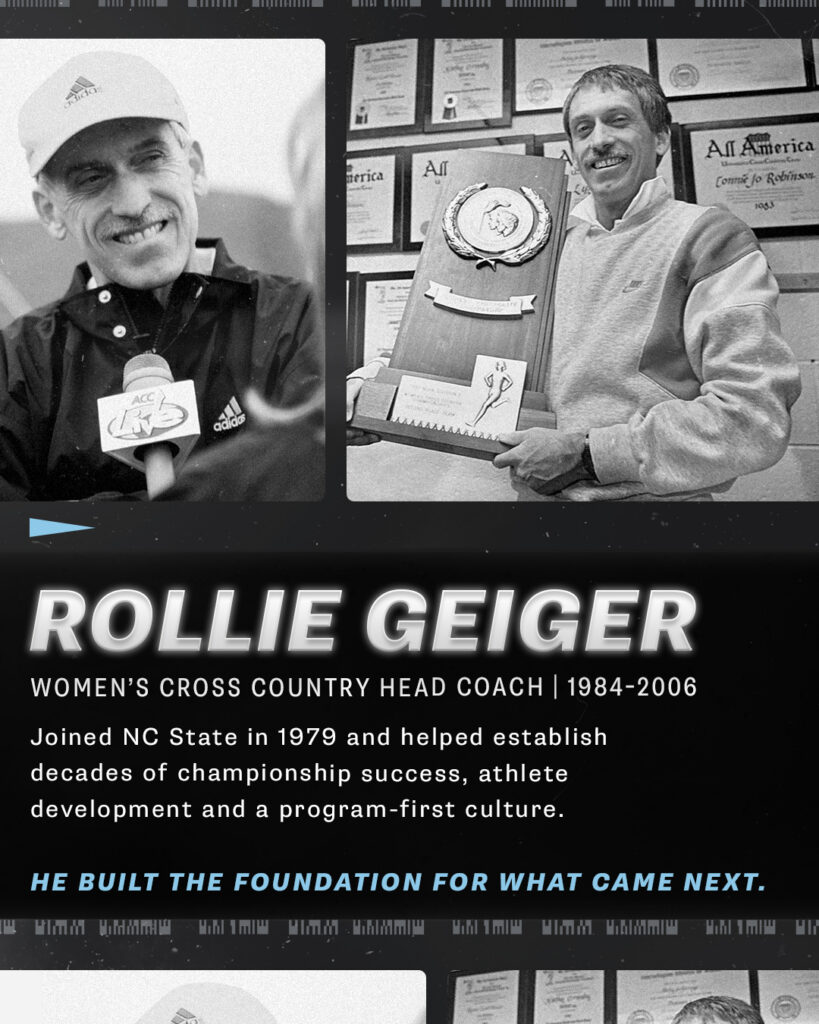
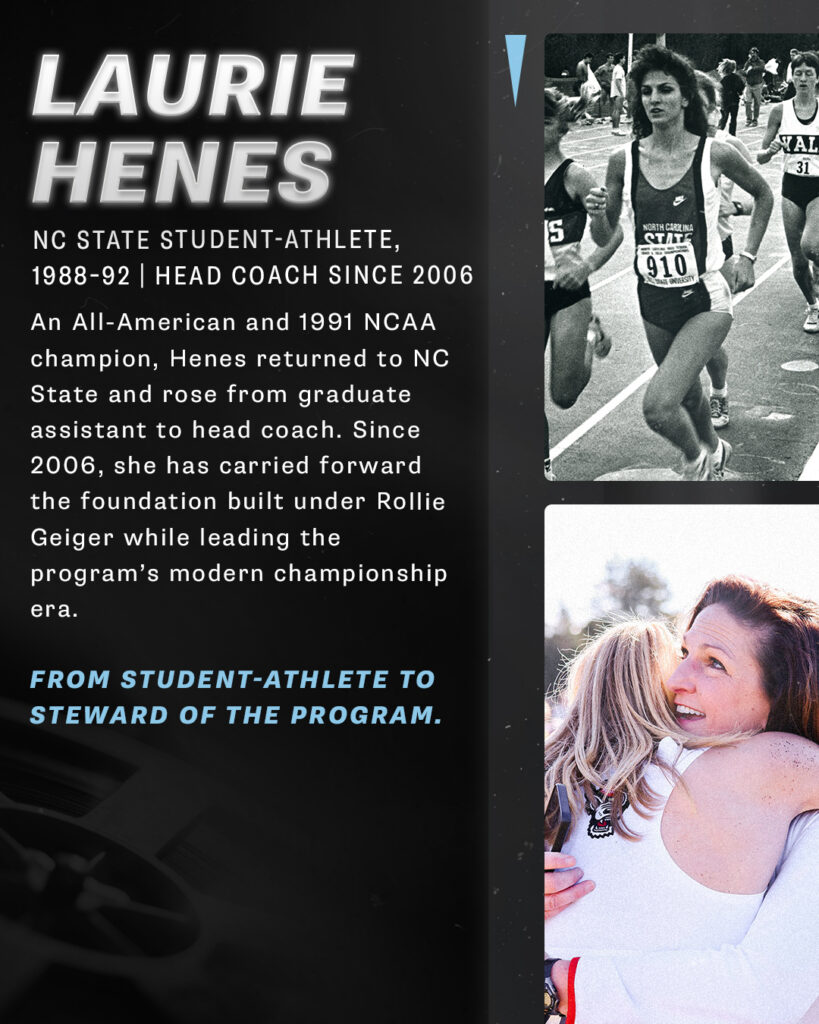
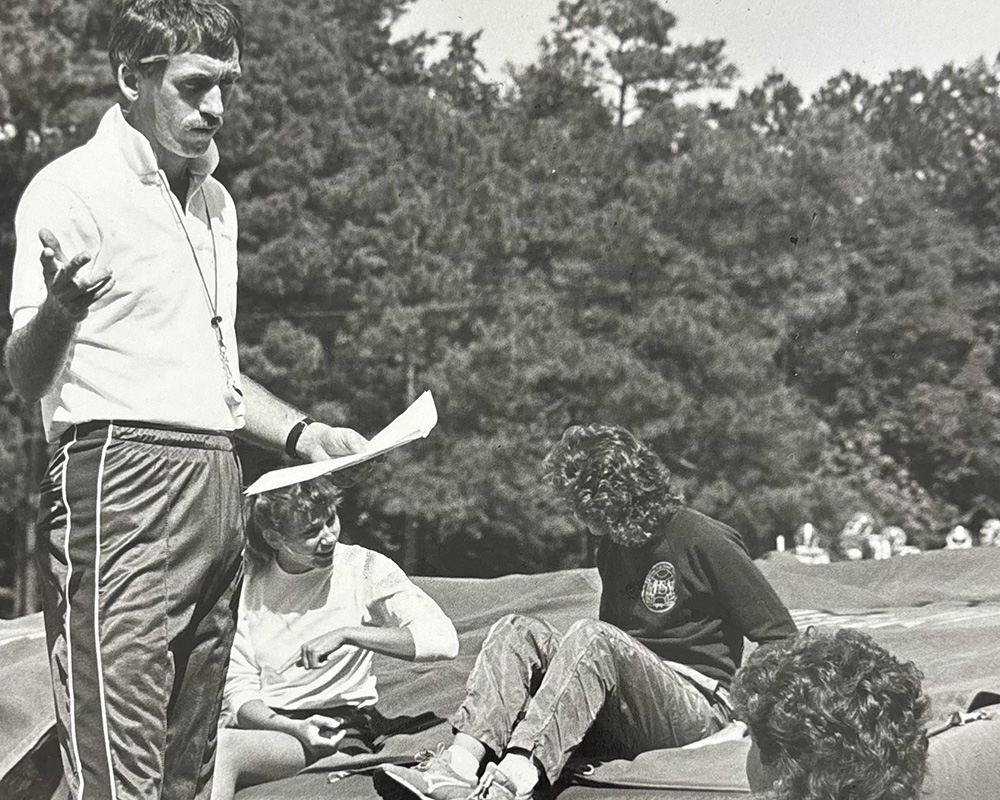
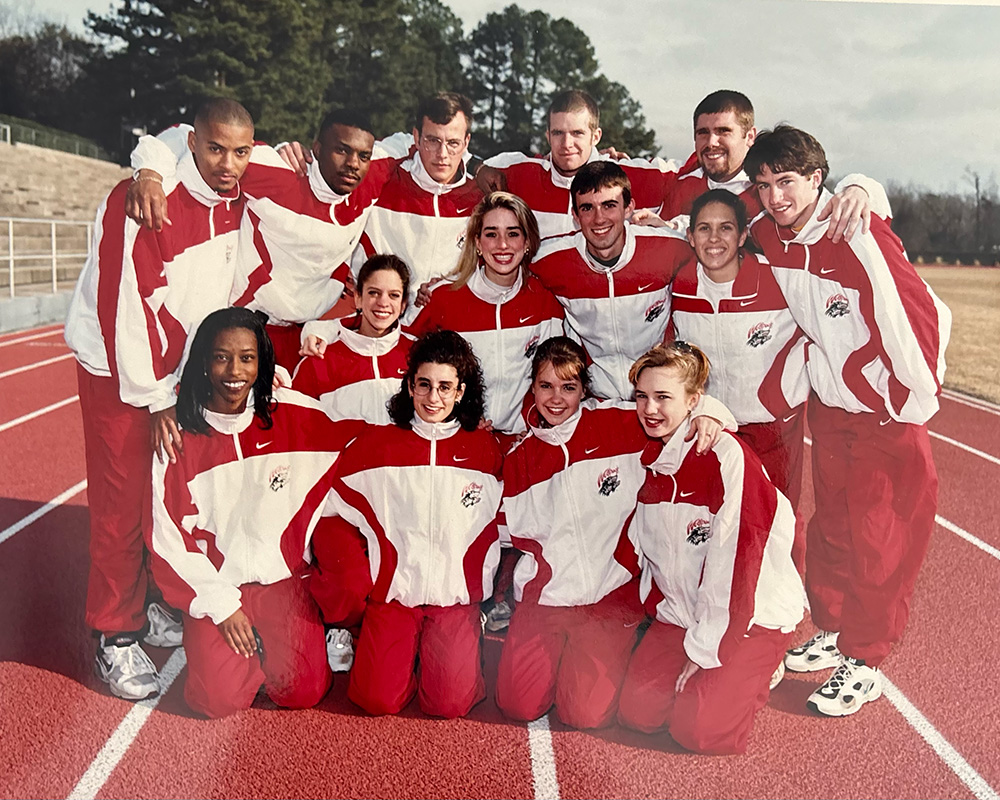
That culture predates the current title run. Laurie Henes first experienced it as an NC State runner from 1988 to 1992 under longtime coach Rollie Geiger, now the senior associate director of track and field and cross country for the Wolfpack.
Geiger laid the foundation. Henes competed within it, then expanded it and led the modern-day version of it.
The foundation
Coach Geiger recruited Henes from her home state of Ohio.
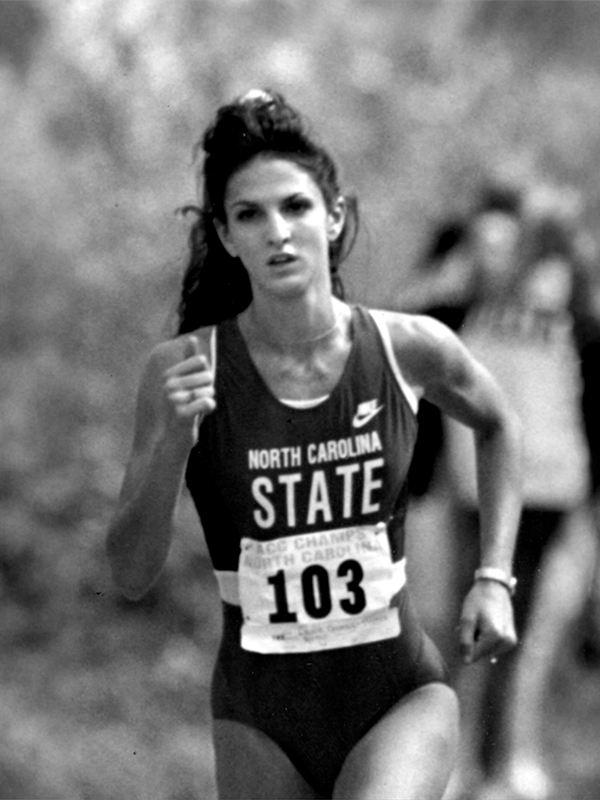
“When I chose to come here, we were ranked preseason No. 1,” Henes said. “I figured that coach Geiger would be here for the next four years. I didn’t know it would be the next 40!”
Geiger recalls Henes’ recruitment as straightforward.
“She was one of the top two or three athletes in the country at the time,” he said. “So her athleticism wasn’t difficult to figure out, but what I didn’t know about was her leadership skills. Those became very evident over the years, though.”
Geiger helped develop Henes into an All-America runner and the 1991 NCAA outdoor track and field individual champion in the 5,000 meters. Henes competed professionally and eventually returned to NC State. She worked her way up through the coaching ranks, from graduate assistant to assistant coach and then head coach.
Henes became the third head coach in program history in 2006 as Geiger transitioned to leading the men’s team. But this wasn’t a handoff; it was a continuation. Henes would be building upon Geiger’s approach to training runners and his commitment to knowing the human behind every performance.
Geiger can still see the athlete he coached in the way Henes leads practice.
“When there’s practice, there’s a lot of women that will be having a good time prior,” he said. “And when Laurie comes down, the atmosphere becomes laser-focused. It’s that leadership quality. It’s hard to put into words, but she has that quality for sure.”
The program’s history matters during recruiting.
“The consistency with coach Henes drew me into this program,” Engelhardt said. “Having gone to NC State herself and coach Geiger was her coach, it is all just very deeply rooted. So I think it makes all of us proud to represent them, as well.”
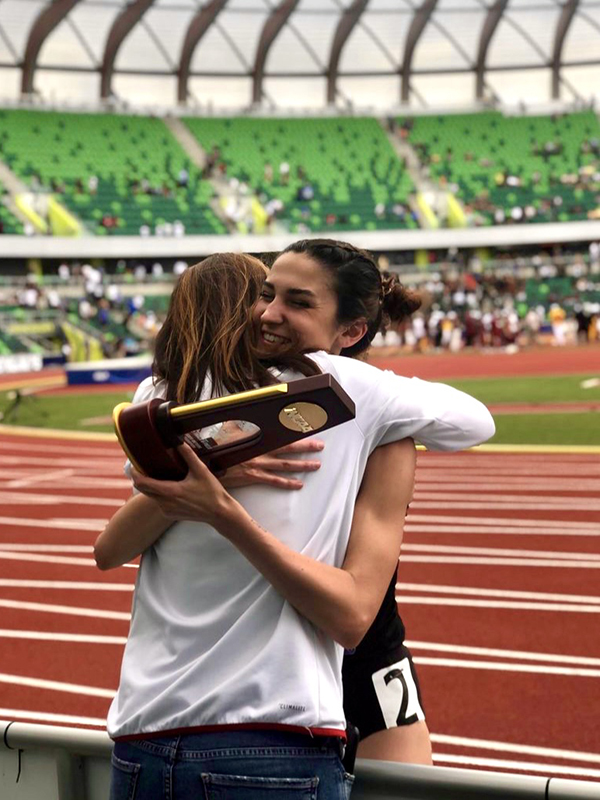
That consistency carries over into NC State’s track and field program, where Henes has been the head women’s coach since 2019 and men’s coach since 2023. This foundation also set the stage for a meaningful moment for the Henes family. At Hayward Field in Eugene, Oregon, in 2021, exactly 30 years after Henes won her individual title in the 5,000 meters, her daughter, Elly, won the very same event on the same track. Elly knew that her mom and coach had won this national title, but she didn’t understand the significance until she captured her own.
Geiger witnessed both championships, first as Laurie’s head coach and then as a mentor watching his former athlete’s daughter race to victory on the national stage.
“When her daughter won and she’s taking that victory lap, what do you think I did? I cried, oh man, I cried,” Geiger said. “They’re hugging each other, Laurie and her daughter. It was truly just amazing.”
One track, one event, two champions, and three members of the pack representing visibly the foundation that defines NC State.
“We, NC State, are very fortunate to have Laurie at the helm of this program,” Geiger said. “The championships are extra. It is the relationships that you have and seeing the progress, then the joy. Seeing the joy of an athlete having success, that’s to me why as coaches we do what we do.”
More than the seven on the starting line
Athletes have joined the Wolfpack from New Zealand, California, New York, Massachusetts and beyond, which requires more than just adjusting to new training methods and rigorous coursework.
Yet for so many of them, the program quickly felt like home.
That was the experience of Engelhardt, who joined NC State from California ahead of the 2025 championship season. Despite the distance from her family, she found herself surrounded by teammates and staff members who made the transition feel natural.
“I don’t think I felt homesick once last year because you do feel that family culture,” she said. She continued, with a smile, “It is pretty hard to get a group of women who are all pretty similar to get along.”
Only seven runners compete for their team at the NCAA championships, and five determine the final score. NC State teaches all those on the roster to see themselves in that final result, too.
This is something that Napoleon didn’t fully understand nor embrace at first. Initially, her perspective was that the national championship belonged primarily to those on the starting line. But her teammates challenged her on that thought process. That change came from eight simple words that she heard after the 2023 national title and now shares with her teammates: “You guys are the reason we won, too.”
That includes injured runners who stay engaged, nonscorers who raise the level of practice and reserves whose names may never be called to contribute points.
“Everybody on the team belongs,” Gapes said. “We could not do what we do without the 25-30 people on the roster, and just because you’re not in the top five doesn’t mean a thing.”
The championship years
Each season brings its own set of challenges or obstacles to overcome, and NC State wants to showcase that championships aren’t picture-perfect moments. Each roster responds to its own specific set of circumstances and pursues a new opportunity.
“We’re not defending anything,” she said. “We’re really stuck on that because if you start playing defensively or thinking about last year, it’s not going to work.”
The unpredictability of the sport is a reinforcing element of one of coach Henes’ lessons, that success doesn’t require everything to perfectly align.
“You can’t try to make everything perfect,” she said. “That’s not going to happen, not in anything in life. You just have to focus on making the next best choice in that moment and doing what you need to do.”
Excellence beyond the course
The academic résumé for the NC State women’s cross country team in the past five years is as accomplished as its championship record.
- 4 USTFCCCA National Scholar Team of the Year honors (2021, 2022, 2023, 2025).
- 5 consecutive USTFCCCA All-Academic Team selections.
- 5 consecutive ACC Women’s Cross Country Scholar-Athlete of the Year honors.
- 1 back-to-back NCAA Elite Scholar-Athlete (Hartman, 2024 indoor track and field and 2025 cross country).
- 1 College Sports Communicators Academic All-American (Chmiel).
- 40+ All-ACC Academic selections.
- 29 USTFCCA All-Academic honorees.
Academics and running aren’t competing standards within this program. They are the program’s core values coming to life, preparing women for life after their final race and letting them have fun while doing it.
That commitment follows the team everywhere. The runners bring textbooks on road trips, work during flight delays and complete assignments in hotels. Jody Moylon, associate director of student-athlete tutorial services, helps ensure there is time built into their schedules to manage demanding majors, competition travel, and communication with professors, advisors and coaches.
The results reflect that support. NC State earned 2025 National Scholar Team of the Year honors with a 3.60 team grade-point average. The team had five USTFCCCA All-Academic athletes, including Hartman. The graduate student is a two-time NCAA Elite Scholar-Athlete Award winner, the 2024 ACC Scholar-Athlete of the Year and a 2025 NCAA Woman of the Year top 30 honoree who is pursuing a career as a therapist.
Moylon and Henes remind the team that high achievement does not require perfection.
“This is a safe space,” Moylon said. “This is a space where we do not expect you to be perfect.”
That support allows the runners to ask for help, hold one another accountable and find room for something else that defines the Wolfpack experience: having fun together
Fun as a competitive advantage
For NC State, fun is not a reward saved for after winning. It helps create the friendships that produce trust, accountability and performance.
“My favorite memories aren’t winning races or setting records,” Tuohy said. “It’s truly goofing around with my teammates and having inside jokes.”
Despite the high expectations, they danced before races, gathered for game nights, lingered over brunch after long runs and stayed at team dinners until restaurants began closing. Trips to lake houses and hours spent traveling together created inside jokes that rarely made it beyond the team.
“I love for them to be having fun at the same time,” Abbatoy said. “Let’s be serious because we’re putting in work, but let’s also enjoy what we’re doing.”
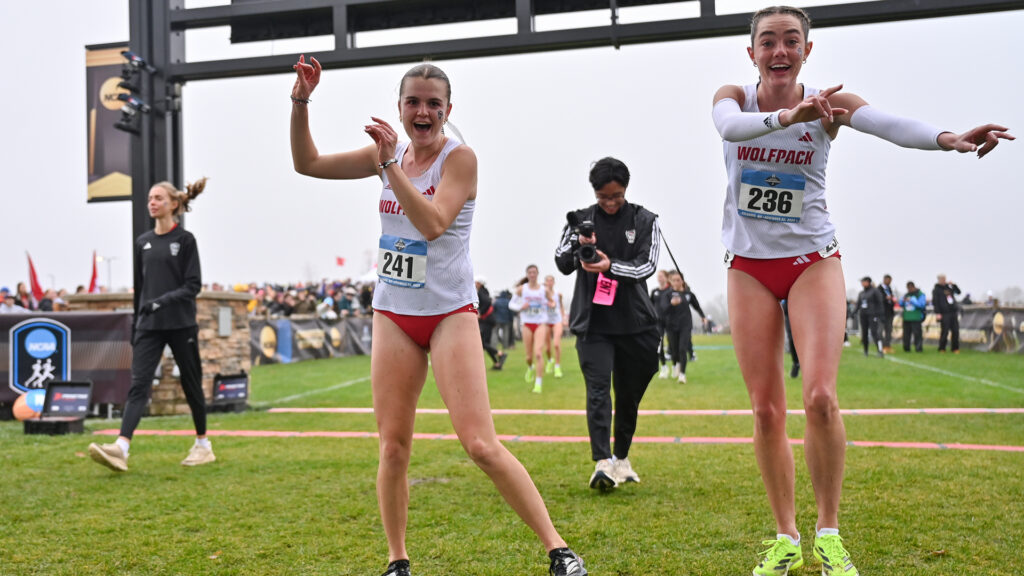
Coach Henes hopes that joy becomes part of how her runners remember the team, that regardless of the injuries, illnesses, difficult races and the rigorous demands of their academics, the pressure didn’t define their experiences.
“I think that it’s so important in this sport that can be really hard on an individual, is for them to have fun,” Henes said. “Because why are you doing this if it’s not?”
“I really hope that sense of community and friendship never leaves this team,” Engelhardt said. “And I don’t think it will because I think you can see how deeply rooted this program is.”
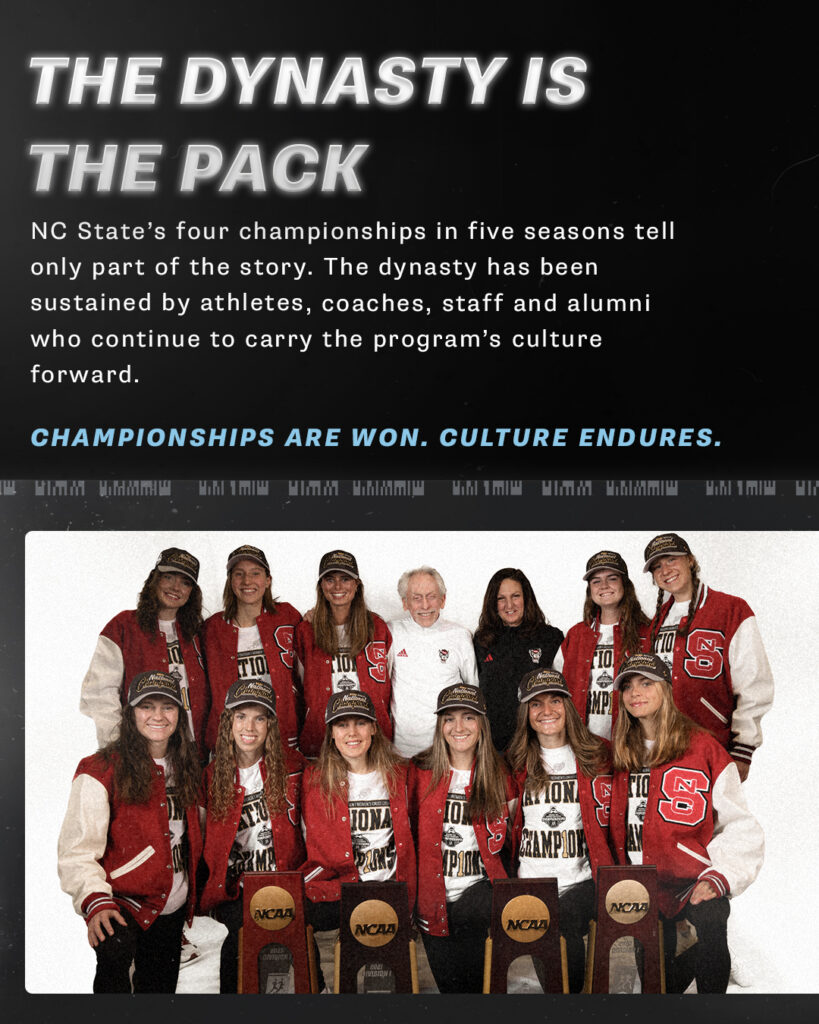
The dynasty is the pack
Behind each roster are support staff members whose work is integral in allowing these women to focus on training, academics and competition.
Director of Operations Jackie Brooks manages the daily details that keep the program moving. Abbatoy designs strength plans around mileage, individual development and competition schedules. Moylon helps athletes navigate their majors and professional goals. Athletic trainers, sport psychologists, academic advisers, assistant coaches and communications staff members address needs that fans don’t even know exist — like having extra spikes, securing forgotten uniforms, doing prerace taping and coordinating postrace interviews.
Elly Henes described the support as an interconnected system dependent on communication and trust. Cohesion allows athletes to trust not only the resources available to them but also the people providing them. She described access to sport psychology as part of regular athlete care rather than a resource reserved for moments of crisis.
“Seeing a sports psychologist is normalized by multiple people on the team,” Elly said. “It helps you understand that it is preventative care, like seeing your primary care provider. This is part of training. You’re training your mind as much as you’re training your body.”
Trust makes it easier for athletes to use those resources before small challenges become larger ones.
Tuohy gained a fuller appreciation for those resources after entering professional running. While in college, Tuohy and the team’s travel, buses, boarding passes and hotel keys were made available to them seamlessly. Each detail appeared simple because someone had already handled that complexity.
“There’s people behind the scenes that get that done,” Tuohy said. “So we gotta give them a big shoutout because we wouldn’t be here without them.”
Gratitude for those contributions is deliberately reinforced. Elly remembers coaches regularly asking athletes to recognize those working around them.
“My mom, coach Geiger and the support staff continuously say to make sure you thank this person. This person does a lot for you,” she said.
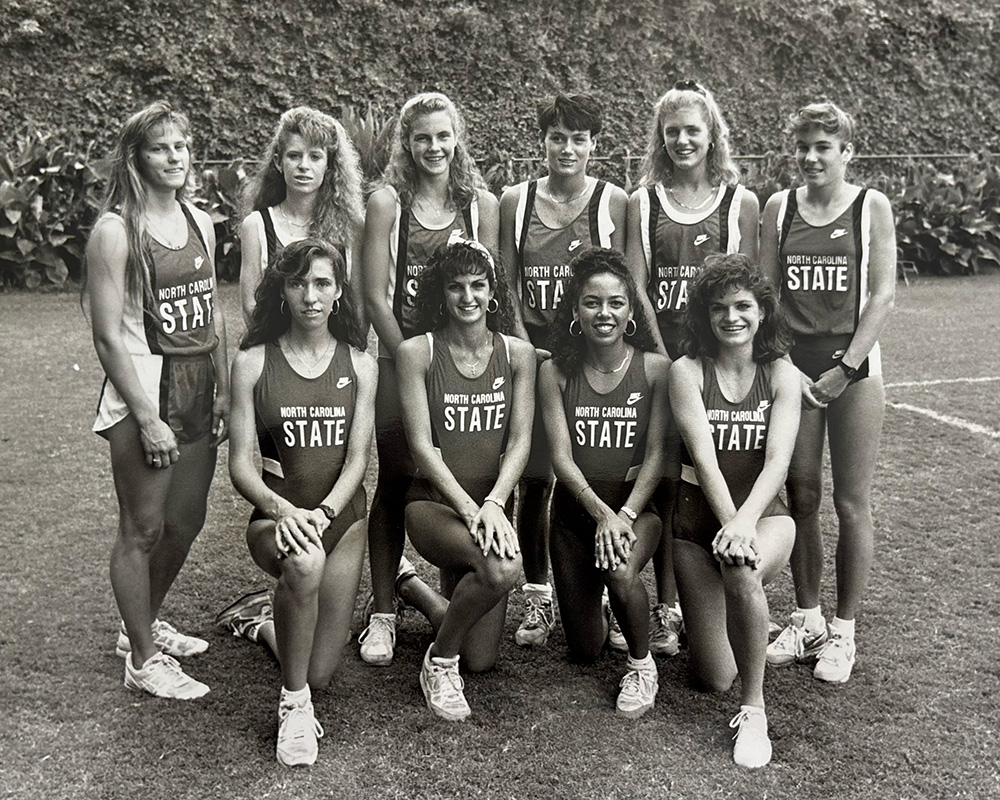
That gratitude helps explain why so many people remain connected. It is why alumni gather for watch parties, former teammates stand beside one another in weddings, graduates return as staff members, some continue training together, and others bring their families back around the program.
As coach Geiger jokingly put it, “What’s been said about the program is once you’re in, you can’t get out.”
NC State’s four championships in five seasons will remain forever etched in history. The Wolfpack’s All-Americans, individual champions and academic achievements will, too. But dynasties require everyone, and at NC State, the dynasty is the pack.
“This is so much more than the seven that line up, so much more,” Napoleon said. “If we show up to practice and there are only seven of us showing up every day, simply put, we won’t win a thing. It’s because of all of us, showing up every day. We are slapping hands, cheering each other on, making jokes, having fun, going to dinner and having game nights.”
Napoleon continued, “Seven of us can’t make that chemistry, but an entire program can.”
Love cross country? Stay up to date with cross country championship tickets and key dates throughout the season.