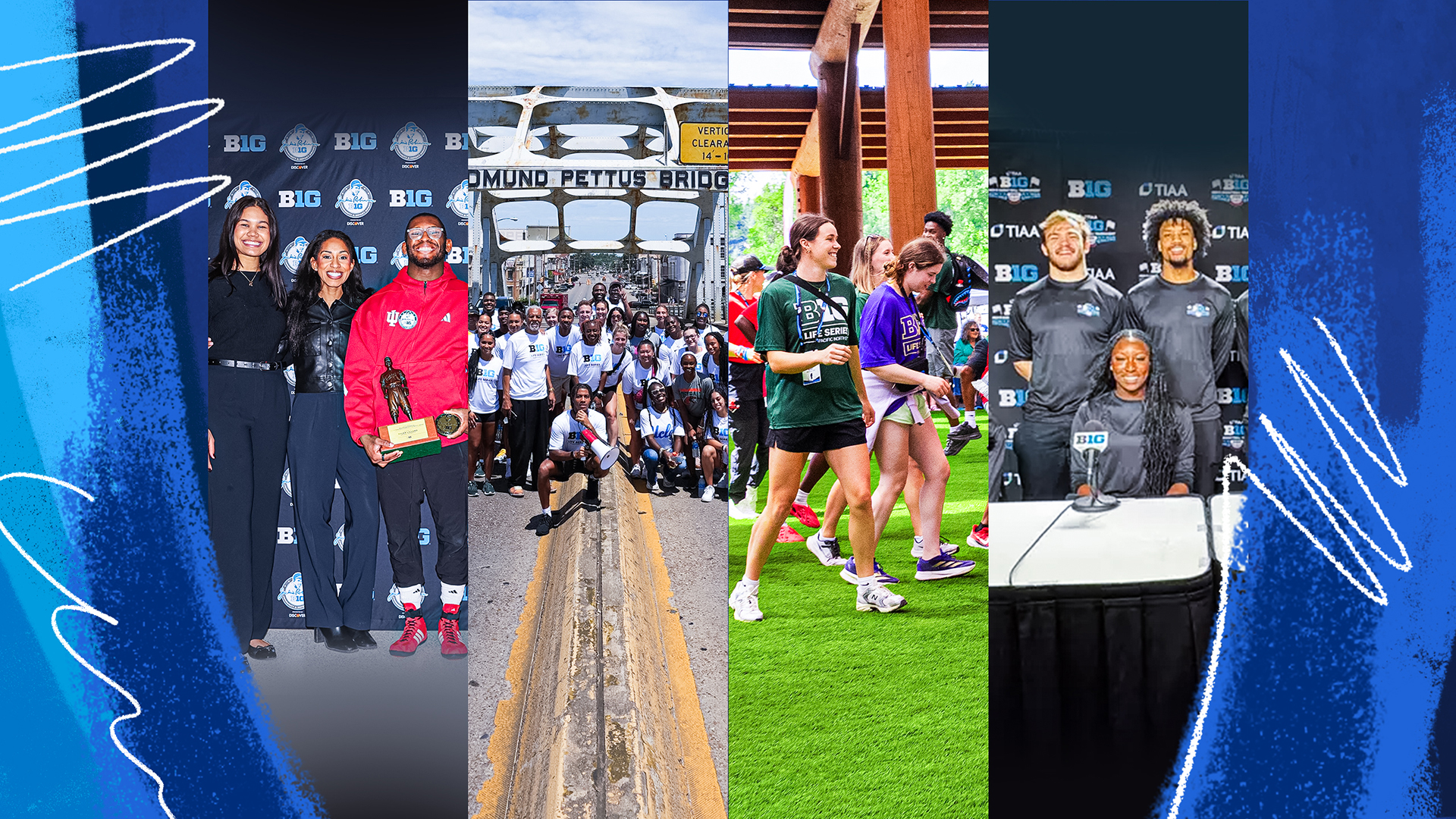
From career to cultural immersion, Big Ten Community & Impact team prepares student-athletes for life after sport
The Big Ten strives to be the best conference in the NCAA.
It has 18 teams from across the country with over 14,000 student-athletes. It boasts the most national championships in Division I college football. Including its West Coast additions, it has the most national championships across all NCAA sports.
But to Omar Brown, the Big Ten’s senior vice president of community and impact, “the best” encompasses more.
“As a conference, we owe it to our student-athletes to do everything we can to support them on and off the field,” he said. “You can’t just celebrate the accomplishments on the field and not help and prepare student-athletes for what comes when they’re done.”
Brown has received calls from student-athletes who attended his programs, asking for help. Their college or professional careers have ended. After being in silos of athletics, they are lost.
“It’s really pushed me. … There are so many that need support,” Brown said. “As a conference, we owe it to (our athletes). That’s part of being the best, right?”
When Brown created the Community & Impact Department over three years ago, he talked to student-athletes first. In the past, they wanted support on mental health, but recently, Brown said student-athletes want professional development.
“It is tough to get a job. … I don’t think the average person, number one, understands how much time is spent honing their craft. Which also means the average person doesn’t understand how many missed opportunities student-athletes have that every other student has,” Brown said.
Brown’s team is a small-but-mighty crew of three: himself, Associate Director Mya Perez and Coordinator Kennedi Orr. Both Perez and Orr were collegiate student-athletes, with Orr starting as a participant in a Big Ten-CBS program at the 2025 Big Ten Men’s Basketball Tournament and later earning an internship with the conference after her volleyball career at Nebraska finished.
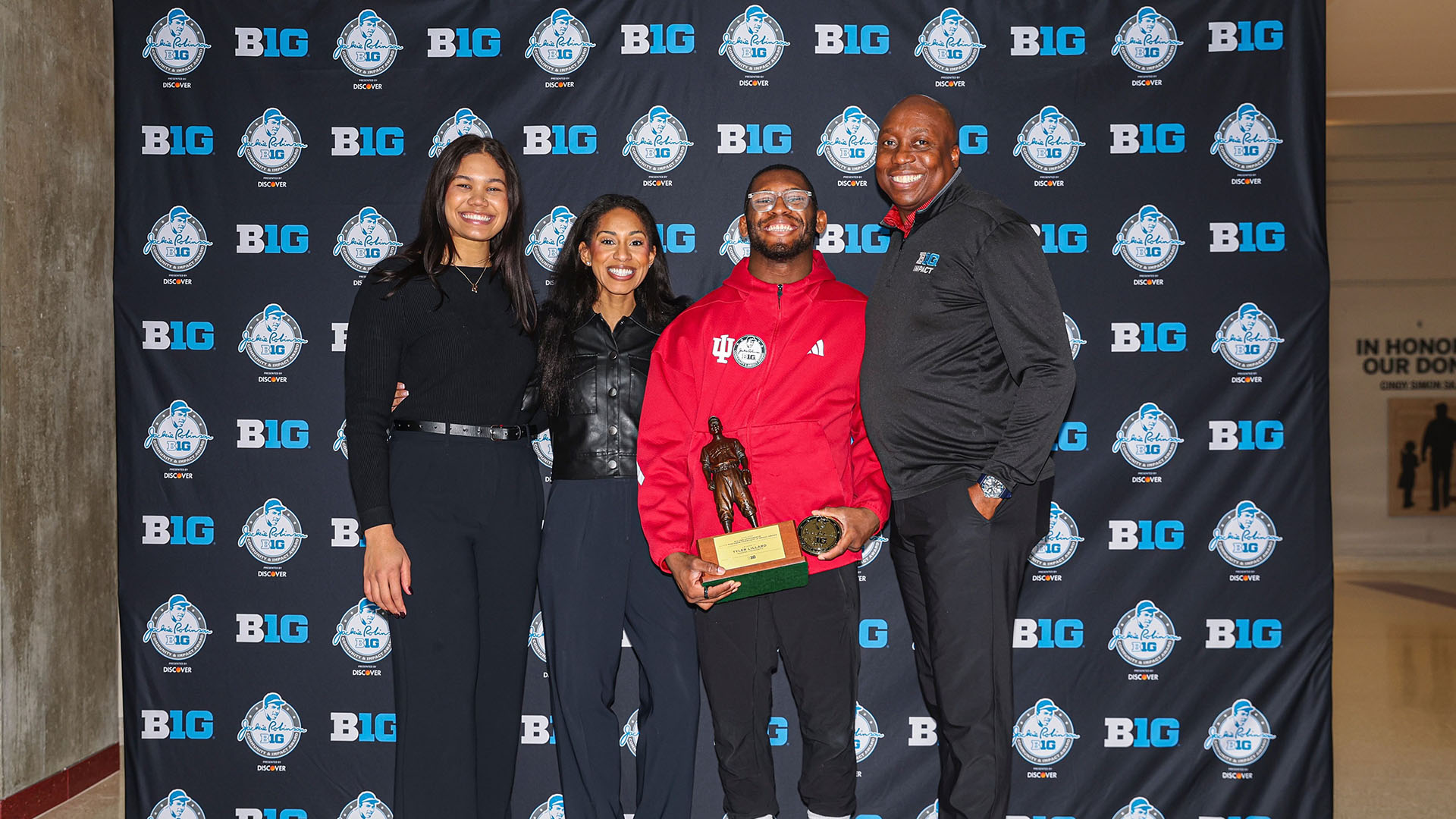
The Community & Impact team has worked to create resume-worthy programs, including the CBS program, where groups of 12-14 student-athletes interested in media production, journalism and broadcast shadowed CBS employees at the Big Ten volleyball and men’s and women’s basketball tournaments.
For Michigan State volleyball’s Malayah Long, the CBS program opened her eyes to the opportunity to stay involved in her sport.
“It was just the coolest experience, and we were able to have one-on-one conversations with each and every person,” she said.
One 45-minute conversation was with Tony Petitti, the commissioner of the Big Ten.
“He just was so vulnerable and talked to us about every question that we possibly had,” Long said. “It wasn’t like we were taking up all of his time, and it was just like, ‘Wow! This is just such a cool organization that we’re a part of.’”
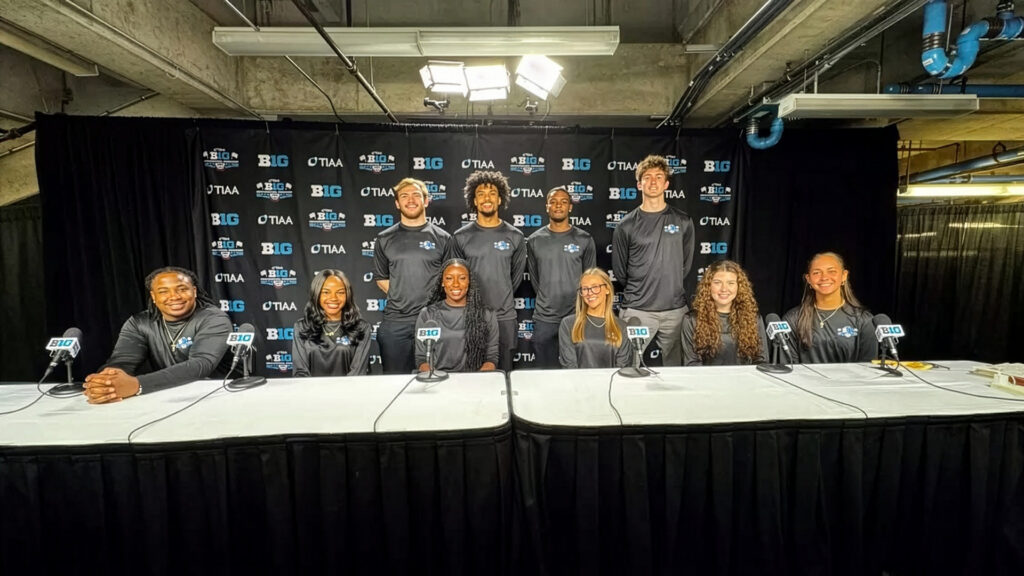
Another program, the Big Ten Student-Athlete Leadership Retreat, gathered five student-athletes from each university at the conference office in Chicago. Each day addressed versions of the athlete: future, current and past selves. Student-athletes met Big Ten alumni, heard from speakers and had a field day with Chicago youth.
Northwestern football’s Landon Lauter drove by the Big Ten office all his life, so attending the retreat at the conference office was a no-brainer.
“It showed the Big Ten has a bigger purpose and cares about each individual athlete,” Lauter said. “It’s super impactful and just makes you want to try even harder, knowing they actually care about you, not just your performance on the field.”
Lauter has attended multiple programs but had an “aha” moment listening to a speaker at the retreat.
“To hear about how everyone in college thinks they need to follow one specific career path and one ladder throughout their whole career, it showed there’s many ways to do it,” he said. “Let it come to you, and just there’s no normal.”
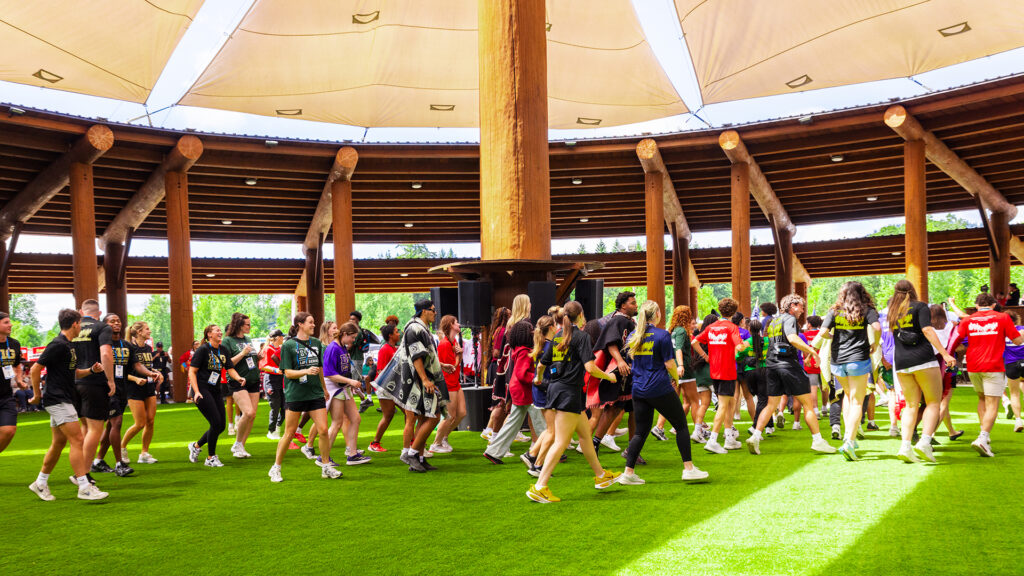
The Community & Impact team also leads the Big Life Series, immersive educational experiences that deepen student-athletes’ understanding of local history, regional heritage and civil rights. The series brings student-athletes to Montgomery and Selma, Alabama; Portland, Oregon; and rural Iowa, with cohorts of about 150 per series. In Alabama, student-athletes walked the Edmund Pettus Bridge and learned about the Civil Rights Movement. In Portland, the students engaged with cultural traditions at an Indigenous reservation, hiked to a 100-foot waterfall and learned about the Japanese Americans and Oregon Black Pioneers in the Pacific Northwest. In Iowa, they saw food production from farm to table, meeting with farmers to understand produce and agriculture.
Orr said sometimes the best measurement of success is silence.
“Walking out of that (Oregon Historical Society visit), it was quiet. I think that says more than hearing a bunch of chatter and words. We saw student-athletes really reflect on the information they’re hearing and being given.”
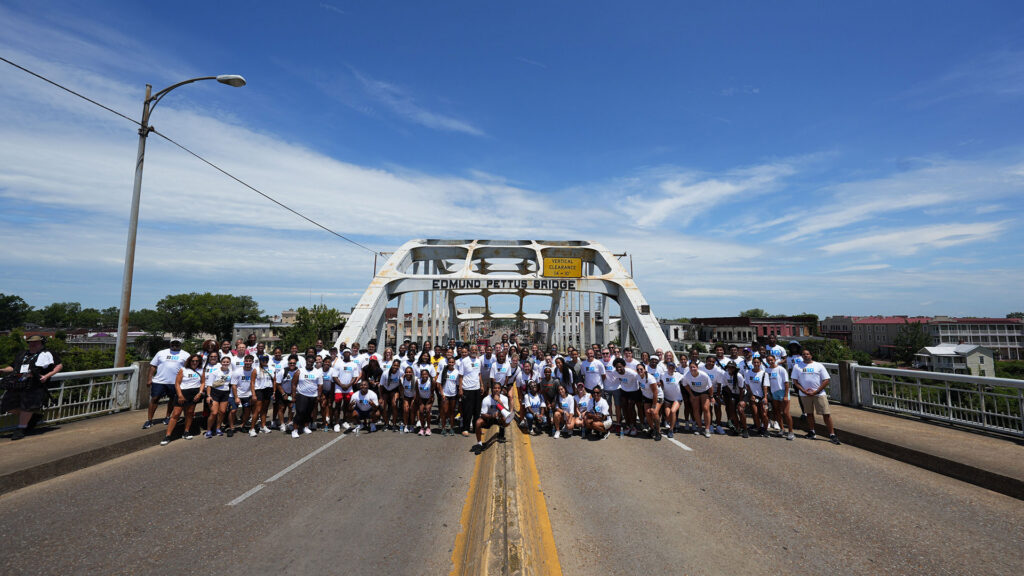
Rutgers football player DJ Allen experienced this silence as his cohort crossed the Edmund Pettus Bridge in Selma. The group started at a church, protesting and chanting “No Justice, No Peace” to mirror the Civil Rights Movement. But at some point, Allen noticed the quiet, too.
“It’s just crazy seeing history books compared to being there in person. It’s quiet in being peaceful, but also at the same time being unsettling,” Allen said. “It’s just a different feeling being able to be there where like those historical moments took place. … It didn’t feel real.”
The Community & Impact team views those moments as holistic development.
“Something that can get lost in the mix is identity and learning and understanding culture and community,” Orr said. “That’s what these trips really focus on. It’s highlighting the fact that there are so many different parts of student-athletes.”
The team finds smaller moments for involvement, too, like having Northwestern student-athletes volunteer at the Southeastern Conference-Big Ten volleyball matchup at Wrigley Field in Chicago. The crew puts student-athletes at the center, pivoting, adjusting and adding student-athlete involvement in everything they do.
The Big Ten’s budget is bigger than most conference offices. The Community & Impact team invests that budget back to the student-athletes. Brown, Perez and Orr pride themselves on being nimble to meet student-athletes’ needs today.
“Omar always says you don’t have dumb ideas. Maybe it’s not going to work out, but we’re going to try our best to make it work,” Orr said. “I think that’s where that innovation comes from.”
“We put our money where our mouth is,” Brown said.
This story is part of the NCAA’s Tomorrow’s Leaders, Today campaign, which showcases how the college sports experience helps student-athletes build the skills and character traits that contribute to lifelong success.