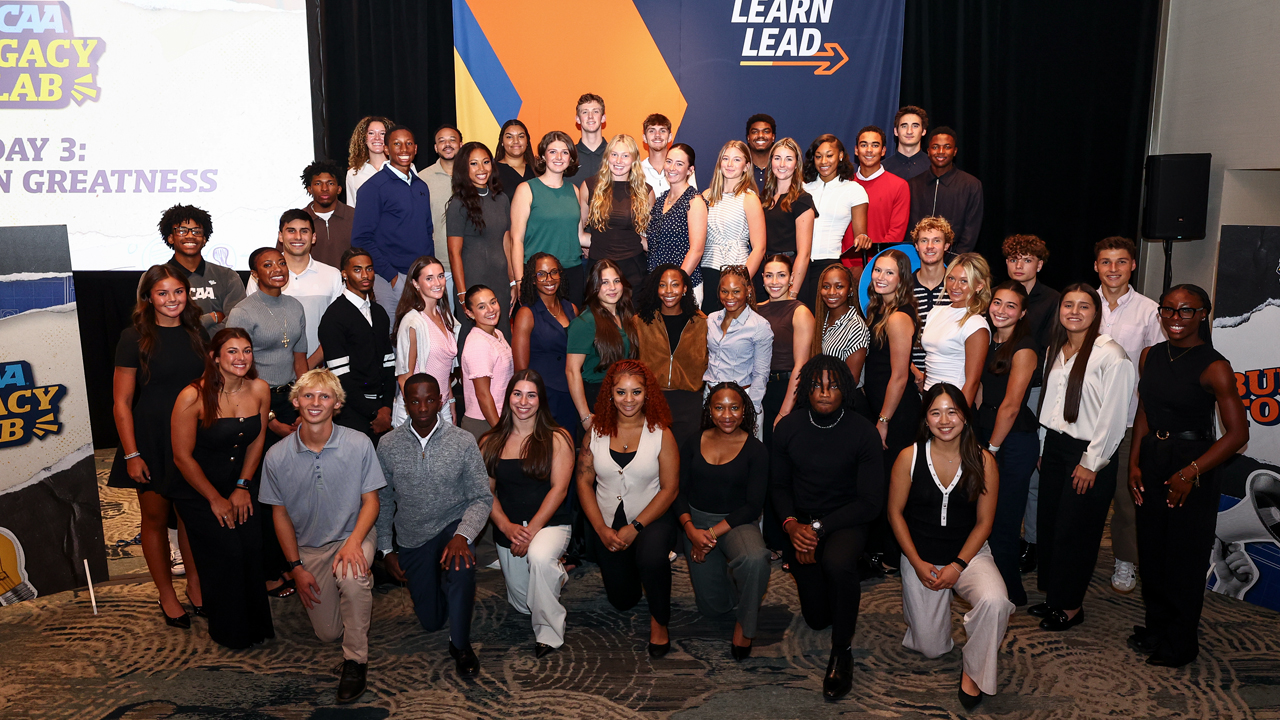
47 sophomores and juniors participate in the 4-day hands-on program in Indianapolis
At the NCAA Legacy Lab, handshakes don’t close deals. They open doors for a lifetime of connection, learning and impact.
It starts with a simple message: Let’s build. The student-athletes in the program saw these words from program director Ashley Jocelyn again and again — in emails, LinkedIn comment sections and plastered on signs around the venue in Indianapolis, where the NCAA hosted the second iteration of the event last weekend.
The program
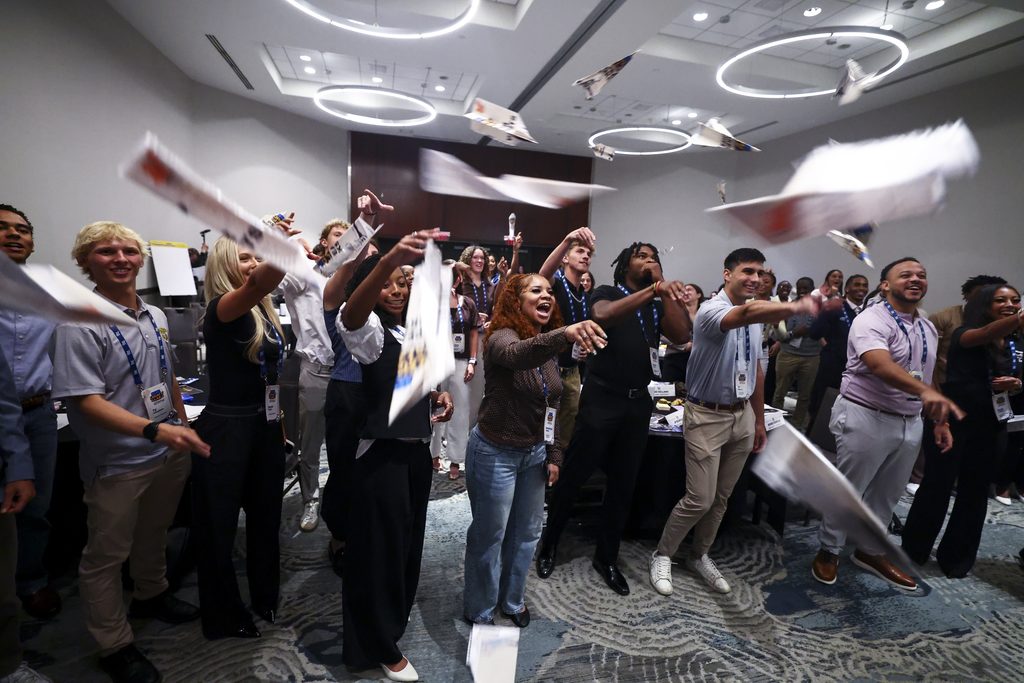
Forty-seven sophomore and junior student-athletes across all three divisions attended the interactive four-day session complete with keynote speakers, workshops, games and the program’s hallmark pitch competition, the Hustle Bowl.
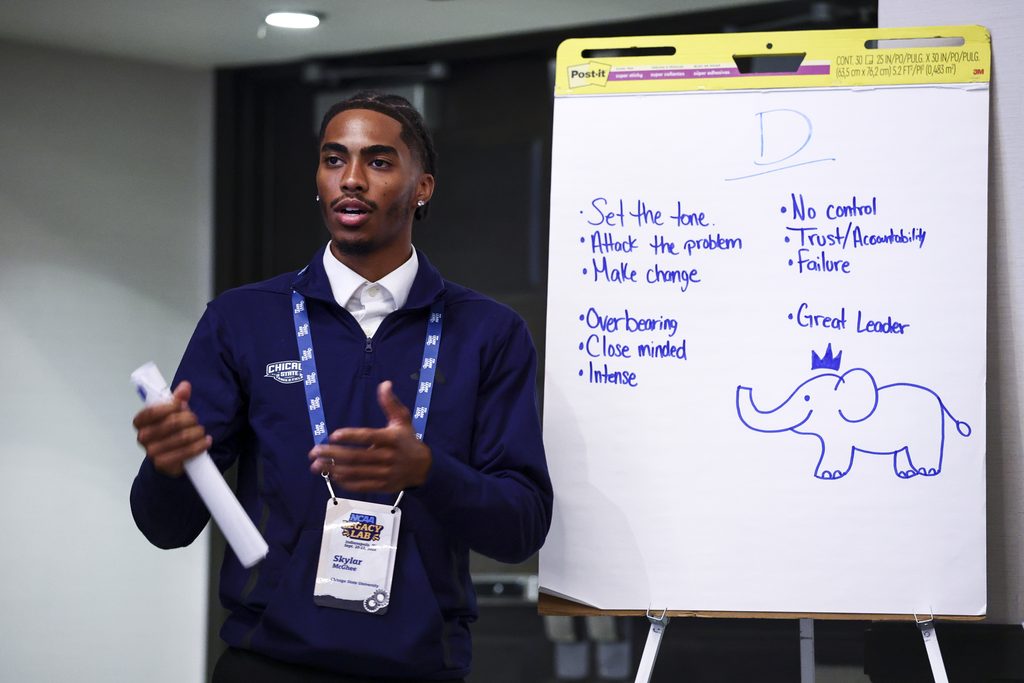
The Legacy Lab is about empowering student-athletes to build something they are proud of, whether it’s a business, a brand or a career making a difference. Learners selected one of three tracks:
- Brand in Motion: Explore how to monetize your name, image and likeness responsibly and effectively.
- Blueprint to Breakthrough: Learn the essentials of starting, operating and growing a business.
- Built To Serve: Design ventures that prioritize social responsibility alongside profitability.
The entrepreneurs
Alyssa Jones, a Baylor track and field student-athlete, knows a thing or two about building. The sophomore has amassed over 5,500 followers on her Instagram account @thebaylorbaddie, where she peels back the curtain on life as a student-athlete.
Jones has wanted to be a content creator since she was a kid, but she didn’t realize that social media could be a legitimate career path until she joined Baylor’s athletics department. Now, she makes meaningful extra income through brand deals.
She knows her work is valuable. The Legacy Lab’s curriculum taught her the skills to make sure brands know it, too.
“I feel like I have been given the tools and equipped with the ability to effectively pitch myself and to show people what value I can provide them now, to find a problem within their unit and what they’re doing and to provide them a solution,” Jones said.
Katie Brosseau’s experience at Wofford looks markedly different. The junior lacrosse student-athlete points out that student-athletes at lesser-known schools across all three divisions must approach NIL differently. She advocates for better financial education on campuses.
The oldest of 10 children, Brosseau has been financially independent for much of her life. She wrote a financial literacy guide for teenagers while interning with a financial education company as a high schooler.
Today, “locker room” talk for Wofford women’s lacrosse can center around Brosseau’s credit card recommendations. She plans to use what she learned on the Built To Serve track to empower fellow student-athletes through financial education.
“I’ve talked to my coaches, and I want to start putting on a workshop series for my team and then expand it to our (Student-Athlete Advisory Committee) program and start working on a program where financial literacy could be included in compliance meetings and SAAC meetings,” Brosseau said.
The Legacy Lab’s curriculum was built in alignment with the World Economic Forum’s Future of Jobs Report 2025 to help student-athletes develop the network, tools and mindset to build a career they love, whether it’s in entrepreneurship or not.
Benjamin Hall, a sophomore at Division II Findlay, has an entrepreneurial spirit and a passion for human performance. His schedule studying biochemistry, mathematics and chemistry while competing on the track and field team doesn’t leave much room to add a business class, though.
The Legacy Lab’s Blueprint to Breakthrough track got Hall thinking about how he can translate his science background into a business that can help people.
“You have the idea. You might be able to make a product, but you have a product and nobody wants it or nobody can see it. Or I don’t know how to sell it, or I don’t know who to talk to to figure those things out. It’s useless if nobody can use it,” Hall said.
Hall just scratched the entrepreneurship surface at Legacy Lab. He doesn’t have the answers, but he left the program with the tools to start asking the right questions.
“You don’t know what you don’t know. (Legacy Lab) opens my eyes a little bit to stuff that I wouldn’t have even considered. It feels like I’m sitting in a business lecture, an economics lecture, and I’m like, ‘OK, that isn’t what I’m used to,’” Hall said.
The impact
The most essential material for building something meaningful is the courage to get started. The NCAA’s Jocelyn said Legacy Lab’s mission is to empower learners to take the leap.
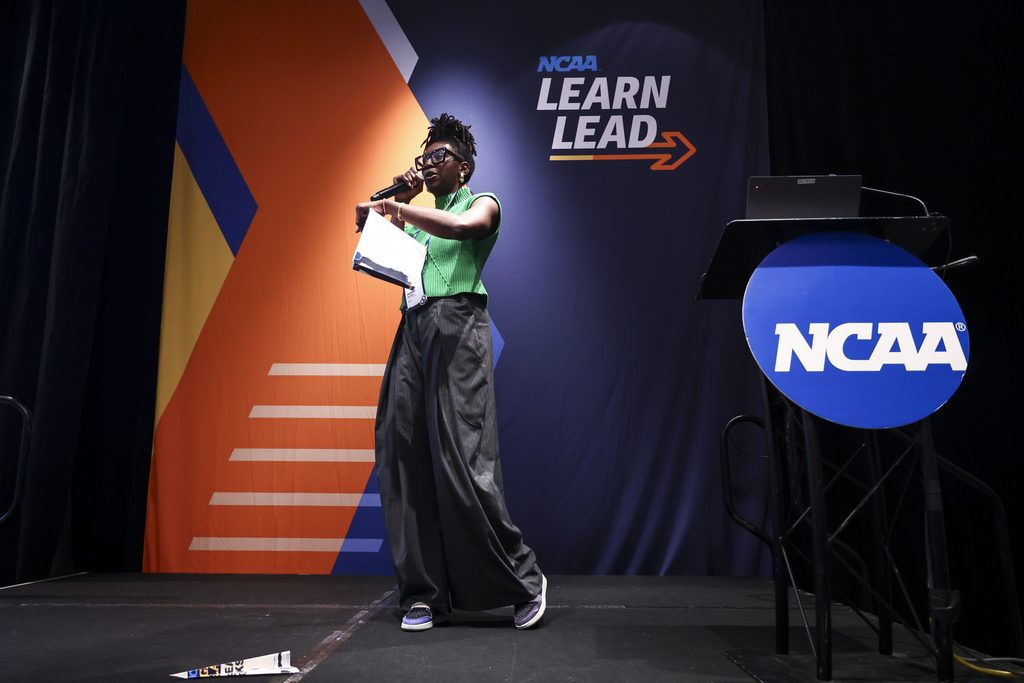
“I hope (the learners) walked away with the confidence to trust the ideas that may feel so big they are intimidating. Sometimes the best opportunities are the ones that scare us the most. My hope is that Legacy Lab gave them the courage to pursue those ideas anyway and believe in themselves enough to take the first step,” Jocelyn said.
Legacy Lab is hosted by NCAA leadership development staff members, who organize and develop year-round programming for student-athletes, postgraduates, coaches, administrators and others. The programs support the NCAA membership through leadership development, educational resources, scholarships, grants, awards and events. Learn more about educational and leadership opportunities from the NCAA leadership development team.