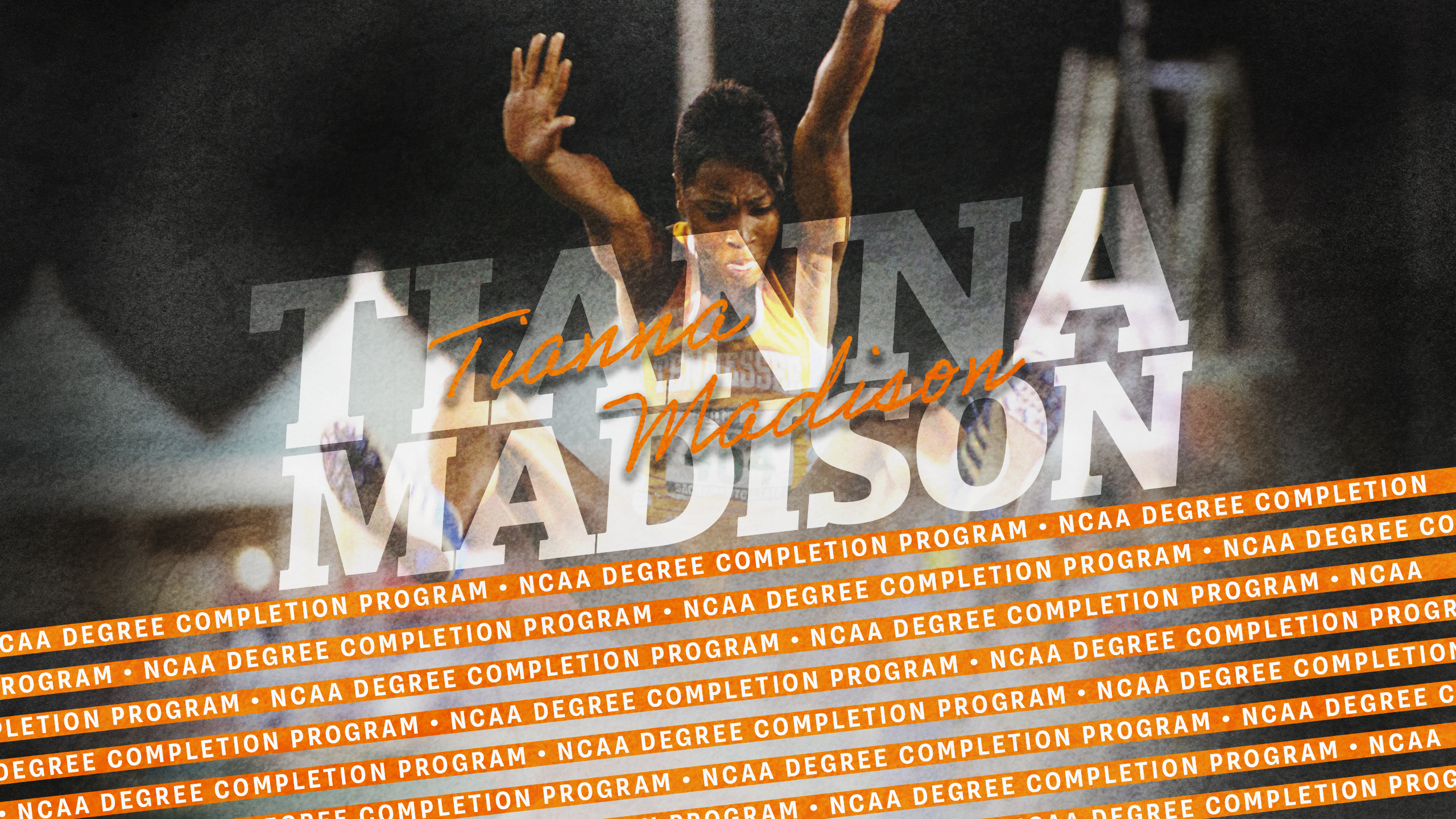
The 2-time NCAA long jump champion and 3-time Olympic gold medalist earned her social work degree years after leaving campus
Tianna Madison became a two-time Southeastern Conference and NCAA long jump champion, a six-time All-American and a world champion all before age 20. She added three gold medals while competing on the sport’s biggest stages — winning at the 2012 London Games and the 2016 Rio de Janeiro Games.
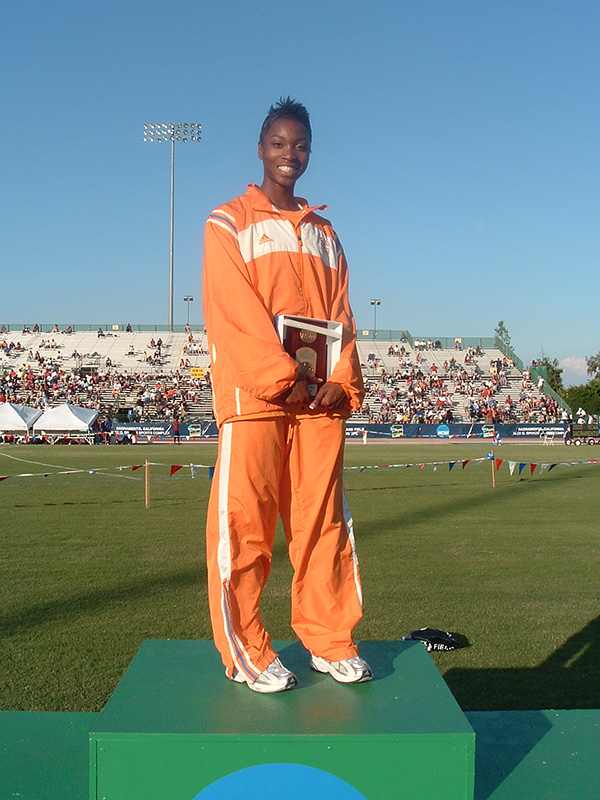
But even with a résumé filled with medals, records and global recognition, Madison still thought about the undergraduate degree she started at Tennessee back in 2003.
“The thing that was hanging over my head this whole time was never finishing my undergraduate degree,” Madison said. “I felt like it was the one thing that could unlock a lot of doors for me.”
That door opened through the NCAA Division I Degree Completion Award Program. Madison was exposed to the program and its benefits through a former teammate, All-American runner Marc Sylvester.
For Madison, the program did more than help pay for classes. It helped remove a weight she had carried since going professional.
A difficult decision at the height of her career
Madison quickly became one of the most accomplished athletes in Tennessee track and field history. She won conference and NCAA indoor and outdoor long jump titles in 2005 and helped Tennessee win its first NCAA indoor track and field championship. That same year, she captured long jump gold at the International Association of Athletics Federations World Championships in Helsinki.
That success created a complicated choice. Although Madison was thriving academically and athletically, professional track and field opportunities were beginning to appear.
“I had my dad on one side, who’s like, ‘You strike while the iron’s hot. You’re not going to have legs forever,’” Madison said. “On my mom’s perspective, she was just like, ‘Track is this much of your life, and we’re supposed to be setting up the rest of your life.’”
Madison eventually turned professional, knowing that she could pursue the sport at the highest level, and her Olympic career proved that. She competed in the 2012 London Games, winning gold as part of the U.S. team’s world-record-setting 4×100-meter relay alongside Allyson Felix, Bianca Knight and Carmelita Jeter. She also finished fourth in the 100 meters.
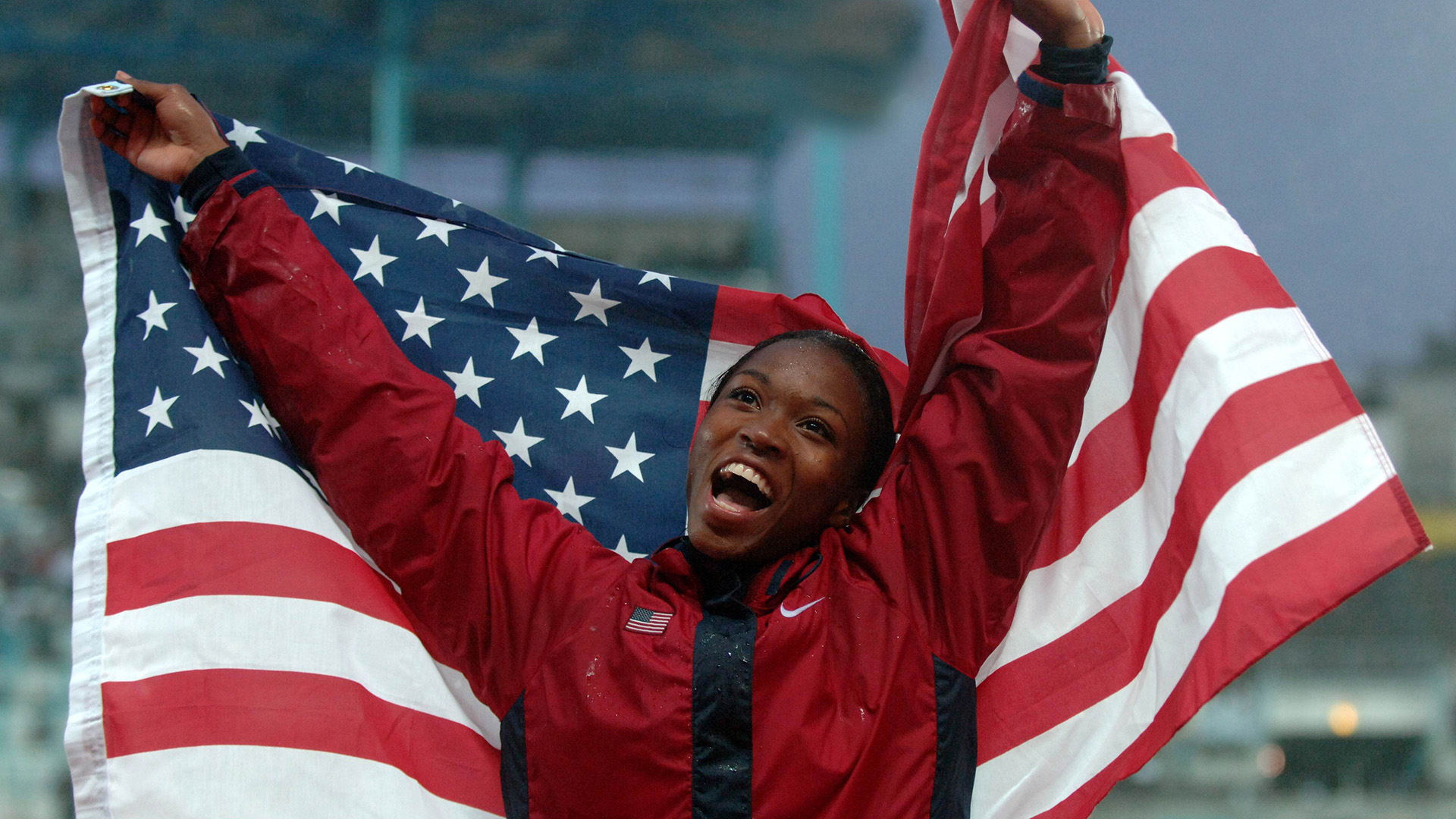
Four years later at the 2016 Rio de Janeiro Games, she added two more Olympic gold medals by winning the long jump and successfully defending the 4×100-meter relay title.
Finding her way back to Tennessee
But the decision to leave school stayed with her.
“Had I known that this program existed, I think I would have done a lot less hand-wringing and being so stressed about the decision, feeling like a failure because I didn’t finish school,” Madison said. “If I had known, ‘OK, I’m going to go do this for however long I’m able to do this, and Tennessee will still be here for me when it’s time for me to complete this degree,’ I think I would have had a very different experience.”
The NCAA’s student-athlete core guarantees are designed to help support student-athletes throughout their academic and athletic journeys and prepare them for life after sports. Division I schools are required to provide resources such as academic counseling, career development, life skills programming, mental health resources and other personal and professional development support. The guarantees also include degree completion opportunities for eligible former student-athletes seeking to complete their first undergraduate degree.
Madison packed what she calls “a whole lot of living” into her 17 years as a professional. She moved from Tennessee to California and from there to Florida and then to Europe. She trained, competed and made Olympic teams, all while building a successful professional career. She also experienced some major life changes, including pregnancy.
Prepping for retirement and motherhood prompted Madison to begin asking herself what kind of life she wanted to build next.
“What does my life look like right now? What do I want it to look like? And how do I get there?” Madison said. “Going into my last year of professional competition, I knew that I wanted to return to school. But I wasn’t yet sure how I was going to make it happen.”
Finishing what she started
Returning to school would require time and money at a moment when Madison was rebuilding. She knew she wanted to go back to school, even considering taking one class at a time if necessary. Then Sylvester introduced her to the degree completion program.
“I love Knoxville so much,” Madison said. “And I think that’s why it was also a no-brainer when I learned I could go back. I was like, ‘I can go back.’ When I was there as an undergrad, there was a certain level of tunnel vision that I had. There was a lot of the college experience that I didn’t experience because I wanted something else. But going back, I got to do all those things.”
Madison graduated from Tennessee in 2023 with a bachelor’s degree in social work. That same year, she was inducted into the Tennessee Athletics Hall of Fame. She walked at graduation, took graduation photos and embraced the milestone fully.
“I did all the things,” Madison said. “I had a graduation photo shoot. I went all in, as if it happened right on its original timeline.”
The timing, she realized, did not make the achievement any less.
“My degree is not any less valuable because it took me longer to get,” Madison said. “I had been beating myself up for so long and jokingly calling myself a college dropout three times over. And then I got it, and all of that stuff was just like, I wasn’t dropping out. I was just doing what I needed to do when I needed to do it.”
Turning a degree into a new purpose
After Madison earned her social work license, she began pursuing a master’s degree. Now, as an assistant track and field coach at San Jose State, she uses her social work training every day with student-athletes while also building toward broader work in community development and maternal health advocacy.
Her advocacy work stems from her hometown of Elyria, Ohio. With the loss of labor and delivery services in the area, Madison is concerned with what that means for expecting mothers who now must travel farther for prenatal care.
“How can we bring the birthing center back?” Madison said. “How can we make access to prenatal care more affordable and accessible? This is the type of thing that keeps me up at night in between writing training programs for my team.”
Madison traces this chapter of life directly back to the degree completion program.
“I wanted academic credibility to accompany my lived experience,” she said. “I wanted to be able to say, ‘I’m an Olympic champion, NCAA champion, SEC champion, and I have a master’s degree in this specific area.’ Your sport is the platform that can make people listen to you. Your degree helps you have the impact and create the change or the life that you want.”
‘Go and do the thing’
Madison wants other former student-athletes to know that returning to school is possible, even if the timeline looks different than they imagined.
“I think that if there’s any athlete that thinks, ‘That was my life back then and now maybe all I can do is coach,’ or any of the other boxes that they put former athletes in, I would say, take a look at this program and go do the thing,” Madison said. “If you’re insecure about your age, you won’t be the oldest person in class. I was not the oldest person in my class. I’m not the oldest person in my master’s program.”
For Madison, finishing her undergraduate degree wasn’t about rewriting the past. It was about completing a life goal that still mattered.
“I know there are probably some people looking at their lives right now and saying they can’t wait for something ‘good’ to happen to them,” Madison said. “You have to go create it for yourself, so go and do it.”