

Three-time Paralympic medalist balances neuroscience Ph.D. work and Team USA skiing heading to Milan Cortina
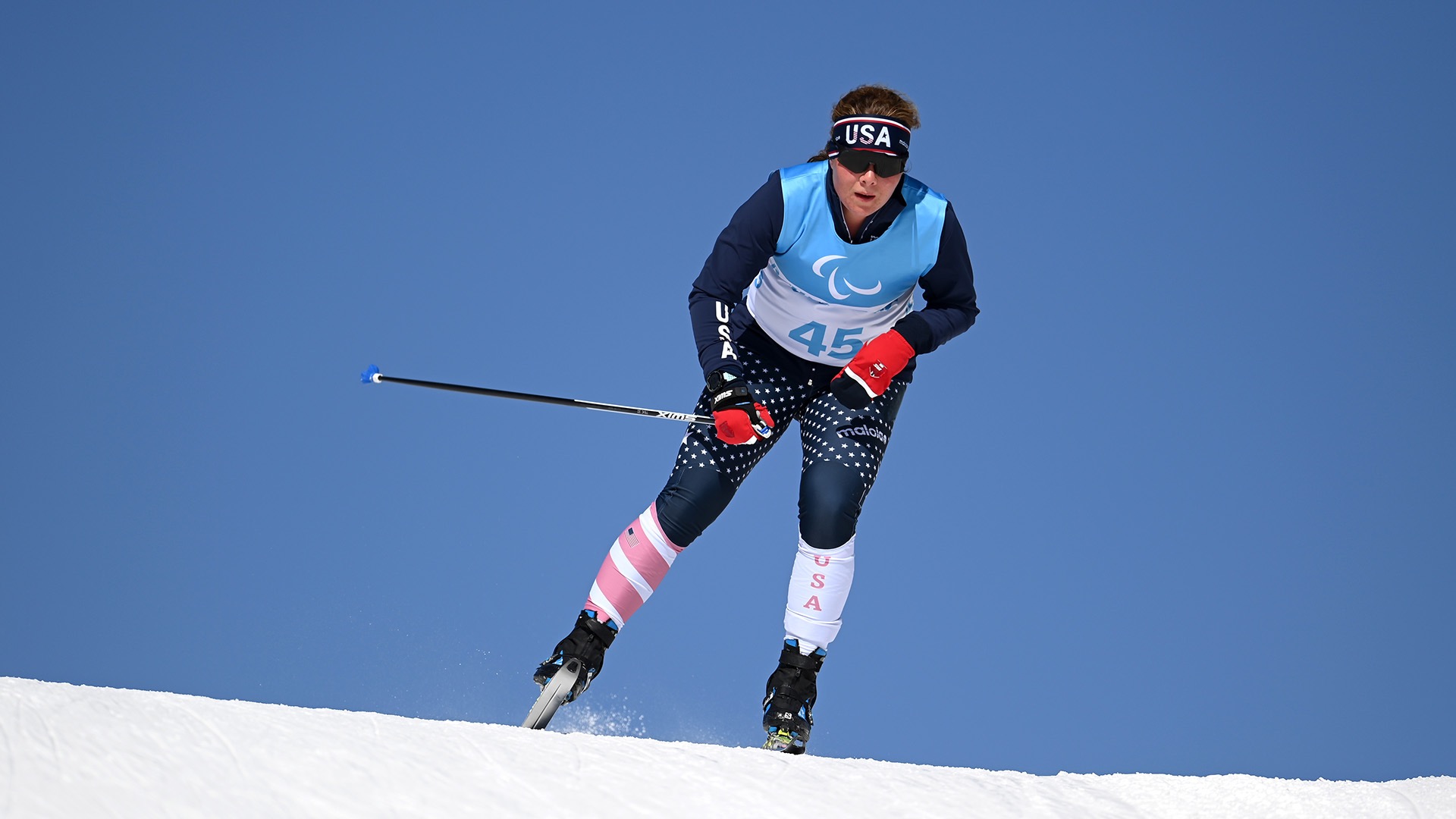
In the first competition of her first Paralympic Winter Games, Team USA Nordic skier Sydney Peterson didn’t shy away from the spotlight. She raced headfirst into it.
A few months earlier, the Paralympics hadn’t even been on her radar. Yet when the then-sophomore Nordic skier at St. Lawrence had begun rapidly losing movement in her left arm and leg due to a neurological disorder, dystonia, her coaches suggested the Paralympics.
Peterson paused her season to compete in the 2022 Beijing Paralympics, classifying only two months before the Games.
Early into the hourlong 15-kilometer classic race, Peterson found herself leading in her first Paralympic competition.
"I went out as hard as I could, which was not a smart idea," she recalled. "The coaches were not thrilled about that. They give you splits along the way, and they were like, ‘Oh, you’re in the lead.’ I was like, ‘Oh, that is not a good thing.’"
Peterson went into the race with zero expectations and 100% excitement. Despite her blistering start, she ended her first Paralympic competition with a silver medal, becoming the first standing U.S. woman to earn a medal in Nordic skiing at the Paralympics."I was absolutely stoked on that. Then I was like, ‘Oh, this is just a fluke,’" she said.
But it wasn’t. Peterson hat-tricked her first Paralympics, adding a gold medal in the 4×2.5-kilometer mixed relay and a bronze in the 1-kilometer sprint freestyle.
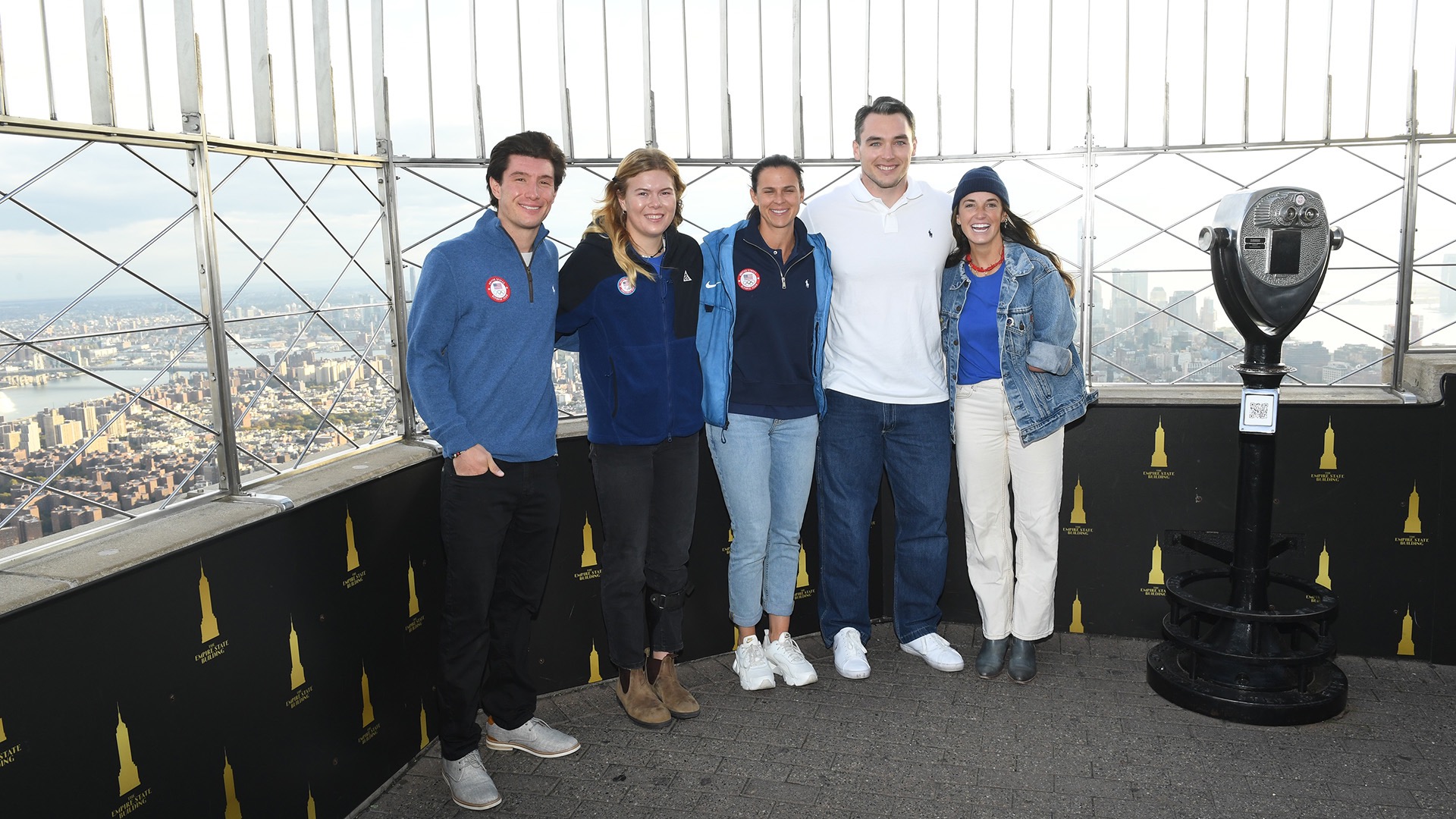
Heading into the 2026 Milan Cortina Paralympics, Peterson is not a novice to the Games but a leader. In October, she joined several Paralympic and Olympic athletes to flip a switch lighting up the Empire State building in red, white and blue in a Team USA promotion, something she never would have imagined when she started her college career.
"I never started skiing because I wanted to become an Olympian," she said. "I just started skiing because I loved to ski. … Each thing gradually led me there, which is really cool."
From St. Lawrence neuroscience to the Paralympics
Peterson is a self-proclaimed nerd. At St. Lawrence, she studied neuroscience and captained the ski team her senior year. Now, she is a professional skier pursuing her Ph.D. in neuroscience at Utah. Aligning her ski career and her education gives the 24-year-old energy.
"I just like to go play in the mountains, and I also just feel like a somewhat nerdy, curious person who likes to go tinker in a lab," she said.
Peterson’s interest in neuroscience partly stems from understanding her dystonia, a neurological disorder in which a person’s muscles contract involuntarily.
"Once you start learning more about the brain, it’s really hard to not want to go deeper. I don’t study my exact disease. I wouldn’t want to do that. That would be too deep. But I think I’ve seen how beneficial research can be."
Living and competing with dystonia
Beyond the science, Peterson understands the experience of living with a neurological disorder.
"I entered college with four functioning limbs. And then throughout my sophomore year, now my arm and leg are slowly losing function," she recalled.
As Peterson coped with feelings of her body failing her, she also questioned her identity and future as a skier. The potential loss of her collegiate career broke her heart.
When she pursued classification to compete in para skiing, outsiders saw a silver lining. Internally, Peterson struggled with the changes in her reality.
"To be honest, there were a lot of hard feelings. People were just telling me, ‘Oh, you should be really excited about this opportunity,’ but I was really upset about it," she said.
"Even though it’s opened up a lot of opportunities, it’s not just this amazing thing," she added. "(Living with dystonia) can feel like your body’s just constantly betraying you, and it feels like you can never put a plan in place because then you have to constantly change that plan, which is tough."
The power of community at St. Lawrence
But through these frustrations, Peterson leaned on her community at St. Lawrence.
"My teammates from college are absolutely amazing. They’re some of my best friends to this day. I saw the impact of a great community and how that made me successful."
She competed all four years at St. Lawrence. Even with the changes, her coaches treated her the same. She still had to wax her own skis, carry her own equipment and pull her own weight throughout her four years in college.
"There wasn’t any difference, which I really appreciated," she said.
In 2023, Peterson underwent an invasive brain operation to address her symptoms of dystonia. After a successful procedure and recovery, she returned to competing at the 2025 world championships.
Now, as Peterson heads to the Milan Cortina Winter Paralympic Games, she has learned to pace herself in her stride for gold. As she moves forward, so has her acceptance of her new reality.
"I think it’s gotten better with time, but there’s always been some tension there," she said.
"But I think having some tension is healthy, because it shows that you’re trying to strive to get better, which is a good thing."