
The veteran referee still relies on the lessons he learned as a basketball player at Oklahoma Baptist
After more than a decade of officiating in the NFL, Clay Martin still remembers exactly when he got the job.
"I got the phone call April the 9th of 2015 at 1:37 p.m., to be exact," Martin said. "We kind of remember those moments."
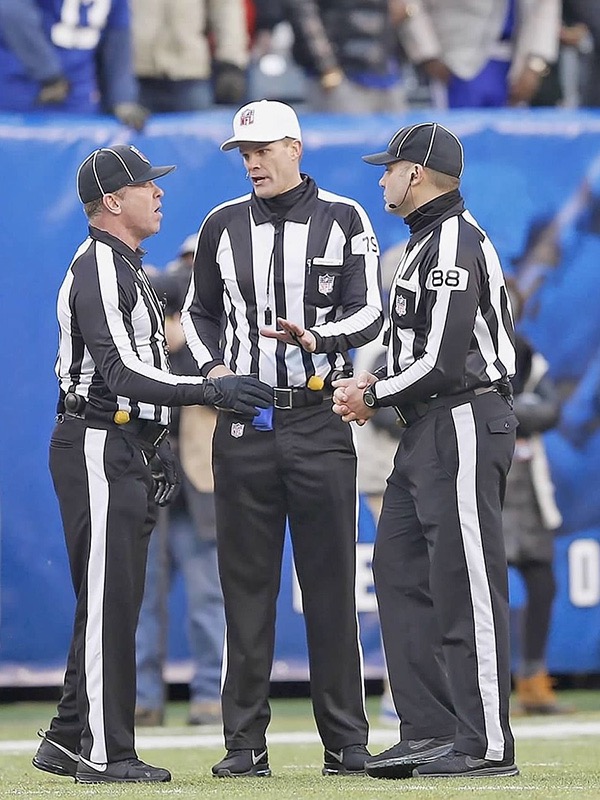
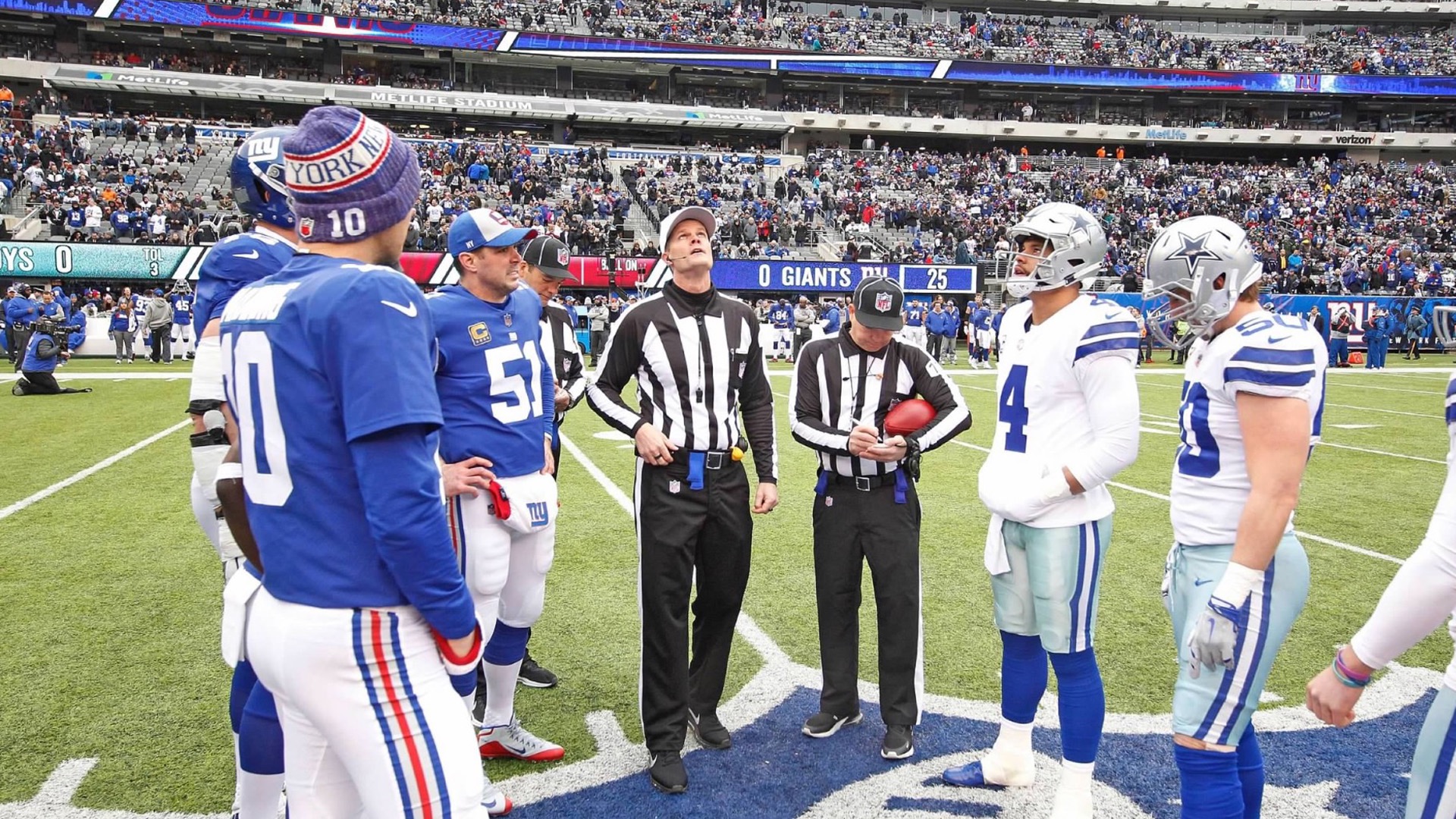
Martin is a few months removed from finishing his 11th season in the NFL and eighth as referee and crew chief. In this role, he leads a nine-person crew of officials on game days, wearing a white hat and making announcements during the game. In his last assignment of the season, Martin served as referee for the NFC championship — his first time officiating the postseason event.
Martin’s journey in the NFL may have officially begun in 2015, but the foundation was built during his time as a college athlete at Oklahoma Baptist. Though he never thought he’d become an official at the time, the values and skills he learned as a student-athlete prepared him for success.
Becoming a team player at Oklahoma Baptist
Martin always loved playing sports growing up but never thought seriously about playing in college. After receiving his first call from a college basketball coach as a sophomore, he set a goal of being a collegiate athlete.
Becoming a two-sport standout in basketball and football at Nathan Hale High School in Tulsa, Oklahoma, Martin found an opportunity to play both sports at nearby Tulsa. After spending three semesters there, Martin decided to transfer somewhere he could focus solely on basketball. Oklahoma Baptist, then a part of the National Association of Intercollegiate Athletics, provided Martin with the chance to play right away and enter a culture that was perfect for him.
"This was a program that was team first, that was all about the young men, including myself, and pouring into these guys above and beyond basketball," Martin said. "Yes, they were going to help us reach our potential as basketball players. But it went above and beyond that."
Martin played for the Bison from 1996-99, helping lead them to three NAIA tournament berths, including the championship game in 1997. Martin’s role on the team was a pass-first point guard and stout defender, much different than the role he played in high school. Martin credits his head coach, Bob Hoffman, for teaching him the lessons of humility and believing in a goal bigger than yourself.
"I can remember Coach Hoffman telling me, ‘Hey, we could win a national championship here if you lead the nation in assists.’ And I’m like, ‘Whoa, assists? That means I’m giving it up.’ But he was right because he had recruited guys way better than me that could score the basketball," Martin said. "He saw the potential in me … and it didn’t take long for me to see the impact that I could have without being a leading scorer and how successful it made our team."
Martin still holds the program records in career assists and steals and was inducted into the Oklahoma Baptist Athletics Hall of Fame in 2011.
Seeing the way that Hoffman approached coaching and creating a culture that built his players up to be their best inspired Martin to become a coach as well. After graduating from Oklahoma Baptist in 1999, Martin joined Hoffman’s staff and moved with him to coach at the University of Texas-Pan American, now the University of Texas Rio Grande Valley.
Martin spent two years under Hoffman before moving back to Oklahoma to coach at the high school level. After two years at two schools, he found a home at Jenks High School in 2003 as an administrator and the boys basketball coach.
Finding a new opportunity in officiating
When he and his wife began starting a family a couple of years later, Martin decided to look for ways to make some extra money. Since he was already coaching basketball, Martin saw officiating high school football as a way to avoid a conflict of interest and stay close to sports, all while making some money for his young family.
"The Greater Tulsa Officials Association really took me in," Martin said. "When I got into high school football officiating, a lot of those guys officiated for me in basketball. I was known to be a little more aggressive coach and verbal and get on them, so when I walked into that first chapter meeting, I think I turned a few heads. And I thought, ‘Oh, man, this is going to be tough.’ But that group just took me in from day one and really mentored me."
Right away, Martin began to form a new level of respect for officials. He also began to see how his experience as an athlete and coach impacted his approach to officiating.
"Not every official can empathize with the frustrations of a coach or an athlete because maybe they haven’t done it, played or coached," Martin said. "The emotions of a coach that’s going through a tough game or an athlete that’s struggling and not performing at the level they think that they should be able to, I think that really helped me just with having empathy and how I communicated … because I’ve had those same emotions a lot myself."
Martin was content with where he was as a coach and an official, but more opportunities began to present themselves. While working a spring scrimmage at Tulsa in 2007, longtime NFL official and future mentor Gerald Austin introduced himself to Martin and encouraged him to apply for a spot at the college level with Conference USA.
"He asked me why I hadn’t applied and I said, ‘Well, I’ve just been doing this two years,’" Martin said. "He said, ‘I don’t care. I’d like for you to apply.’ Three months later, I’m starting my Division I career. All because Mr. Austin saw something in me."
Still coaching at Jenks, Martin found a way to manage both schedules, thanks to the support of his coaching staff and family.
"It worked well because I would leave on Friday, work the game on Saturday, and either come home Saturday night or first thing Sunday morning," Martin said. "And I’d be back to school Monday."
Catching the eye of the NFL
Beginning as a line judge for Conference USA, Martin continued to impress Austin and other higher-ups. After earning opportunities to work conference championships and bowl games, Martin tried his hand at referee for a game during the 2012-13 season. It was then that Austin told Martin that the NFL had started to evaluate him as a candidate for their league.
"The following year, I moved to referee full time in Conference USA and worked two full seasons," Martin said. "I was also asked to start officiating in the Arena Football League because the NFL was using that as an evaluation tool as well. I started to tell myself, ‘Well, my goodness, who knows what will happen?’ But I knew at that time, there may be a shot for me one day."
Martin’s shot came in the spring of 2014, when he was called in to the NFL offices in New York for an interview.
"I was in and out in less than 36 hours," Martin said. "They fly you in and you walk into this room, and I would have sworn that the table was 30 feet long … and all these are guys sitting around it in suits."
Despite having some nerves, Martin made it through the interview and began participating soon after in what is now known as the Mackie Development Program, where candidates are taught how to officiate at the NFL level. Once Martin learned he got the job with the NFL in 2015, he decided to step down from coaching at Jenks and move into an assistant principal role.
However, after Martin had two seasons under his belt as an NFL umpire, he returned to coaching from 2017-22 when the role opened up again. His son, Chase, had just begun playing on the team, and Martin deemed coaching him was too good of an opportunity to pass up.
The next NFL season, Martin became a referee and crew chief. While that presented more responsibilities, he is thankful for the support system that was in place around him.
"My wife and the support that she brings, the basketball staffs that I’ve been a part of here that have been so supportive of my journey," Martin said. "It’s still nuts, even in my current role as an athletic director. I mean, it’s two full-time jobs that you just have to have a great team. There’s no way I get to do this without a great team."
Promoting the student-athlete-to-official pipeline
Being able to serve athletes and maintain the integrity of the game as part of a great team is what Martin enjoys so much about being an NFL official, despite the hard work it takes to maintain his role. It’s reminiscent of his time at Oklahoma Baptist, where he first learned how to buy into a team striving for something bigger than himself.
"You’re on a crew of nine, seven on field and two replay officials, and you’re together a lot," Martin said. "You’re in hotels a lot, and you’re on Zooms a lot, and you do a lot of life together. And so I love the relational part of this because it’s a small brotherhood. Very few people can truly understand what it’s like for us and what it’s like for their families that go through all the ups and downs, the ridicule, or whatever you want to call it. And so being able to just do life and pour into other people and have them pour into you, I think, is just awesome and something I look forward to every year."
As a former student-athlete, Martin hopes that more continue to seek out the path he took, as he’s seen firsthand the benefits that come with this career.
"I think it’s a path that more people need to know about," Martin said. "Athletes bring a lot of qualities to the table, because that’s what they’ve been doing on their respective fields. How they drive to compete and get better and handle criticism and make tough decisions … those people that are used to the fire, used to the pressure, those are the ones that come in and I think feel right at home."
Student-athletes interested in officiating can fill out this form. Learn more about the NCAA’s officiating resources and initiatives on its Say Yes to Officiating page.