The 2001 national champion and co-Hodge Trophy winner now helps other amputees as a prosthetist
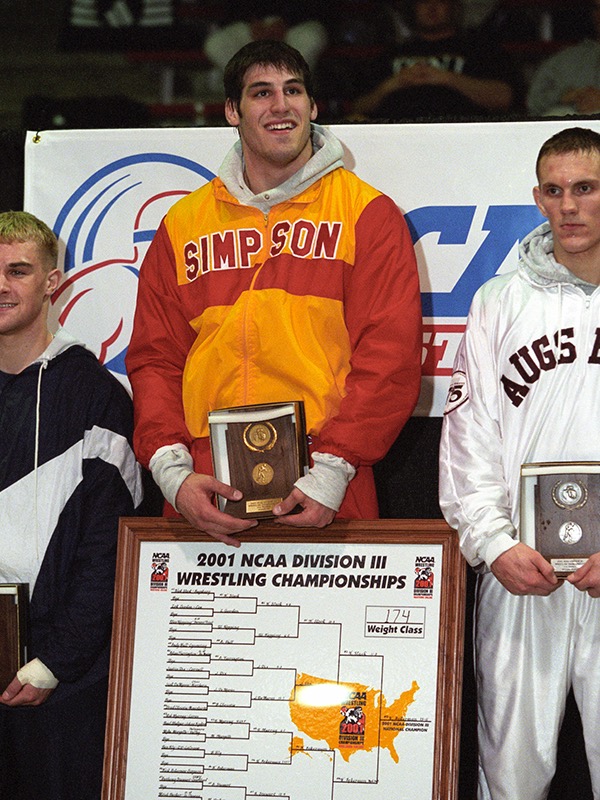
In 2001, Simpson wrestler Nick Ackerman was named a co-winner for the Hodge Trophy, the sport’s highest individual honor, after notching a 20-match winning streak and winning the 174-pound NCAA Division III national championship. Twenty-five years later, he remains the only Division III wrestler to have won the Hodge Trophy.
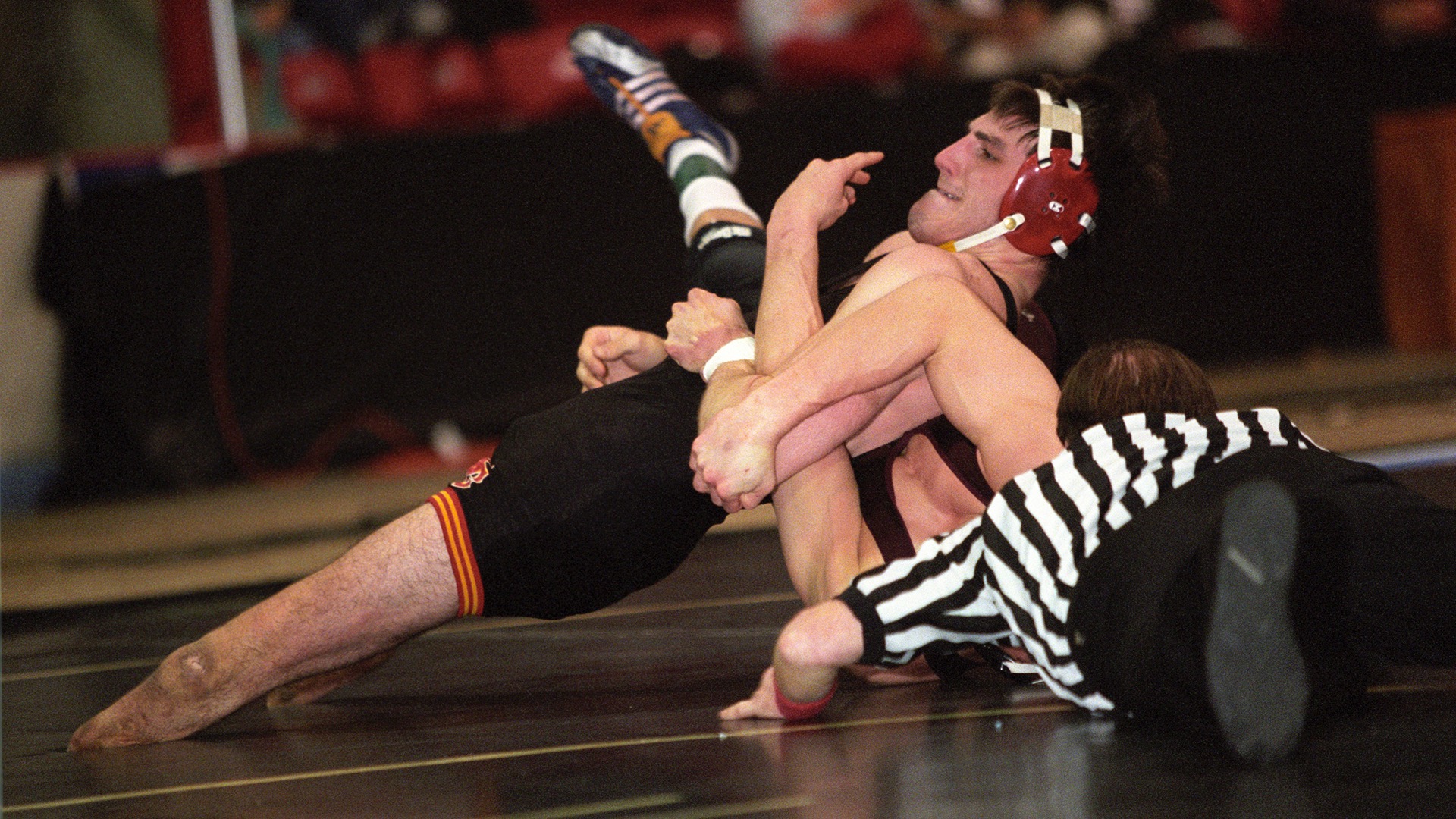
Ackerman accomplished it all without legs, which were amputated when he was 18 months old due to bacterial meningitis.
As he reflects on his accolades, however, what he was able to accomplish without legs never crosses his mind. Instead, his achievements are a reminder of what can happen when you simply have a strong belief in yourself.
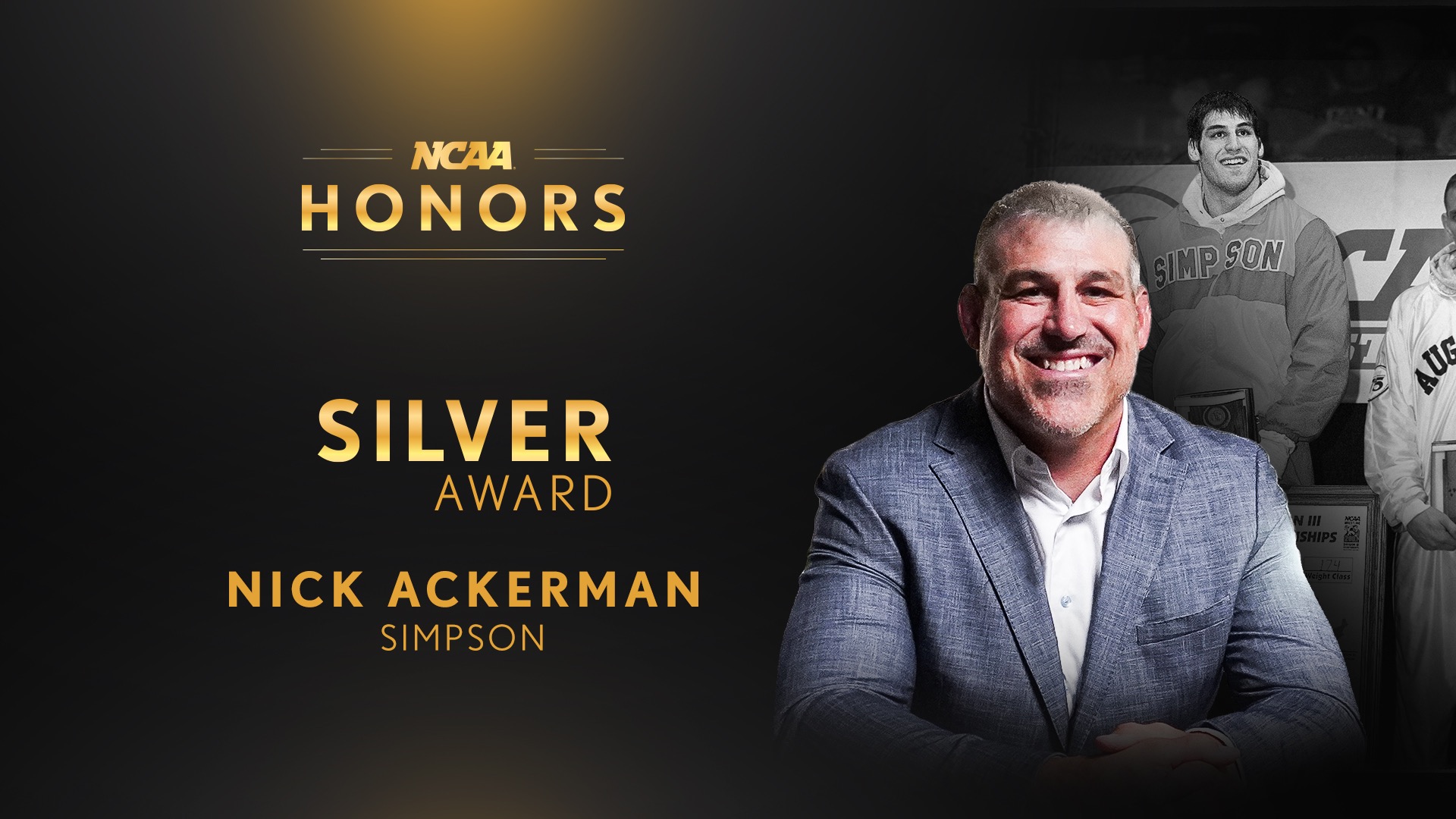
To recognize Ackerman and his significant place in collegiate wrestling history, the NCAA is honoring him with the 2026 Silver Anniversary Award. The award recognizes individuals on the 25th anniversary of the conclusion of their college athletics careers and celebrates the achievements and contributions in their professional lives. Ackerman will be honored at the NCAA Convention in January alongside the other NCAA Honors recipients.
Sports played a pivotal role in Ackerman’s upbringing in rural Iowa. Both he and his brother, Nathan, competed in several sports, including baseball, football and track and field. Since wearing prosthetic legs was all he knew, Ackerman never felt different from his peers.
“Growing up without legs was not a big deal,” Ackerman said. “It was just like somebody who wears glasses. It wasn’t a characteristic that defined who you were.”
When he first started wrestling in fourth grade, Ackerman initially chose it because it allowed him to try an individual sport while still being able to play with his friends. It’d take years before he understood some of the character-building lessons that come with the sport.
The first lesson he learned was how to deal with losing, which he did a lot of early on.
“I wasn’t very good for a long time in my life in wrestling,” Ackerman said.
This persisted into his early high school years, as he won only four varsity matches during his freshman and sophomore seasons combined.
“There was no vision of wrestling at the next level, even through my junior year of high school,” Ackerman said. “But as my senior year kind of developed, and as I started competing and started putting things together, I knew I wasn’t ready for wrestling to be done.”
Among the colleges that showed interest in him, Simpson turned out to be the best fit for Ackerman. For one, his brother was already playing basketball there. Additionally, head coach Ron Peterson saw potential in Ackerman.
Just like in high school, Ackerman had to battle past early failures in his freshman and sophomore seasons.
“I don’t think anybody my freshman year in college thought that, in four years, this kid will win a national title,” Ackerman said. “I don’t know that I didn’t, but it wasn’t on my radar.”
Once again, Ackerman continued to work hard behind the scenes and lean on his teammates and coaches who continuously challenged him and played a pivotal role in his development.
“These guys were all big dudes that were All-Americans, and they just beat me up every single day,” Ackerman said. “And that was a real blessing. I’m fairly bullheaded, and I would walk out there, and those guys brought me into the fold, allowed me to get beat up by them in a really good way, and shared their bits of knowledge.
“I’m very thankful for those teammates, those relationships, those coaches that gave me an opportunity, took a chance on me. Not a lot of people are recruiting the kid that walks in the room on his knees that hasn’t even won a state title and said, ‘Yeah, come wrestle for us.’ It gave me an opportunity to come in and get beat up and to grow and develop.”
It was at the end of Ackerman’s junior year, after losing a match that would have qualified him for the national tournament, that he began to truly believe in himself and in his place among the best in the sport. That belief sparked the beginning of a relentless pursuit to win.
“This is the difference between having a good senior season and winning a national title … a crazy belief in yourself,” Ackerman said. “That whole summer (between my junior and senior year) of this mental preparation and repeating national champ in the mirror hundreds and hundreds and thousands of times, it was kind of a whirlwind. Anybody who knows a wrestler knows that there’s a bit of a crazy streak in most of us. And I started believing in myself a lot. By the time the season started, I was on a mission.”
Once his senior season started, there was no looking back for Ackerman. He took his newfound self-confidence and determination all the way to a 38-4 record, defeating defending national champion Nick Slack to claim the national title and snap Slack’s 60-match winning streak. Ackerman shared the Hodge Trophy that year with Iowa State’s Cael Sanderson.
He hopes his story is a reminder of the heights that are possible for a student-athlete at any level.
“If there’s anything that my journey can show anybody, it’s that you can achieve those highest accolades coming from the Division III level,” Ackerman said. “By getting these accolades, the Hodge Trophy and all these different things from the NCAA, I’m hopeful that it allows kids to believe that it’s not one path, and if they’re not on a full-ride scholarship, it’s (still) worth competing at the next level, because there’s so much more you get out of it at any level that you’re competing in.”
While Ackerman made an outsized impact on others with his performance on the mat, he continues to do so in his profession as a prosthetist. He discovered the passion shortly after his collegiate career ended, when a kid who had recently become an amputee reached out to him for advice. Ackerman felt like he could make a difference.
This marked the beginning of what has now been over two decades of helping others.
“It’s a career where you solve problems,” Ackerman said, “You help people … and you’re changing their life and making something that seems so on the surface a big deal, less of a big deal. The goal is to allow them to return to normal, whatever that is for them. So if we can make not having a limb not be a big deal for them, that’s a good thing for me.”
Ackerman said he has always viewed both his work as a prosthetist and wrestling as labors of love.
“Earning awards is never the goal,” he said. “Everything revolved around the process. Everything revolved around the work that went into it and the love of the sport. There’s a deep passion for something when you really love it. Whether it’s what I do now as a prosthetist or wrestling, it never feels like work. It’s hard, certainly, but it’s never something that you avoid.”