

Former Georgetown basketball star spent decades impacting people across the world
Dikembe Mutombo knew the importance of time.
On the court, the former Georgetown basketball star and NBA defensive stalwart knew the right time to put his large hands and 7-foot-2-inch frame in the way of opponents’ shot attempts.
Off the court, Mutombo understood that the best way to show up for others was to give them his time. If you looked up and saw him walking at the airport or on the street, he would flash a smile and stop to talk with you as if you were two friends catching up.
"For him, it was a form of giving back," said Rose Mutombo, Dikembe’s wife. "He was never in a rush, and a lot of times late because of those things … but that was Dikembe Mutombo. He’d just stand there and talk with the old, the young, the little, he’d just talk with everybody. Just truly a giant, not only in size, but also a giant in heart."
Mutombo, who died of cancer in 2024, lived a life dedicated to serving others, impacting countless lives along the way. To commemorate his impact, the NCAA is posthumously honoring him with its highest honor: the Thedore Roosevelt Award. The award recognizes a former student-athlete with a respected reputation who has made an outstanding impact on society.
Mutombo, also the recipient of the NCAA Silver Anniversary Award in 2016, was an active advocate for several causes, serving on the boards of organizations like Special Olympics International, the National Constitution Center, the Centers for Disease Control and Prevention Foundation, and the U.S. Fund for UNICEF.
Working in communities including Washington, D.C., and Atlanta, as well as his home country, the Democratic Republic of the Congo, Mutombo spent countless hours and resources to better the lives of others through the avenues of basketball, health care and education.
Early lessons on values
Dikembe Mutombo Mpolondo Mukamba Jean-Jacques Wamutombo grew up in his country’s capital city of Kinshasa as one of 10 children. His mindset of helping others came from his parents, Samuel and Biamba Marie Mutombo. They taught all their children to help the less fortunate and share their blessings with those around them.
These values became a way of life for Mutombo, who dreamed of giving back to his community by becoming a doctor. His values also led him to Georgetown, which drew him in with its premedical program and university mission of educating its students to be lifelong learners who live lives of service to others.
In 1987, he arrived on campus on an academic scholarship, with no aspirations to play basketball. Mutombo had previously played basketball back home with his older brother, Ilo, but he did not plan on playing in college. Hoyas head coach John Thompson, however, persuaded Mutombo to try out for his team. It was the beginning of a close relationship between the two.
"I think (Thompson) became a father figure to him and just kind of encouraged him," Rose Mutombo said. "He saw the potential, and he just told him, ‘If you can work really hard, you can get better and you can actually make a living.’"
In the three seasons he played for Thompson, Mutombo was a two-time All-Big East selection and won conference Defensive Player of the Year twice, also earning third-team All-America honors as a senior.
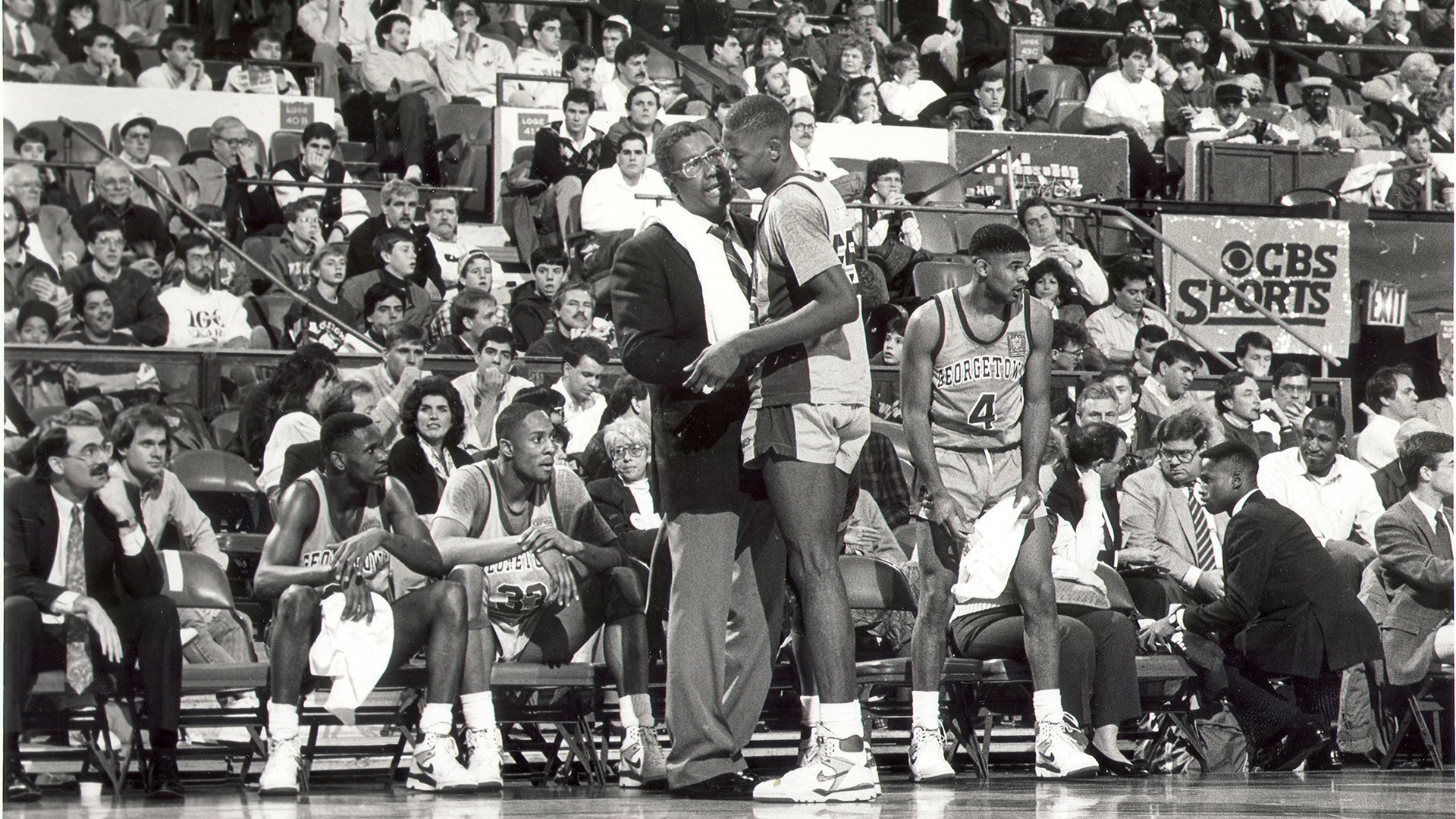
Like Thompson, Georgetown teammate Alonzo Mourning also saw a special player in Mutombo.
"When I noticed his impact on the defensive end, I knew that he was going to make a career out of playing basketball," Mourning said.
Mourning, who went on to have a successful pro basketball career of his own, also saw the commitment that Mutombo had for serving others. As the two built a friendship on and off the court, Mutombo shared his aspirations. Though Mutombo changed his major from premed to linguistics and diplomacy, his goal of helping the less fortunate never wavered.
"The genuineness of (his) caring, there was nothing fake about it," Mourning said. "He really wanted to change the world and make the world better. He lived it, and his actions were contagious.”
Advancing basketball on a global scale
After completing an impressive college career on the court and graduating from Georgetown, Mutombo was selected fourth overall by the Denver Nuggets in the 1991 NBA draft. The Hall of Fame center spent 18 years in the league, playing for Denver, Atlanta, Philadelphia, New Jersey, New York and Houston.
Mutombo is regarded as one of the best defenders in league history, being named Defensive Player of the Year four times to go along with his eight All-Star selections. His signature trademark was blocking shots, often followed by a playful taunt and the wag of a finger. He led the league in total blocks five consecutive seasons and ended his career second all-time in blocked shots with 3,289.
While he made history on the court with records and awards, Mutombo’s legacy in basketball will be the work he did as the NBA’s first global ambassador, where he steered the league’s investment in Africa and supported its social efforts with the NBA Cares Foundation.
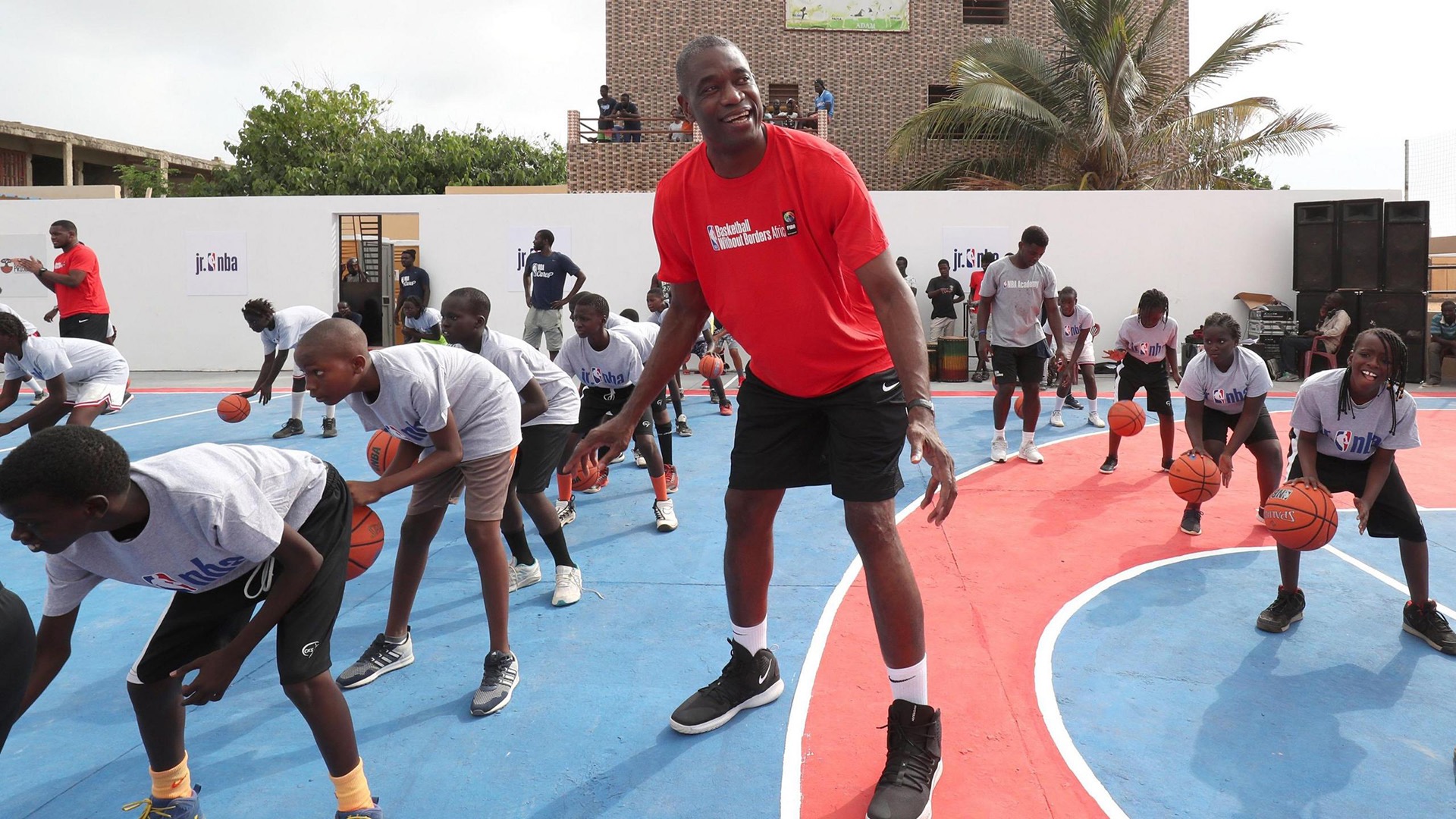
Many of the basketball stars to come from Africa — Joel Embiid, Serge Ibaka and Pascal Siakam, to name a few — point to Mutombo as one of the forefathers who helped pave a way for them.
The same is true for student-athletes at the college level. Ryan Mutombo, Dikembe’s son and a former basketball student-athlete at Georgetown and Georgia Tech, can attest to it firsthand.
"Throughout my college years, I want to say I had eight or nine African teammates, and all of them just loved my dad," Ryan Mutombo said. "I think almost all of those players were affiliated with one of the several NBA Africa academies that they have over there to develop young talent, and my dad was really integral in getting those off the ground."
When Ryan was a kid, he remembers traveling to Houston to watch his dad play and dreaming of being an NBA player one day, too. As he grew older and began to understand the impact his father was making, he realized helping others wasn’t just something his father did on occasion.
"For him, I think the NBA was a form of philanthropy," Ryan Mutombo said. "There was no separation between his, quote, unquote, playing career and his, quote, unquote, philanthropic career. It was just one big pot. That’s why I don’t think he had any hesitation in cross-pollinating his resources between the NBA and the philanthropic world … because for him, I don’t really think that he saw a line between the two."
Creating foundational change in the Congo
Among the several projects that Mutombo embarked on, perhaps the most rewarding and most difficult one was the creation of a hospital in Kinshasa.
In 1997, while he was on the way to winning a second-consecutive NBA Defensive Player of the Year award on the court, the Dikembe Mutombo Foundation was created. Mutombo’s goal for the foundation was to improve the health, education and quality of life for the people of the Congo.
Evan Gelber, a former videographer for the Rockets during Mutombo’s tenure, was inspired by his mission and offered to join his crew. This triggered seven trips to the Congo with Mutombo, the first in 2007, where Gelber documented the journey of building the hospital.
"It was one of the great joys of my life," Gelber said. "I was on board, happy to help him in any way I could."
Gelber was present with Mutombo throughout parts of the process, from surveying the land where the building would be built and meeting with the country’s president to building rehab equipment and touring the building with doctors and nurses.
Even now, Gelber is still amazed by how Mutombo managed it all.
"He was just a tireless worker every single day," Gelber said. "They were 10-, 12-, 14-hour days, and we didn’t have a lot of downtime. I just tried to give people a sense of what his country was like, and then how hard he was working to accomplish his mission."
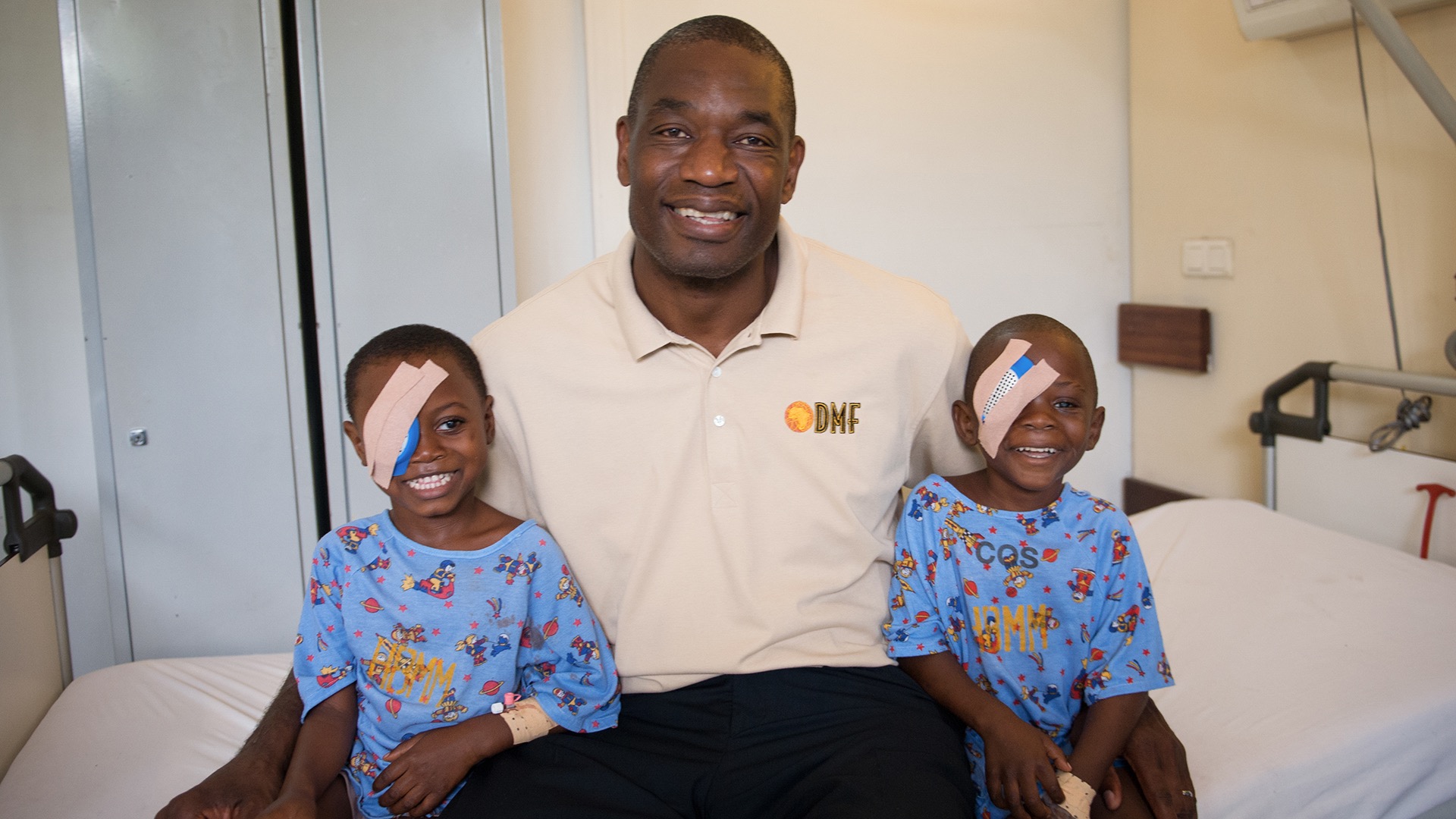
In 2007, the Biamba Marie Mutombo Hospital, named after Mutombo’s mother, opened its doors. The $29 million facility has treated over 1 million patients and has since expanded to better treat infants, as well as patients with cancer and HIV.
"When the hospital was finally built … there had to be 100,000 people in the street," Gelber said. "I always tell people it was like one of my kids being born because it was such an amazing moment to see him and his family realize this dream. It was amazing to be a part of."
In addition to the hospital, Mutombo continued to provide aid and resources to the Congolese community. In 2021, his foundation announced the opening of the Samuel Mutombo Institute of Science and Entrepreneurship, in honor of his father, who worked as an educator for over three decades.
Inspired by a cervical cancer screening campaign that he led with the help of Mutombo in 2016, Dr. Groesbeck Parham, a world-renowned gynecologic cancer surgeon and CEO of the nonprofit Friends of Africa, is currently building the Dikembe and Rose Mutombo Compassionate Cancer Center. The center will be a space for women who are cancer survivors to heal physically, emotionally and spiritually.
"Meeting Dikembe, working with him, standing shoulder to shoulder with him in service to the women of Africa … it was one of the greatest gifts of my life," Parham said. "Because of him, I will keep doing what I know how to do: saving the lives of African women, and in doing so, strengthening their families and the vulnerable communities they hold together.
"Dikembe’s life was a light, and I pray that each of us finds a way to carry that light forward."
A unified duty to continue a legacy
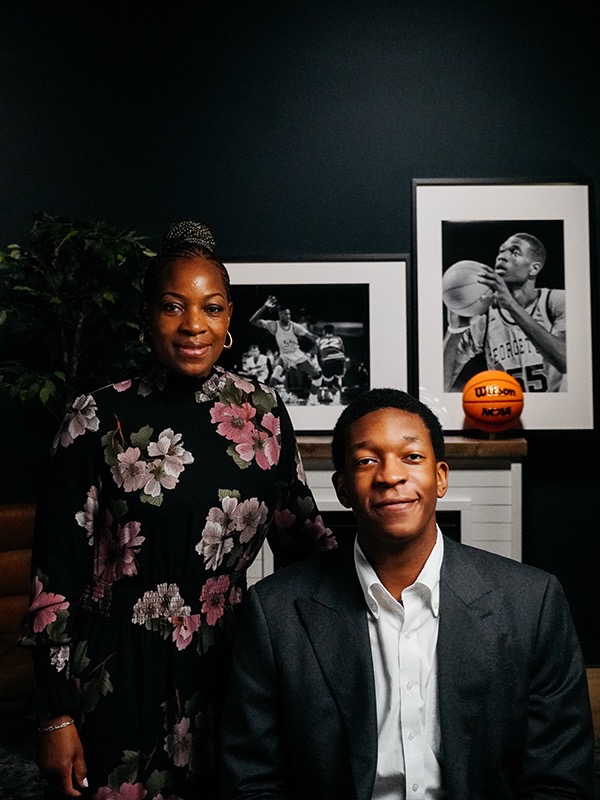
Carrying that light forward has looked different for everyone who knew him.
For Ryan Mutombo, it starts right at home.
"Obviously, I don’t have as big of a platform that he did, but for me, it’s just become trying to take as good care possible of the people in my life as I can," he said. "It’s been a very rough last three years for my family since my dad’s diagnosis, so just making sure my brother is all right, my sister, my mom, my extended family … making sure that everybody’s all right, because I know that’s exactly what my dad would be doing if he was still here."
For Rose Mutombo, it is continuing the work that her husband poured so much of himself into.
"Dikembe loved this African proverb that says, ‘Whenever you take the elevator up, always remember to send that elevator down so it can uplift other people.’ So we will continue that legacy of trying in our best ability to send that elevator down to uplift the less fortunate," she said.
Through the acknowledgment of his life’s work with an honor like the Theodore Roosevelt Award, the countless people that Mutombo impacted play a part in carrying his light forward, too, by continuing to share his name and his story.
"Awards are symbolic gestures of how people feel about you in their hearts," Ryan Mutombo said. "I think that my dad is receiving this award because the people that have interacted with his story, and many people at the NCAA who have gotten to know him personally over the last 4½ decades, I think they’ve been touched by him. They’ve been moved by him. They’ve had their lives changed by him to some degree."
When asked what he thought his father might say in response to accepting this award, Ryan Mutombo knew exactly what the answer was.
"He would definitely make a joke funnier than what I’m capable of saying," he said, chuckling.
"But if my dad was here right now, I think he would say, ‘Keep pushing. Continue the work. Continue to fight for the people you love. Continue to fight for the places you love, for the communities you love, and never forget where you came from.’"