

4 trailblazers provided representation at a key time during the rise of women in sports
When Alpha Alexander stepped onto Wooster’s campus as a student-athlete in the fall of 1972, she entered an uncharted world.
She graduated from a high school in Ohio that did not offer girls sports, and the opportunity to play at the college level was an exciting prospect. Just months earlier, Title IX of the Education Amendments of 1972 was enacted, prohibiting sex-based discrimination in education programs and activities that receive federal funding. While Wooster already offered sports for women before the law, the landmark legislation sparked a nationwide surge in opportunities for young women like Alexander to participate in higher education and athletics.
“At the time, I didn’t know what Title IX was,” Alexander said. “I just knew that I wanted to play sports, and Wooster gave me an opportunity to do that.”

At Wooster, Alexander played basketball, volleyball, tennis and lacrosse while earning her degree in physical education. The student-athlete experience was one she thoroughly enjoyed, but attending a predominantly white institution meant that Alexander often lacked the company of Black peers and other students of color. For the first two years of college, she was the only Black female athlete at Wooster.
Alexander wanted to address this issue and learn more about how she could help more people who look like her enter the sports world.
She didn’t know it then, but this desire would mark the beginning of a life dedicated to increasing the involvement of Black girls and women in all aspects of sports, later focused through the work of the Black Women in Sport Foundation. The organization she co-founded with Nikki Franke, Tina Sloan Green and Linda Greene in 1992 focuses on advancing girls and women “from the playing field to the boardroom” through grassroots programming, mentoring and educational sessions.
How it came together
The group founders first met at Temple, where each of them made their way to the campus during the late 1960s and 1970s. Sloan Green arrived first as a master’s student and later became the university’s women’s lacrosse coach. As an undergrad at West Chester, she was a four-year letter winner in field hockey, lacrosse and badminton. Franke followed in 1972, becoming a graduate student and a fencing coach after her own stellar college career at Brooklyn.
Sloan Green and Franke were introduced to Alexander in 1976 during Temple’s first Black Women in Sport conference. Then a senior at Wooster, Alexander had been invited to visit campus and present her senior independent study examining the different experiences that Black and white female athletes encounter.
Alexander’s experience at the conference with Franke and Sloan Green inspired her to attend Temple for graduate school, studying sports psychology and working as a graduate assistant in Temple’s athletics department.
During their time at Temple, all three women were active participants in local and national conferences for women in sports, led at the time by organizations like the Association for Intercollegiate Athletics for Women. Within these spaces, they noticed a lack of representation for Black athletes and other athletes of color.
“We weren’t hearing people discussing some of the concerns that we had as African American women involved in athletics,” Franke said. “And so we decided, ‘Well, if no one’s going to do this, then we need to start doing this.'”
From the playing field to the boardroom
The foundation’s work began years before its official founding. When Linda Greene entered the fold in 1978 as the first Black female professor at Temple’s law school, her legal expertise fit perfectly with the rest of the group.
Within the Temple and greater Philadelphia area, the group began hosting conferences with women of color as the speakers and facilitators, discussing their experiences in sports.
“We were trying to exhibit what it means to be an athlete and how to go from being on the playing field to having a seat at the table and being able to make decisions that really will impact sports,” Alexander said.
Right away, they began to see the impact they were making.
“It was very easy to get people to show up,” Franke said. “People were looking for something like what we had at our conferences. It became a really great training ground for younger women that were going into athletics and going into coaching to be able to talk about some of their concerns and for those of us who’d gone through it to be able to share our experiences in a way that we hoped would be helpful.”
Beyond the conferences, the foundation put an emphasis on introducing children from underrepresented communities to nontraditional sports like field hockey, tennis and fencing. This came in the form of after-school clinics, summer programs and visits to colleges.
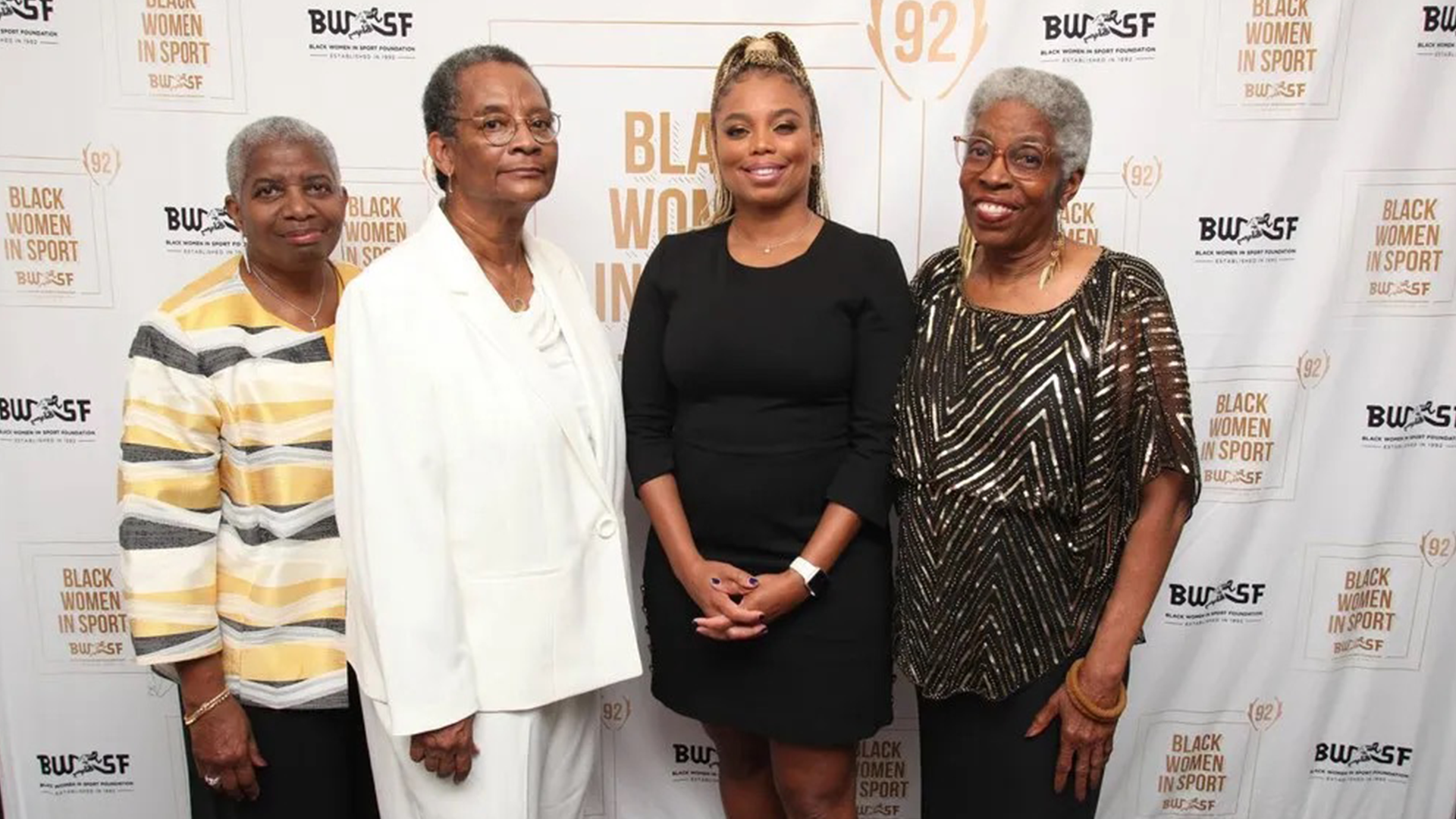
As time passed, the foundation’s reach grew larger. Women and children not just in the surrounding Philadelphia area but nationally began participating in events it hosted or backed. This included attending the U.S. Open Tennis Championships, learning how to combine athletics and academics at the Sisters in Sport Science camp and joining the White House’s Let’s Move! national fitness initiative.
A duty to carry the torch forward
Thirty-four years after the foundation was founded, its creators have etched their marks in the history and growth of athletics.
The NCAA has honored three of the founders over the years. In 2001, Alexander earned the Silver Anniversary Award, which recognizes former student-athletes who have excelled in their professional lives and continue to exemplify the values of collegiate athletics 25 years after the end of their college careers. Sloan Green was honored in 2025 with the Theodore Roosevelt Award, the Association’s highest honor. Earlier this year, Franke was awarded the Pat Summitt Award, given to a coach who has demonstrated devotion to the development of student-athletes and made a positive impact on their lives.
Although the founders are still active on the foundation’s board and present at key events, new faces have emerged to lead the charge.
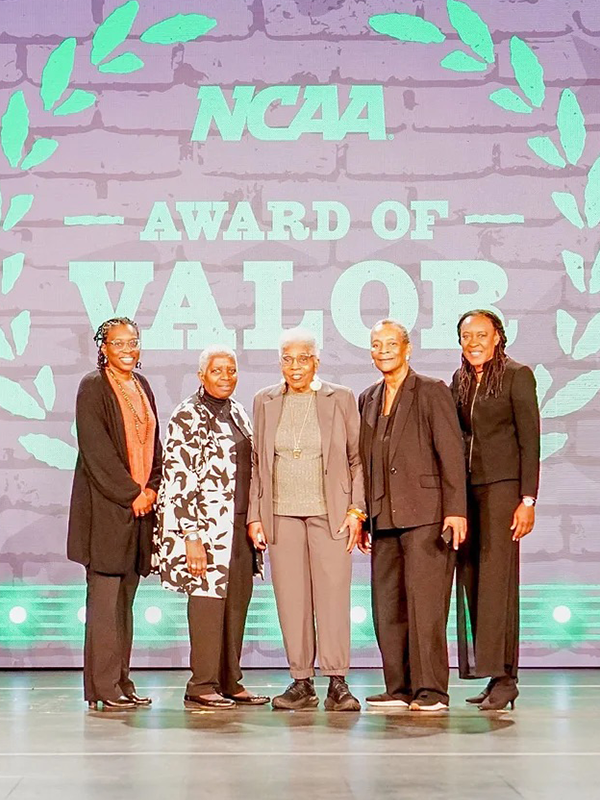
Traci Green, Sloan Green’s daughter, took over the role of foundation president in 2024. Green, a successful women’s tennis coach at Harvard, holds the organization close to her heart.
“I grew up knowing about the foundation, learning about the foundation, being involved with the foundation, so it definitely means a lot to me, and it’s made a huge impact in my life,” Green said. “When I’d be home for the weekends when I was in college, I’d be helping out with mentoring programs. It was one of my part-time summer jobs.”
Green played college tennis at Florida, where she was a member of the 1998 national championship team. From growing up around sports to becoming a student-athlete and now a coach, she can’t imagine a life where sports aren’t a major part of her life.
As a product of what can happen when you have guidance and representation, Green is dedicated to continuing where her mom, Alexander, Franke and Greene left off.
“It’s just been a true blessing to still have the founders being active, and I’ve learned so much from them, and they bring so much energy to the foundation, to our board,” Green said. “At the same time, we need to keep expanding, keep breathing new energy, new life, into the organization.
“We need more Dr. Nikki Frankes, we need more Tina Sloan Greens, and that’s our role, our purpose … to create more.”