
Official Championship Procedures
This page summarizes the NCAA Division I Women’s Basketball Championship selection, seeding and bracketing process. The NCAA Division I Women’s Basketball Championship Principles and Procedures document remains the official governing source used by the committee.
What is the process to creating the 76-team tournament bracket for the NCAA Division I Women’s Basketball Championship?
The 76 tournament teams comprise 32 automatic qualifiers — teams that win their conference tournaments — and 44 at-large bids. The NCAA Division I Women’s Basketball Committee uses a combination of metrics and evaluation tools to choose the at-large teams.
The NCAA uses a three-phase process to create the 76-team tournament bracket:
- Select the 44 best at-large teams.
- Seed the field of 76 teams.
- Place the teams into the championship bracket.
What principles are in place to select, seed and place the teams into the championship bracket?
- The committee selects the 44 best at-large teams, with no limit on how many may come from one conference.
- The committee aims to achieve reasonable competitive balance across all regions of the tournament bracket.
Conflict-of-interest rules
- Committee members cannot be present during discussions regarding the selection or seeding of a team they represent as a school or conference administrator.
- Members cannot vote for a team they represent.
- Members may not answer questions about their own team unless the questions are strictly factual, such as injury dates or player status. Conference administrators may answer general questions about the relative strengths of teams within their conference. School administrators may discuss other teams in their conference, but only when specifically asked.
- The committee must follow all established principles when selecting, seeding and bracketing teams, with no principle taking priority over another.
Voting integrity
- All committee voting is conducted by secret ballot.
Who is on the Division I Women’s Basketball Committee?
Composition:
12 members selected to five-year terms.
- One representative from each autonomy conference.
- Four representatives from the seven highest ranked nonautonomy conferences (based on basketball success*).
- Four representatives selected from remaining nonautonomy conferences (based on basketball success*).
*Basketball success is defined as total conference appearances plus total conference wins in the previous five NCAA championships, excluding Opening Round wins.

Conference affiliation: Big Ten Conference
Term expiration: August 2030
Brown joined Nebraska Athletics in July 2024 as deputy athletics director and senior woman administrator, overseeing key programs including volleyball and women’s basketball. She arrived from Texas A&M, where she served as deputy athletics director for administration and leadership from 2020-24. At Texas A&M, she led the department’s engagement unit, oversaw compliance, directed diversity and inclusion efforts, and served as sport administrator for multiple teams.
Before Texas A&M, Brown spent six years at Maryland as associate athletics director of administration. There, she oversaw programs that won two national championships and multiple Big Ten Conference titles. She also served as Maryland’s diversity and inclusion officer, led community engagement initiatives, and contributed to major department committees and hiring processes. Earlier in her career, Brown worked at the American Conference, the Big East Conference and the Big Ten Conference. A former women’s basketball letterwinner at Northern Illinois University, she also holds a master’s degree in sports administration from Ohio.
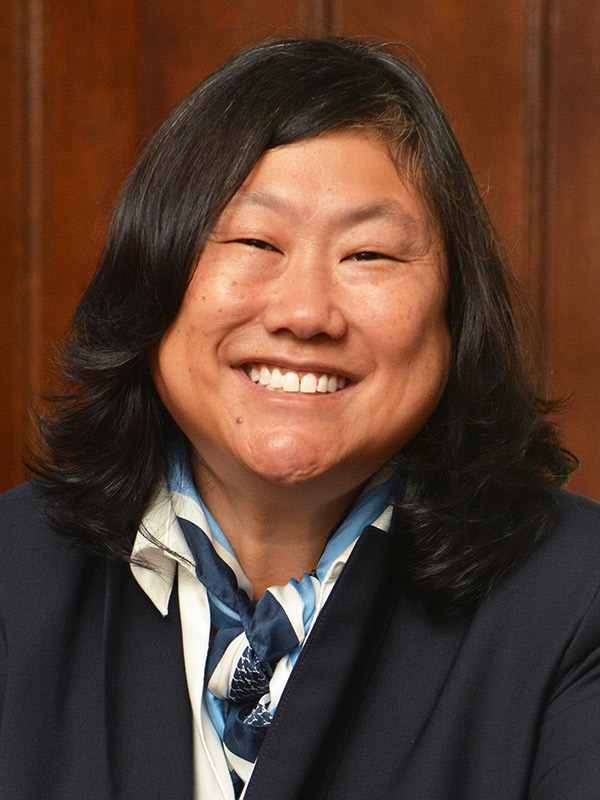
Conference affiliation: The Ivy League
Term expiration: August 2029
Chun has served as Yale’s director of athletics since 2018, becoming the first woman and first Asian American to lead the department. A nationally recognized athletics administrator, she is a two-time National Association of Collegiate Directors of Athletics Under Armour Athletics Director of the Year. Under her leadership, Yale athletics has achieved exceptional competitive success, earning 11 national championships, 38 Ivy League titles, over 140 All-Americans and more than 180 Academic All-Ivy honorees. She previously served as director of athletics at her alma mater, Colgate, where she made history by becoming the first Asian American woman athletics director in NCAA Division I history. Chun had a standout career as a volleyball student-athlete at Colgate, later serving as a coach and being inducted into the Colgate Hall of Honor. Chun has held significant NCAA leadership roles across football and governance committees, including the NCAA Division I Council, Division I Football Oversight Committee and Division I Football Competition Committee.
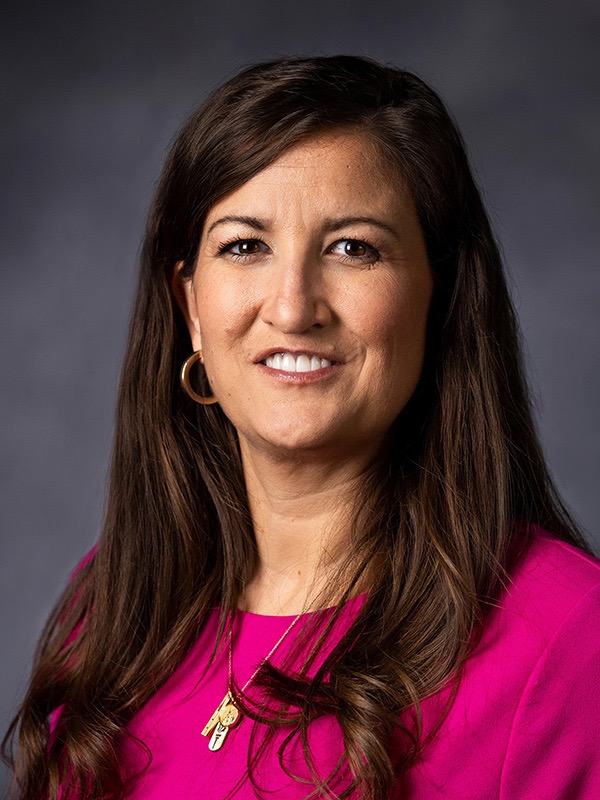
Conference affiliation: Big 12 Conference
Term expiration: August 2029
Darger is the senior associate athletics director and senior woman administrator at Brigham Young, where she oversees women’s soccer, women’s gymnastics, men’s and women’s cross country and track and field, and the spirit squads. She leads the department’s human resources and gender equity efforts and serves in key campus roles, including Title IX liaison. Nationally, she contributes to the NCAA Common Ground Leadership Team and Big 12 Senior Woman Administrator Committee, as well. Darger holds a doctorate in educational leadership (2023) and master’s and bachelor’s degrees from Brigham Young. Before joining Brigham Young athletics in 2015, she spent more than a decade in coaching and athletics administration at the high school and collegiate levels, including six years as an assistant women’s basketball coach at Utah Valley.

Conference affiliation: Pac-12 Conference
Term expiration: August 2031
Elcano is in her 13th year at Oregon State and serves as the women’s basketball sport administrator. A former basketball student-athlete at Willamette, she began at Oregon State as executive assistant to the athletics director and rose through roles in operations, marketing and fan engagement and revenue generation before her promotion to the executive leadership team in 2022. She oversees communications, creative and multimedia rights partnerships, and supervises women’s cross country, women’s track and field, men’s soccer and softball in addition to women’s basketball. Elcano chaired the marketing and communications subcommittee for the 2019 NCAA Women’s Basketball Regional in Portland, Oregon, has served as an NCAA site representative for women’s soccer, and is a board member and third vice president of the National Association of Collegiate Marketing Administrators.
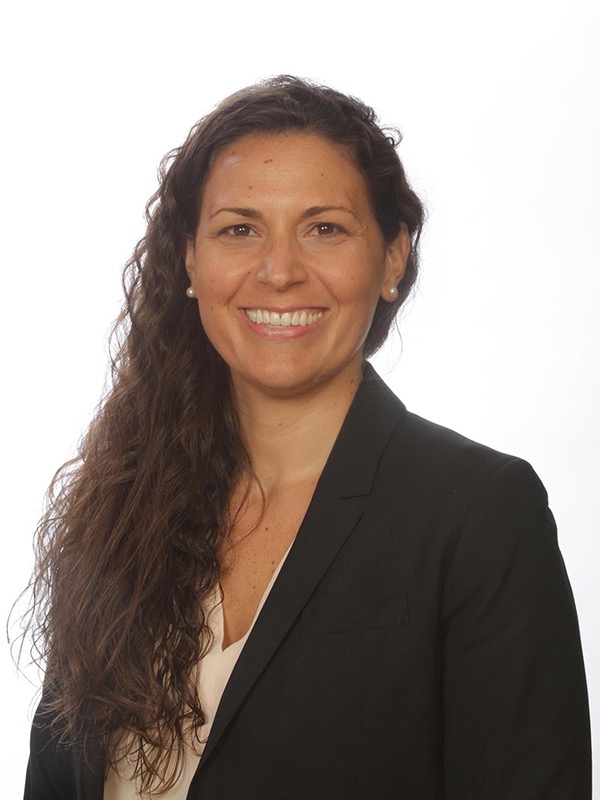
Conference affiliation: Big East Conference
Term expiration: August 2031
Fiorvanti is the deputy director of athletics and senior woman administrator at UConn, a role she has held since 2021. She arrived at UConn in 2011 as an assistant director of compliance services and was elevated through the compliance ranks, overseeing the athletics department’s compliance office before moving into her current position on the director of athletics’ leadership team. Fiorvanti is the primary sport administrator for men’s ice hockey, women’s lacrosse and women’s soccer, and has represented UConn on the Big East Senior Woman Administrator Committee. A former four-year member and captain of the women’s volleyball team at Providence, she previously served on the NCAA Women’s Volleyball Rules Committee and is a 2014 graduate of the Women Leaders in College Sports Institute for Administrative Advancement.

Conference affiliation: Atlantic Coast Conference
Term expiration: August 2027
Heird has served as Louisville’s director of athletics since 2022, leading major progress in competitiveness, academics, fundraising, facilities and NIL. He hired Jeff Brohm and Pat Kelsey to lead football and men’s basketball, guided multiple teams to national rankings and NCAA postseason appearances, and celebrated football’s first ACC Championship game berth. Academically, Louisville has posted 27 straight semesters with a GPA of at least 3.0. Heird secured a $41 million stadium naming-rights deal, expanded NIL support through the 502Circle partnership and launched industry-leading mental health initiatives. Before becoming athletics director, Heird held senior roles at Louisville and Villanova, overseeing championships, facilities, capital projects and key sport programs. He began his athletics career at Louisville in 2007 after working in Washington, D.C. Heird is a 2002 graduate of Mississippi College, where he was an American Southwest Conference 800-meter champion in track and field, an all-conference selection in cross country and a member of the football team. He earned an MBA from Louisville in 2009.
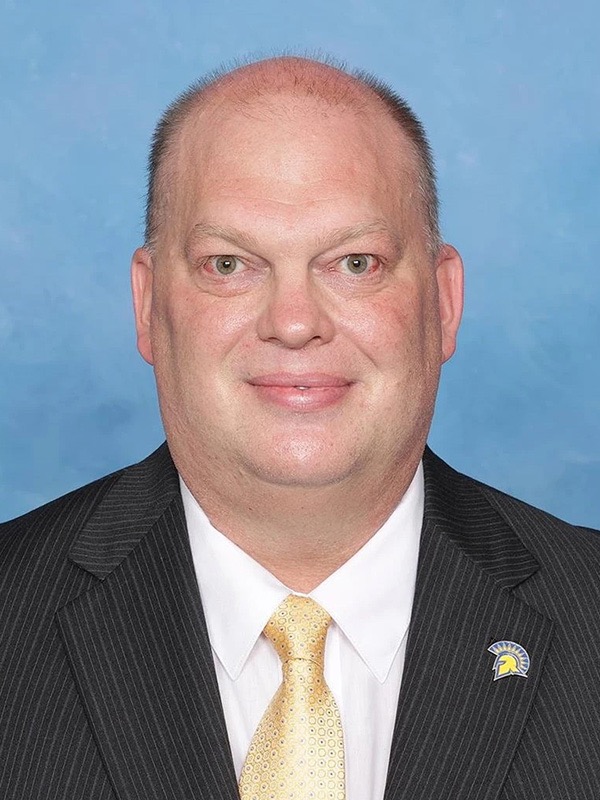
Conference affiliation: Mountain West Conference
Term expiration: August 2028
Konya, a two-time NACDA Athletics Director of the Year, has served as San Jose State’s director of athletics since 2021. He has led the Spartans to historic competitive success, including postseason appearances in both football and men’s basketball, as well as record achievements in women’s golf. Konya has driven major innovation and growth through strategic partnerships, expanded multimedia rights, record fundraising and enhanced student-athlete experiences. Before San Jose State, Konya led successful, nationally recognized athletics programs at Northeastern, Oakland, and California State University, Bakersfield. During his time at Oakland, Konya served as chair of the Horizon League Executive Council. He holds a law degree from Iowa and a bachelor’s degree from Princeton, where he played football.

Conference affiliation: Atlantic 10 Conference
Term expiration: August 2027
Lewis, appointed in 2023 as George Mason’s assistant vice president and director of intercollegiate athletics, has rapidly reshaped Mason athletics into a model of competitive excellence, student-athlete support and school pride. He led the Patriots to a historic 2024-25 campaign featuring five Atlantic 10 Conference championships and record-setting seasons in both men’s and women’s basketball, while also driving strong academic achievement with a department GPA of 3.32 and a record number of Provost Scholars. Lewis has strengthened the student-athlete experience through major facility investments — including a $2 million field house renovation and the development of a new $30 million Basketball and Academic Performance Center — while delivering significant revenue growth in tickets, sponsorships and fundraising. Lewis brings leadership experience from Brown, Georgia Tech, Maryland and Georgia State, along with credentials as a licensed CPA and NCAA Pathway Program graduate. A former Georgia Tech basketball captain, Lewis played in the 2004 Division I national title game. He earned his bachelor’s in management from Georgia Tech and later completed a master’s in taxation at Georgia State.
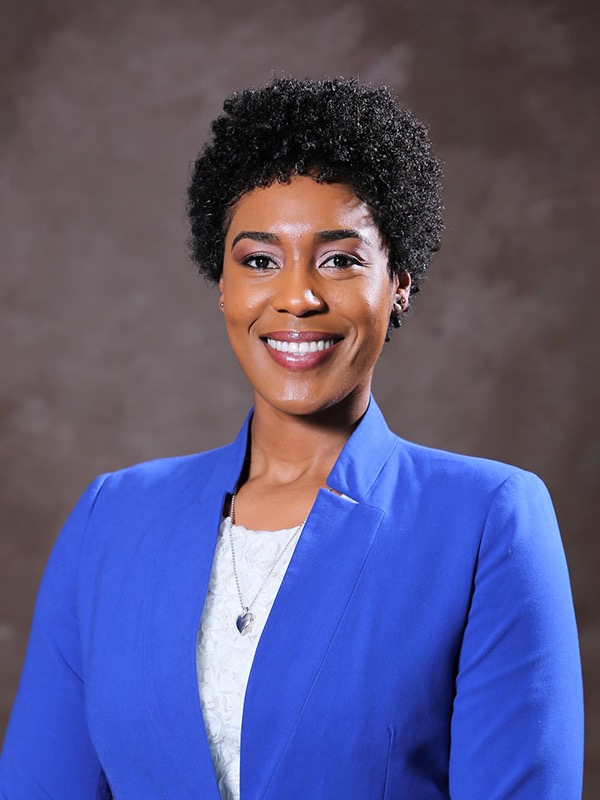
Conference affiliation: Big South Conference
Term expiration: August 2031
Montgomery is in her fourth year leading the Big South Conference, becoming the league’s fourth commissioner in May 2023 and its first appointment to the Division I Women’s Basketball Committee. A former women’s basketball student-athlete at Gardner-Webb, she spent seven years on the Big South staff before stops at Winthrop, the Summit League and the Missouri Valley Conference, where she was appointed deputy commissioner. She also served as an assistant director of enforcement at the NCAA national office. Montgomery’s national service is extensive: she was a two-time chair of the NCAA Committee on Women’s Athletics, a member of the inaugural NCAA Board of Governors Ad Hoc Committee to Promote Cultural Diversity and Equity, and most recently the vice chair of the Women’s Basketball Invitation Tournament Selection Committee.
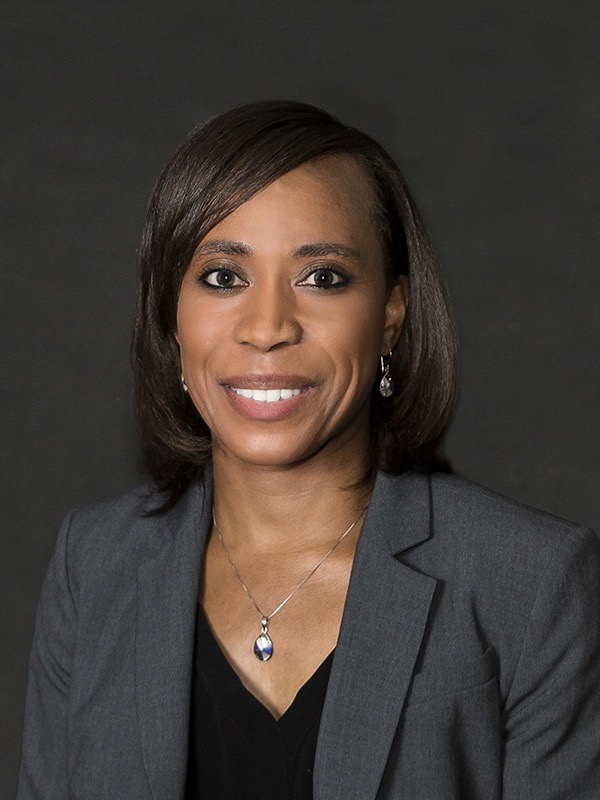
Conference affiliation: Missouri Valley Conference
Term expiration: August 2030
Redmond joined the Missouri Valley Conference in 2023, where she contributes to all aspects of conference operations, governance, membership services, business functions and leadership initiatives. She works closely with the conference’s board of directors and Council of Athletic Directors to support overall administration and strategic direction. Redmond spent more than 13 years at the Atlantic 10 Conference, rising from director of compliance to executive senior associate commissioner. She led the Atlantic 10’s diversity, equity and inclusion efforts; oversaw the Commission on Racial Equity, Diversity and Inclusion; and worked directly with conference leadership on governance, policy development, membership strategy, and special initiatives, including the 50th anniversary of Title IX celebration. Nationally, Redmond serves on the NCAA Division I Committee on Infractions and has previously held numerous NCAA committee appointments, including the Division I Nominating Committee; the Division I Administration Cabinet; the Awards, Benefits, Expenses and Financial Aid Cabinet; and the Division I Amateurism Fact-Finding Committee. She has received significant recognition, including the 2017 Nell Jackson Administrator of the Year Award from Women Leaders in Sports and a 2022 Sports Business Journal Game Changer honor. Redmond has held previous roles at Richmond, Dartmouth and Benedictine (Illinois). A former track and field student-athlete at DePaul, she earned her undergraduate degree from DePaul and an MBA from Benedictine.
Conference affiliation: Southern Conference
Term expiration: August 2027
Simmons was promoted to senior associate athletics director for student success and senior woman administrator at Western Carolina in 2024, a year and a half after joining Catamount athletics in 2022. She oversees student-athlete support and academic success initiatives, and she serves on the department’s senior leadership team. Simmons began her Western Carolina career in 2021 as a transfer specialist in academics affairs before transitioning fully into athletics administration. She previously spent seven years at her alma mater, the University of Louisiana Monroe, rising from a graduate assistant in academic services to assistant athletics director for compliance and SWA. Her responsibilities there included sport oversight, compliance management, Student-Athlete Advisory Committee advising and Title IX liaison work. As a standout women’s basketball student-athlete, she was a two-time team captain, first-team All-Sun Belt Conference selection and a 1,000-point scorer. She holds a bachelor’s degree in psychology with a mathematics minor from ULM.
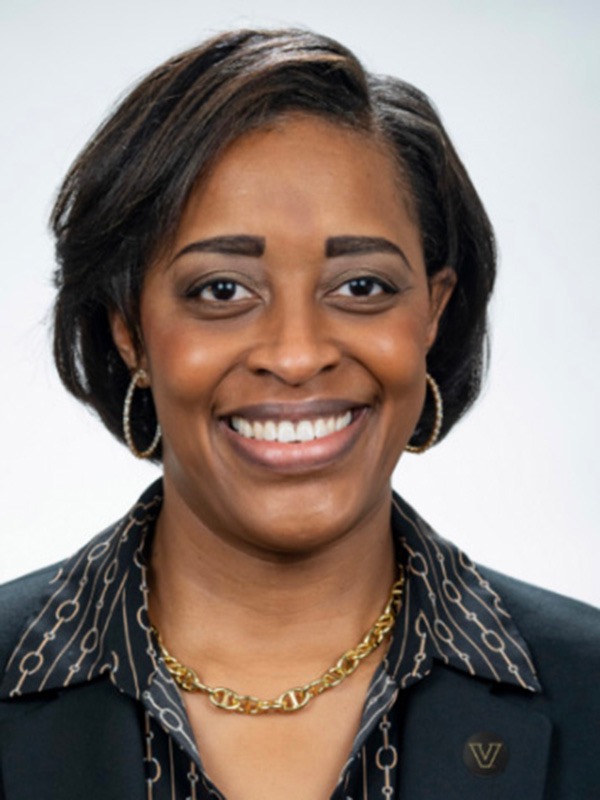
Conference affiliation: Southeastern Conference
Term expiration: August 2030
Lee is Vanderbilt’s vice chancellor for athletics and university affairs and athletics director, becoming the first woman and first Black woman to lead an SEC athletics program when she was appointed in 2020. A former Vanderbilt women’s basketball student-athlete and team captain, she holds a bachelor’s, master’s and doctorate from Vanderbilt and has spent her entire professional career at the university, rising from academic advisor to deputy athletics director before taking the department’s top role. Under her leadership, Vanderbilt has won national and conference championships across several sports and maintained elite academic success, with the Commodores posting 29 straight semesters with a department GPA above 3.0. A nationally respected leader, Lee has served on multiple NCAA committees, including the Division I Men’s Basketball Competition Committee, Women’s Basketball Rules Committee and Division I Women’s Lacrosse Committee. Additionally, she has been recognized as the NACDA Athletics Director of the Year (2024-25), the Sandy Barbour Nike FBS Executive of the Year (2024) and the 2022 Black Student-Athlete Summit Athletic Director of the Year.
When do members of the committee begin reviewing teams?
Committee members rely on a broad set of observation, consultation and data resources throughout the season and during selection week to make informed decisions.
Committee members draw on far more than won-loss records. Alongside the full statistical picture — detailed results, rankings, metrics and polls — they weigh inputs like injury and availability reports and late-season performance.
Each of the 12 committee members individually interprets this information, and their collective deliberation precedes each member voting by secret ballot to determine team selection and seeding.
What criteria are used by the committee to evaluate teams?
The committee considers a wide range of data to evaluate teams, including (listed alphabetically, not in terms of priority):
- Bad losses.
- Common opponents.
- Competitive in losses.
- Early performance versus late performance.
- Head-to-head outcomes.
- NET ranking.
- Observable component.
- Overall record.
- Significant wins.
- Strength of schedule.
- Wins Above Bubble ranking.
What is the NET?
The NCAA Evaluation Tool, known as the NET, is used to assess team quality for NCAA tournament selection and seeding. The algorithm, first used for women’s basketball selections during the 2020-21 season, evaluates:
- Whom a team played.
- Where the games were played.
- How efficiently the team performed.
- Game results.
The NET is composed of two major components:
- Adjusted Net Efficiency
Measures overall performance using:
- Offensive efficiency (points per possession).
- Defensive efficiency (opponent points per possession).
- Strength of opponents.
- Game location (home/away/neutral).
- Team Value Index
Results-oriented metric that rewards teams for beating strong opponents, factoring in:
- Opponent quality.
- Game location.
- Win/loss outcome.
The NET is one of many criteria used during selection of the 44 at-large teams and seeding of the 76-team bracket.
What does Wins Above Bubble mean?
Another tool used in selections is Wins Above Bubble, which was added to the women’s selection criteria before the 2025-26 season. This metric is results-based, measuring the quality of a team’s resume, including:
- A team’s wins compared with what a typical bubble team would be expected to have against the same schedule.
- It does not account for scoring margin or efficiency.
For example, if an average bubble team was expected to win 19 games against Team A’s schedule, but Team A won 20, it would have a +1.0 WAB rating.
Phase I: Select the 44 best at-large teams
The committee selects the 44 best teams for at-large berths, with no conference limits. To qualify, a team must have an overall record of .500 or better.
Initial ballot
- Each committee member receives an alphabetical list of all eligible Division I teams before selection weekend and submits an initial ballot with two parts by a designated time on the first full day of selection meetings.
- Column 1: Up to 28 teams the member thinks should be at-large selections.
- Column 2: In the second column, each committee member shall identify all teams that should receive consideration for at-large berths. Each committee member must identify a minimum of 56 teams on the initial ballot between those under consideration and at-large. There is no maximum limit in the second column.
- Any team receiving all but three of the eligible votes in Column 1 becomes an at-large selection.
- Teams receiving at least four votes in either column, teams that won/shared their regular-season conference title or teams that are recommended by more than one member before closing nominations are placed on the at-large nomination board.
- The process for creating the initial “at-large nomination board” will then be closed.
- Teams on this board may be removed with all but three votes. Teams may be added to the board with at least four votes at any time.
- Verbal nominations are allowed.
Remaining ballots
- The committee evaluates teams on the at-large nomination board through repeated voting rounds.
- Each committee member selects a list of the best eight teams, and the eight teams receiving the most votes will make up the next at-large ballot.
- Each member ranks the eight teams, with the best team valued at 1 point.
- The four lowest-point teams (i.e., highest-ranked) are added to the at-large field; the other four carry over to the next round.
- Each committee member lists the best eight remaining teams on the under-consideration board.
- The four teams receiving the most total votes are combined with the four teams carried over from the previous round to form the next at-large ballot.
- This process repeats until all at-large spots are filled.
- Teams not selected after two straight ranking ballots return to the at-large nomination board.
- A team can be removed from the at-large field by all but three votes and returned to the under-consideration board.
- The committee chair may call for:
- Removal of a team from the at-large nomination board if it receives all but two of the eligible votes.
- Review of teams on the holding board.
- Adjusting how many teams move forward each round.
- A full cross-country vote of remaining teams on the at-large nomination board.
- At any point, the committee may begin the seeding process.
Phase II: Seed the field of 76 teams
The committee creates an S-curve, ranking all 76 teams to ensure competitive balance across regions. Once finalized, the S-curve stays fixed, though bracket-placement rules may prevent teams from being placed exactly according to their numerical seed.
How teams are seeded
- Each committee member will submit a list of the best eight teams, not in rank order, from teams that are in the tournament as automatic qualifiers or at-large selections.
- The eight teams receiving the most votes form the next S-curve ballot.
- Members then rank those eight using a point-based scoring system, with the best team valued at 1 point.
- The four lowest-point teams are moved into the S-curve, in rank order; the other four roll into the next ballot.
- This “list eight, rank eight, move four” cycle continues until all teams are seeded.
- After placement, a team’s position in the S-curve can still be adjusted by a simple majority vote.
- The committee may seed teams in any order, not strictly from top to bottom.
Additional considerations
- The chair may:
- Review teams on the holding board; with a majority vote, teams can be added or removed, returning removed teams to the not seeded board.
- Call for a cross-country vote of remaining unseeded teams.
- Begin seeding at any time during the at-large selection process.
Phase III: Building the bracket
The committee aims to create a balanced bracket that ensures fair competition while following all required principles. Balance does not mean equal. After all teams are placed, the committee formally approves the bracket.
Core bracketing principles
- Teams are assigned to regions and first-/second-round sites in S-curve order, by taking into account travel distance from site, mode of transportation and fan accessibility.
- All four teams in each bracket group (seeds 1–16–8–9), (4–13–5–12), (2-15-7-10), (3-14-6-11) are assigned to the same first/second-round site, with two pods at each site that may feed into different regionals.
- The No. 1 overall seed is placed in a regional pod that plays Friday and Sunday.
- The committee will attempt to keep conference teams from meeting until the regional semifinal round.
- If the committee is unable to balance the bracket after exhausting all possible options, it has the flexibility to permit two teams from the same conference to meet each other in the first round.
Hosting decisions and Opening Round procedures
- The last 12 at-large teams and seeds 65-76 compete in the Opening Round on Wednesday and Thursday following the announcement of the field.
- First- and second-round hosting goes to the top 16 seeds that submit acceptable bids.
- If a top seed cannot host, the committee selects another qualifying bid — even if bracketing principles do not allow the selection to be the next highest seed.
- The Opening Round games will be assigned, one to each of four first- and second-round sites, based on the bracket placement of teams participating in the Opening Round games.
Site restrictions and seed flexibility
For regionals, a team cannot be placed in an arena where it played more than three regular-season games (excluding conference tournaments).
- Teams outside the top four seed lines may be moved one line up or down from their true seed to comply with bracketing principles.
Core placement steps
- Teams are placed into the bracket in S-curve order.
- The top four seed lines (1-4) are placed first across the four regional pods, pairing:
- No. 1 vs. No. 4 regional pods.
- No. 2 vs. No. 3 regional pods.
- Once placed, the committee checks the numerical balance of the regional pods by adding the true seeds. Regional totals should generally be within 5 points of one another.
- Teams seeded 5 through 16 are then placed using their seed numbers to maintain bracket balance.
- After ensuring all bracketing principles are met, the committee formally approves the bracket.
Additional considerations
After all principles are satisfied, the committee also aims to:
- Avoid rematches of regular-season games in the Opening Round and first and second rounds when possible.
- Allow relaxation of principles when multiple teams from the same conference are among the last 12 at-large teams in the Opening Round.
- Avoid first- or second-round rematches from prior tournaments.
- Limit situations where teams or conferences are moved out of their natural geographic region too frequently, based on the previous two years’ brackets.
How are teams selected for the Women’s Basketball Invitation Tournament?
Selection committee
The WBIT selection committee, made up of five former Division I women’s basketball coaches and three current/former Division I athletics administrators, is responsible for selecting the 32-team field.
The committee uses the same 12 selection criteria as the Division I Women’s Basketball Committee.
The principles and procedures, however, vary slightly and are detailed below.
Selection committee principles
- Each committee member receives an alphabetical list of all eligible Division I teams before selection weekend and submits an initial ballot with two parts by a designated time on the first full day of selection meetings.
- Column 1: Up to 48 teams the member thinks should be at-large selections.
- Column 2: Any number of teams that deserve consideration for an at-large berth.
- Committee members cannot vote for teams they represent institutionally or as conference administrators.
- Regular-season conference champions (per each league’s tie-break protocol) who do not make the NCAA tournament earn automatic bids to the WBIT — unless the school is postseason-ineligible. Co-champions without the tie-breaker do not qualify automatically.
- The first four teams left out of the NCAA Division I Women’s Basketball Championship receive automatic bids and become the top four WBIT seeds.
- Reclassifying schools are not eligible.
- All voting is conducted by secret ballot.
- The committee must follow all selection, seeding and bracketing principles equally; none takes priority. “Additional considerations” may be applied only if they do not violate the principles.
- Committee resources include box scores, game summaries, computer rankings, head-to-head results, home/away and nonconference results, last-10-games performance, polls and other Division I data.
Phase I: Selecting at-large teams
Initial ballot
- Before the selection meeting, each committee member receives a ballot listing all eligible Division I teams.
- Members list:
- Column 1: Up to 48 teams they think should be at-large selections.
- Column 2: Any number of teams that deserve consideration.
- Teams already automatic qualifiers (either to the NCAA tournament or to the WBIT via regular-season championship) do not need to be voted on.
- Any team receiving all but two votes in Column 1 becomes an at-large selection.
- Remaining teams form an at-large nomination board if either of the following applies:
- They received more than one vote.
- They were later recommended by multiple members.
- Teams can be added or removed from the nomination board at any time based on vote thresholds.
- Verbal nominations are allowed.
Remaining ballots
- The committee evaluates all teams on the nomination board.
- Each member lists the best eight teams, not in ranked order.
- The eight teams with the most votes form the next ballot.
- Each member then ranks those eight teams using a point-based system, with the best team valued at 1 point. The four lowest-point teams are added to the at-large field.
- The other four remain on hold for the next round.
- This “list eight, rank eight, move four” cycle repeats until all at-large spots are filled.
- Teams that do not advance after two consecutive ballots return to the nomination board.
- A team can be removed from the at-large field if it receives all but two of the eligible votes.
Additional considerations
- The committee chair may:
- Initiate reviews to remove teams from consideration with near-unanimous agreement.
- Review teams on the holding board and modify it by majority vote.
- Adjust the number of teams eligible to receive votes or change how many move forward.
- Call for a cross-country vote of all remaining teams.
- Seeding may begin at any time during the at-large selection process.
Phase II: Seeding of teams
- The committee creates a seed list ranking teams 1-32, used to maintain competitive balance.
- The first four teams out of the NCAA tournament automatically become the top four WBIT seeds.
- Once finalized, the seed list remains unchanged during bracket construction, though placement principles may keep a team from being placed in its exact seed position.
- The committee chair may adjust:
- The number of teams eligible to receive votes.
- The number of teams moved onto the seed list at a time.
- Membership of the holding board (by majority vote).
Seeding procedures
The committee repeatedly follows a “list eight, rank eight, move four” process:
- Each member lists the best eight teams, not ranked in order, from all qualifiers.
- The eight teams with the most votes form the ballot.
- Members rank the eight teams using a point-based system with the best team valued at 1 point.
- The four lowest-point teams are added to the seed list in order; the others remain in consideration.
- This cycle repeats until all teams are seeded.
- A team already placed on the seed list may be moved to a new position by majority vote.
- Seeding does not need to be completed in numerical order.
- After NCAA tournament selections are finalized, the list is compressed to ranks 1-32, forming the WBIT field.
Phase III: Seeding of teams
Bracket construction principles
- The primary goal is to maintain competitive balance across regions while placing teams as close to their natural geographic area as possible.
- Seeds 1-32 are distributed across four regions, evaluated level-by-level.
- The first two teams from any conference must be placed in different regions.
- Conference opponents should not meet before the quarterfinals, unless nine teams from the same conference are selected.
Additional considerations
- Teams moved out of their natural geographic area should be placed in the next closest region, when possible.
- Regular-season rematches should be avoided in the first round whenever feasible.
Phase IV: Procedures for placing teams into the bracket
- The committee begins by placing the No. 1 seeds to establish the four regions.
- No. 2 seeds are assigned to the regions geographically closest to their corresponding No. 1 seeds.
- No. 3 seeds are placed in the regions closest to each No. 2 seed.
- No. 4 seeds are then placed in the regions closest to the No. 1 seeds.
Hosting priorities
- Higher-seeded teams receive the first opportunity to host as they advance, unless logistical issues (travel, lodging, facility availability or tournament guidelines) prevent it.
- If two unseeded teams advance, the team highest on the overall seed list gets priority to host.
Placement of remaining teams
- After the top 16 seeds are placed, the remaining 16 teams are assigned to the bracket as close to their natural geographic areas as possible.
- The committee reviews each group of four teams to ensure all seeding and bracketing principles are upheld.