
Official Championship Procedures
This page summarizes the NCAA Division I Men’s Basketball Championship selection, seeding and bracketing process. The NCAA Division I Men’s Basketball Championship Principles and Procedures document remains the official governing source used by the committee.
What is the process to create the 76-team tournament bracket for the NCAA Division I Men’s Basketball Championship?
The 76-team field comprises 32 automatic qualifiers — teams that win their conference tournaments — and 44 at-large teams. The NCAA Division I Men’s Basketball Committee uses a combination of metrics and evaluation tools to choose the at-large teams.
The NCAA uses a three-phase process to create the 76-team tournament bracket:
- Select the 44 best at-large teams.
- Seed the field of 76 teams.
- Place the teams into the championship bracket.
What principles are in place to select, seed and place the teams into the championship bracket?
- The committee selects the 44 best at-large teams, with no limit on how many may come from one conference.
- The committee aims to achieve reasonable competitive balance across all regions of the tournament bracket.
Conflict-of-interest rules
- Committee members cannot be present during discussions or seeding of a team they represent as an athletics director or conference commissioner.
- Members may provide only general, factual information about teams from their own conference.
- Members cannot vote for a team they represent.
- A conference office representative may not participate in discussion of or voting for a team that has formally declared its intent to transition into the conference the member represents.
- Members must recuse themselves from discussion of or voting for a team if an immediate family member is:
- A men’s basketball student-athlete on the team.
- A member of the men’s basketball coaching staff.
- A senior athletics administrator at that school.
- When recused members return, they receive a neutral update from the NCAA vice president of men’s basketball, not other committee members.
- If a conflicted institution receives the same percentage of eligible votes as other teams in a selection or seeding vote, it is included in the tiebreak vote even though its committee member cannot vote for it.
Chair-specific rules
- If the committee chair’s school is still on the under-consideration board when all but four at-large teams have been chosen, the chair must leave the room.
- If the chair’s school ends up among the last four at-large teams, the chair cannot publicly comment on that team; the vice chair handles all questions.
Voting integrity
- All committee voting is conducted by secret ballot.
Who is on the Division I Men’s Basketball Committee?
Composition:
12 members are selected to five-year terms.
- One representative from each autonomy conference.
- Four representatives from the seven highest-ranked nonautonomy conferences (based on basketball success*).
- Four representatives selected from nonautonomy conferences (ranked 12-31 by basketball success*).
*Basketball success is defined as total conference appearances plus total conference wins in the previous five NCAA championships, excluding Opening Round wins.

Conference affiliation: Independent
Term expiration: August 2030
Bevacqua, who is a 1993 graduate of Notre Dame, returned to campus in July 2023 as a special assistant to the president before being named director of athletics in March 2024. Before that, Bevacqua served as chair of NBC Sports, leading to its unprecedented collection of assets and platforms, and was the network’s chief steward of exclusive broadcast rights agreement with Notre Dame football.
He previously served as chief executive officer of the PGA of America, global head of golf at Creative Artists Agency, chief business officer for the United States Golf Association and first managing director of the U.S. Open Championship. Bevacqua is also the eighth person to serve on the committee and the College Football Playoff management team.

Conference affiliation: Southeastern Conference
Term expiration: August 2031
The Perryville, Arkansas, native has been a part of the Ole Miss community since enrolling as a freshman in 1995. A four-year starter for the Rebels basketball team, Carter led the squad to a pair of SEC Western Division titles in 1997 and 1998 while earning all-conference honors twice and garnering All-America honors following his senior season in 1999. He also played in the 1997, 1998 and 1999 NCAA tournaments, scoring 22 points and grabbing 11 rebounds in a loss to Valparaiso in the famous 1998 first-round game, and then recording 18 points and seven rebounds in a win over Villanova a year later.
Carter won a gold medal as a member of the United States national team at the 1998 Goodwill Games and also played professionally in Italy for seven years. He joined the Ole Miss Foundation in 2008 and then the Ole Miss Athletics Foundation in 2009. After three years, he was named executive director. By 2018, he was the school’s deputy athletics director for development and resource acquisition, overseeing the Athletics Foundation while also serving as chief revenue officer and as the sport administrator for baseball and men’s basketball. A year later, he moved to his current role, where his tenure has seen the Ole Miss athletics department reach unprecedented heights that include the school’s three best finishes in the Learfield Directors’ Cup.

Conference affiliation: Metro Atlantic Athletic Conference
Term expiration: August 2029
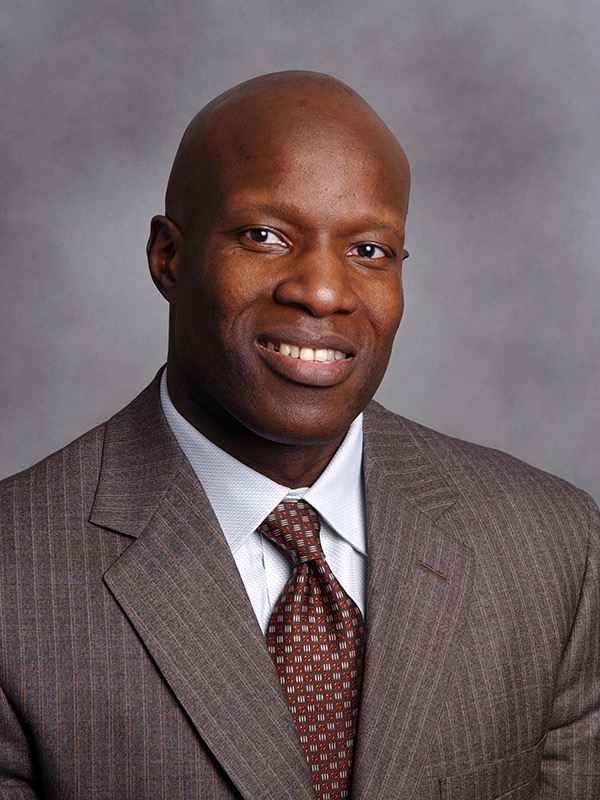
Garcia has served at the helm of the Manhattan athletic department since 2023. Prior to that, she spent 35 years at St. Francis College first as the women’s basketball coach from 1988-99, then as the associate athletics director from 1999-2007 and then as the athletics director from 2007-23. Garcia earned her undergraduate degree from St. Francis in 1980 while playing basketball for four years. Upon graduating, she served as a physical education instructor and girls basketball coach at St. Joseph by-the-Sea High School on Staten Island for eight years. She later earned a master’s from Brooklyn College. Garcia was the Northeast Conference women’s basketball Coach of the Year in 1998, won the FCS Administrator of the Year in 2014-15 from the group now called Women Leaders in Sports, and a year later received Division I-AAA Under Armour Athletic Director of the Year honors. The Brooklyn native has also served on the Division I Women’s Basketball Oversight Committee.
Conference affiliation: Missouri Valley Conference
Term expiration: August 2031
Jackson has extensive basketball experience, having spent 30 years coaching, including seven years as a head coach at Furman and three more in the head position at New Hampshire. He also served as an assistant coach at Vanderbilt for seven seasons, helping the Commodores reach the Sweet 16 in 2004, and had stops at Stanford, Colorado State and St. Bonaventure.
The 1984 Cornell graduate has been at the Missouri Valley since 2021. Before that, he spent three years as the executive associate commissioner of the Big 12 Conference, which included having oversight of men’s basketball and game management, coordinating the conference’s postseason tournament, and working with the league’s coaches, administrators and officials. He previously spent four years as deputy commissioner of the Big South Conference, overseeing external operations, championships and sports administration, with a primary focus on men’s and women’s basketball. Jackson was also responsible for the league’s strategic plan and assisted with branding efforts and broadcast matters.

Conference affiliation: Big Ten Conference
Term expiration: August 2031
Jackson had a brief stint on the committee in 2024 when he was athletics director at Villanova and was appointed by the Big East Conference to replace former Butler Athletics Director Barry Collier, who retired soon after the 2024 Men’s Final Four. However, Jackson accepted his current role that September, ending his short tenure.
Jackson held positions at Southern California (senior associate director of athletics and chief innovation officer) and Syracuse (executive senior associate athletics director) before going to Villanova in 2015. While he was at Villanova, the Wildcats captured the Division I men’s basketball national championship in 2016 and 2018. A native of Boston, Jackson played defensive back on the football team at Colby and received his bachelor’s degree in 1995. He earned a master’s degree from Trinity (Connecticut) in 1997. He also worked as a coaching assistant for the New England Patriots and as director of football development for the Oakland Raiders.
Jackson oversees 21 varsity sports with more than 500 student-athletes, plus recreational and intramural programs at Northwestern. In his two years at the school, the Wildcats won national championships in field hockey (2024, 2025) and women’s golf (2025) and last month captured the women’s lacrosse national title.

Conference affiliation: West Coast Conference
Term expiration: August 2028
Jackson has been the commissioner of the West Coast Conference since 2023. Before that, he was executive associate commissioner for men’s basketball for the Big East Conference for nearly nine years. Jackson served as head coach at Wisconsin from 1992-94, leading the Badgers to their first NCAA tournament berth in 47 years. He also held coaching positions at Providence, Washington State and Oregon, and he served on the NCAA Rules and Competition Committee. Jackson also spent 13 years working for the NBA, serving first as senior vice president and later as executive vice president of basketball operations. Jackson also served as president and general manager of the expansion Vancouver Grizzlies from 1994-2000, as assistant coach and later head coach of the New York Knicks from 1987-91.
Conference affiliation: American Conference
Term expiration: August 2028
Johnson is the vice president and director of athletics at Temple, a position he has held since 2021. He earned both his bachelor’s and master’s degrees from Georgia and served his alma mater as associate athletics director for internal operations and as the primary administrator for men’s basketball from 2005-11. He also served as senior associate athletics director for football operations for three years, and as senior associate athletics director for administration and operations for seven years, at Texas. The Thomasville, Georgia, native also held the positions of administrative assistant for football operations at North Carolina in 1999 and the manager of football operations at Arizona State from 1996-99.

Conference affiliation: Western Athletic Conference
Term expiration: August 2029
Lassiter is the vice president for athletics at Abilene Christian, a position he has held since 2021. Prior to that, Lassiter served as deputy athletics director for external operations at Oregon State from 2015-21. There, he was the sport supervisor for men’s basketball as the Beavers made two NCAA tournament appearances, including their first Pac-12 Conference championship and a run to the Elite Eight in 2021. Before his time in Corvallis, Lassiter served on the executive team at the University of Central Florida for three years after arriving from Utah, where he spent more than six years in athletics administration and served an integral role during the 2010 West Regional in Salt Lake City.

Conference affiliation: Southern Conference
Term expiration: August 2027
Newton has been overseeing the athletics department at Samford since 2011. Newton was an All-Conference honorable mention basketball player at Samford, earning his degree from the university in 1983. He then spent more than a quarter century working in marketing for major shoe companies before going to Kentucky in 2009. During his two-year stay in Lexington, he managed the budget, fundraising, compliance, scheduling, marketing, and academic support for the men’s basketball program. A recognized leader in collegiate athletics, Newton is a member of the NCAA’s Council Coordination Committee, the Division I Administrative Committee and the Men’s Basketball Oversight Committee. Newton is the son of the late C.M. Newton, the legendary college basketball player, coach and administrator, who served on the men’s basketball committee from 1992-99 and chaired it his final two years while the athletics director at Kentucky.

Conference affiliation: Big East Conference
Term expiration: August 2027
Reed, who has been the athletics director at Georgetown since 2010, has been in athletics administration for more than 30 years, starting as an intern for the National Association of Collegiate Directors of Athletics in 1994. He also spent seven years at Eastern Michigan before being named director of athletics at Cleveland State in 2002. He held that position for eight years before landing at Georgetown. A former team captain on the basketball team at Cleveland State, Reed also has coaching experience, having served as an assistant coach for the men’s basketball team at New Mexico. Nearly a quarter-century after serving his internship, Reed became the president of NACDA for the 2018-19 season. That came on the heels of being a 2017 NACDA Athletics Director of the Year Award recipient. Reed also chairs the Big East Conference Men’s Basketball Issues Working Group, and is a mentor for the NCAA’s Pathway Program, which is designed to elevate senior-level athletics administrators.

Conference affiliation: Big 12 Conference
Term expiration: August 2029
Weiberg has been a fixture within the Big 12 Conference, especially at Oklahoma State. He began working in the athletics department in 1994, serving as the director of corporate sales and donor relations for five years before moving to the alumni office and working as the school’s senior director of field operations. Weiberg then spent a year as director of development for the Oklahoma State Foundation, followed by a year in the same role for the athletics department. He left Stillwater for Manhattan, Kansas, in 2004, serving one year as the Kansas State Foundation’s director of corporate relations, four years as the athletics department’s director of major gifts, and six years as associate athletics director for development. He was named deputy athletics director at Texas Tech in 2015, spending two years in Lubbock before returning to Oklahoma State. After four years as deputy athletics director, Weiberg was named athletics director in the summer of 2021.

Conference affiliation: Big Sky Conference
Term expiration: August 2027
Wistrcill has been the commissioner of the Big Sky Conference since 2018. Under Wistrcill’s leadership, the conference has signed a long-term deal with ESPN to broadcast all the league’s sports, created and launched a new strategic plan for the next five years and helped the conference become a national leader in broadcast and social media. A graduate of Saint Mary’s (Minnesota), where he played Division III basketball, Wistrcill brings a variety of experience to the committee. In addition to being a Division I commissioner, he also is a former Division I athletics director, having served in that capacity at Akron from 2009-15. During that time, the Zips went to a pair of NCAA men’s basketball tournaments and one NIT, while the women’s team advanced to its first-ever NCAA tournament. Prior to Akron, Wistrcill served as senior associate athletics director at Minnesota and spent seven years as a Division II commissioner at the Northern Sun Intercollegiate Conference and the Rocky Mountain Athletic Conference.
When do members of the committee begin reviewing teams?
- Committee members rely on a broad set of observation, consultation and data resources available to them throughout the season and during selection week to make informed decisions.
These resources provide the foundation for a thorough and educated process that is reinforced by the committee members’ discussion and deliberation.
Committee members draw on far more than won-loss records. Alongside the full statistical picture — detailed results, rankings and metrics — they weigh inputs like injury and availability reports.
Each of the 12 committee members individually interprets this information, and their collective deliberation precedes each member voting by secret ballot to determine team selection and seeding.
What metrics are used by the committee to evaluate teams?
BPI (ESPN)
The Basketball Power Index is a measure of team strength and not team accomplishment. Each team’s BPI tells how many points better or worse per game it is than an average Division I team. There are two pieces to BPI: a preseason rating and results of games as they are played. As more games are played, the preseason component holds less and less weight until it becomes almost nonexistent. For each game, BPI takes into account points, possessions, opponent strength, game site, distance each team had to travel, day’s rest for each team, and if the game is played at a high altitude.
KenPom Rankings
The Ken Pomeroy ranking is a predictive rating meant to show how strong a team would be if it played tonight, independent of injuries or emotional factors. It is a mathematical formula based on offensive efficiency (points scored per 100 offensive possessions) and defensive efficiency (points allowed per 100 defensive possessions).
KPI
The Kevin Pauga Index ranks team resumes by assigning a value to each game played. The best win possible is worth about +1.0, the worst loss about -1.0, and a virtual tie at zero. Adjustments are made to each game’s value based on location of the game, opponent quality and percentage of total points scored. Game values are added together and divided by games played for a team’s KPI ranking. By ranking games, a team’s schedule can be sorted from best win to worst loss, and a team’s KPI can be broken out into categories (KPI in Home Games, KPI in Conference Games, etc.). All games (including those against schools that are not in Division I) are quantified. Each team begins each season at zero.
NET
The NCAA Evaluation Tool debuted during the 2018-19 season. The two components making up the NET include the Team Value Index, which is based on Division I game results and factors the opponent and the game location. It is an algorithm set up to reward teams that beat good teams. The other component is adjusted net efficiency (offensive efficiency minus defensive efficiency) and factors the location of the game and the quality of the opponent.
Quadrant System Ranges (vs. team rankings in NET)
Quadrant 1: Home 1-30, Neutral 1-50, Away 1-75
Quadrant 2: Home 31-75, Neutral 51-100, Away 76-135
Quadrant 3: Home 76-160, Neutral 101-200, Away 136-240
Quadrant 4: Home 161-353, Neutral 201-353, Away 241-353
- The quadrants are designed to help sort the data, specifically the results against your opponents, on the team sheet. A quick glance at a team sheet could give you an idea if the team played several quality opponents (because there are several results on the left side of the team sheet), or if they played a high number of lesser opponents (because many of the games are within the right quadrants).
- However, the committee doesn’t quickly gloss over the team sheets. They study the results closely and don’t just rely on the won-lost records within the quadrants. Again, the NET data on the team sheets is simply a sorting tool. A deeper dive reveals that a road win over a top-five team in the NET falls in the same quadrant as a road win over a team ranked 38th (or even 75th) in the NET. A home loss to a team ranked 80 is in the same quadrant as a home loss to a team ranked 160. A home win over a team ranked 165 is in the same column as a road win over a team at 353.
The point is not all wins ― or losses ― within the same quadrant are treated equally.
Strength of record (ESPN)
Strength of record answers the question, “How difficult was it to achieve a team’s Win-Loss record?” This is answered by calculating the probability that a typical No. 25 team in the country would have the same win-loss record or better against that schedule. The probability of winning each game for that typical No. 25 team is according to the current BPI estimates. The harder it is to have a given win-loss record (i.e., the smaller the probability the 25th best team in country could have that record), the better a team’s strength of record is.
Torvik
The Torvik ranking is a mathematical formula based on offensive efficiency (points scored per 100 offensive possessions) and defensive efficiency (points allowed per 100 defensive possessions). The differences result from Torvik’s use of a game script, which omits data after the game mathematically becomes decided, and what is called a recency bias. All games played in the previous 40 days count 100%, then degrade 1% per day until they’re 80 days old, after which all games count 60%.
Wins Above Bubble
WAB calculates the expected winning percentage for an average bubble team in each game of a team’s schedule and then subtracts that total from the team’s actual number of wins. For example, if an average bubble team was expected to win 19 games against Team A’s schedule, but Team A won 20, it would have a +1.0 WAB rating. It’s the amount of wins you have minus the amount of wins an average bubble team would expect to have versus your schedule.
Phase I: Select the 44 best at-large teams
The committee selects 44 at-large teams (teams not already qualifying automatically).
Initial ballot
- Each committee member receives an alphabetical list of all eligible Division I teams and submits an initial ballot with two parts by a designated time on the first full day of selection meetings.
- Column 1: Not more than 28 teams the member believes should be at-large selections.
- Column 2: Any number of teams that deserve consideration for an at-large berth.
- Each member should select at least 56 teams total across the at-large and under-consideration columns.
- Any team receiving all but three of the eligible votes in Column 1 becomes an automatic at-large selection.
- Teams receiving at least four votes in either column — or teams that won/shared their regular-season conference title — are placed on the under-consideration board.
- Teams on the under-consideration board may be removed with all but three votes or added with at least four votes at any time.
- Verbal nominations are allowed.
Remaining ballots
- The committee evaluates teams on the under-consideration board through repeated voting rounds.
- In each round, members select the best teams from the board:
- Eight teams when 20-plus are under consideration.
- Up to six when 14-19 teams remain.
- Up to four when 13 or fewer remain.
- When 24 or fewer teams remain, members cannot participate if they have a conflict (represent or have family ties to a team in the pool).
- The eight highest-voted teams form the next ballot, and members rank them, with the best team valued at 1 point.
- The eight highest-voted teams form the next ballot, and members rank them, with the best team valued at 1 point.
- The four lowest-point teams (i.e., highest-ranked) are added to the at-large field; the other four carry over to the next round.
- Each committee member lists the best eight remaining teams on the under-consideration board.
- The four teams receiving the most total votes are combined with the four teams carried over from the previous round to form the next at-large ballot.
- This process repeats until all at-large spots are filled.
- Teams not selected after two straight ranking ballots return to the under-consideration board.
- The committee chair may adjust the number of eligible teams or number selected per round if needed.
- A team can be removed from the field by all but three votes and returned to the under-consideration board.
- After three tied secret voting rounds, the chair breaks the tie.
- At any point, the committee may begin the seeding process.
Phase II: Seed the field of 76 teams
The committee creates a seed list ranking all 76 teams from strongest to weakest. This list determines the order in which teams are placed into the bracket and remains unchanged once final. Although teams are assigned “true seeds,” placement in the actual bracket may vary, when necessary, to follow NCAA bracketing principles.
How teams are seeded
- Committee members repeatedly vote on groups of teams:
- Eight teams listed when 20-plus teams remain.
- Up to six teams listed when 14-19 remain.
- Up to four teams listed when 13 or fewer remain.
- When 20 or fewer teams remain, members cannot participate if they have a conflict (represent or have family ties to a team in the pool).
Ballot and ranking process
- The eight teams with the most votes form each seed-list ballot.
- Members rank these eight teams, with the best team valued at 1 point.
- The four lowest-point teams are added to the official seed list; the other four roll into the next ballot.
- Members then select the best remaining eight teams to form the next ballot.
- The four teams receiving the most total votes are combined with the four teams carried over from the previous round to form the next at-large ballot.
- These steps repeat until all 76 teams are assigned a seed position.
Adjustments and scrubbing
- The chair may adjust the number of eligible teams — or reduce the number moved onto the seed list per round from four to fewer than four — if circumstances warrant.
- After teams enter the seed list, they may be moved up or down by a simple-majority vote. This is called scrubbing, used to refine accuracy.
- Scrubbing applies only to teams already in the field.
- After three tied secret voting rounds, the chair breaks the tie.
- The committee does not have to build the seed list strictly top-to-bottom; it may seed different quadrants at different times.
Phase III: Building the bracket
The NCAA bracket is organized into 16 seed levels (1-16) across four regions, allowing equal comparison of teams on the same seed line. Teams on each seed line should be as equal as possible.
Regions are divided into four quadrants, enabling consistent comparison of equivalent sections across all regions.
Teams are placed into predetermined bracket groups (seeds 1-16-8-9), (4-13-5-12), (2-15-7-10), (3-14-6-11), and each group is assigned to the same first-/second-round site, with two pods at each site that may feed into different regionals.
Conference matchup rules
- The first four teams from any conference placed on the top four seed lines must be assigned to different regions (unless five or more teams appear on those seed lines).
- Teams from the same conference:
- Cannot meet before the regional final if they played three or more times during the regular season and conference tournament.
- Cannot meet before the regional semifinal if they played twice.
- May meet as early as the second round if they played once or not at all.
- These restrictions may be relaxed if a conference has nine or more teams in the tournament.
- Any principle may be relaxed if two or more of the conference’s teams are among the last 12 at-large teams in the Opening Round.
- Top-seeded teams (first four lines) will not be placed where they would face a significant home-crowd disadvantage.
Opening Round procedures
- The 12 lowest-seeded at-large teams and the 12 lowest-seeded automatic qualifiers on the overall seed list compete in the Opening Round games held Tuesday and Wednesday following the announcement of the field.
- Provided all principles are met, matchups pair the last at-large team against the second-to-last at-large team, the third-to-last against the fourth-to-last, and so on. The other Opening Round games feature seed 65 vs. 66, 67 vs. 68, 69 vs. 70, 71 vs. 72, 73 vs. 74, and 75 vs. 76. As a secondary consideration, the committee may move Opening Round teams along the same seed line to optimize travel.
- Opening Round teams are the first on their seed line to be bracketed, receiving priority when assigning the first-round sites to which they advance, to optimize flight options for the winners’ travel.
- Winners advance to first- and second-round sites selected by the committee during selection weekend. If an Opening Round site is also a first- and second-round site, winners may be assigned there regardless of the days of competition.
Geographic placement and venue restrictions
- Teams remain in or as close to their areas of natural interest as possible, based on mileage from campus to the venue. A team moved out of its natural area is placed in the next closest region to the extent possible.
- If two teams from the same natural region are in contention for the same bracket position, the team ranked higher in the seed list stays in its natural region.
- A team cannot play at a facility where it has played more than three games that season (excluding exhibitions and conference tournaments).
- Teams are allowed to compete at a site where their conference is serving as the host.
- When placing teams into the bracket, the committee may move a team up or down one seed line — and, in extraordinary circumstances, two seed lines — from its true seed to ensure all bracketing principles are met.
Core placement steps
- No. 1 seeds placed first: The four No. 1 seeds are assigned to the four regions, determining the Final Four semifinal pairings. The overall No. 1 seed chooses its preferred region and first-/second-round site.
- No. 2 seeds placed next: Assigned in true-seed order, with flexibility to move teams slightly to avoid placing the No. 5 seed in the same region as the overall No. 1.
Conference-separation rules cannot be compromised. - Placement of No. 3 and No. 4 seeds: These seeds are placed in each region according to the true-seed list.
- Check for regional balance: After the top four seed lines are assigned, the committee compares the total “true seed” values within each region to avoid severe imbalance (preferably, no more than six points should separate the lowest and highest total).
- Assign teams to sites: In true-seed order, each team (and its entire bracket group, e.g., seeds 1-8-9-16) is assigned to first-/second-round sites.
- Place seeds 5-16:The remaining seeds are placed according to established principles; all four teams on each seed line share the same numerical value.
Additional considerations
- Avoid early rematches: If possible, the committee avoids nonconference rematches in the Opening Round and first round.
- Geographic consistency: After examining the previous two years’ brackets, teams will not be moved out of their natural region or geographic area an inordinate number of times.
- Scheduling constraint for No. 1 seeds: If the top four seeds would naturally be assigned to Thursday/Saturday first- and second-round sites, the fourth No. 1 seed is assigned to its closest Friday/Sunday site. This is because a 16 seed advancing from an Opening Round game on Wednesday must go to a Friday site for its first-round game against a No. 1 seed. The same adjustment applies if the four No. 2 seeds would naturally go to Thursday/Saturday sites.
How are teams selected for the National Invitation Tournament?
The NIT selection committee is responsible for selecting the 32-team field.
The selection committee uses a three-phase process to create the 32-team tournament bracket:
- Select the best at-large teams.
- Seed the top 16 teams.
- Place the teams into the bracket.
Selection committee principles
The committee selects the best teams that are not automatic qualifiers to fill at-large spots, with no limit on how many teams may come from any single conference. They aim to maintain competitive balance across all regions of the bracket.
Conflict-of-interest rules
- A committee member cannot be present during discussions or seeding of a team they represent as an athletics director or commissioner.
- Members may provide only general, factual information about teams from their own conference.
- Members cannot vote for a team they represent.
- A conference office representative may not participate in discussion or voting for a team that intends to transition into the conference.
- Members must recuse themselves from discussion or voting if an immediate family member is:
- A men’s basketball student-athlete.
- A member of the men’s basketball coaching staff.
- A senior athletics administrator at that school.
- When recused members return, they receive a neutral update from the NIT staff, not other committee members.
Chair-specific rules
- If the committee chair’s school is still on the under-consideration board when all but four at-large teams have been chosen, the chair must leave the room.
- If the chair’s school ends up among the last four at-large teams, the chair cannot publicly comment on that team; the vice chair handles all questions.
Voting integrity
- All committee voting is conducted by secret ballot.
Exempt teams
The NIT awards 16 exempt bids based on conference affiliation and team data metrics:
Atlantic Coast Conference and Southeastern Conference:
- Each conference receives two exempt bids. These go to the teams with the best average across designated data metrics (BPI, KPI, NET, KenPom, SOR, TOR, WAB), excluding any teams that make the NCAA tournament through automatic or at-large qualification.
These exempt teams are also eligible to host first-round games.
Top 12 conferences (via KenPom ratings):
- The 12 highest-rated conferences receive one exempt bid each. Within each of those conferences, the team with the best average of the designated metrics receives the bid and may host a first-round game.
The ACC and SEC may also appear in this top-12 group; if so, their two exempt teams are determined before assigning these conference-based bids.
If a team declines its exempt bid:
- The bid passes to the next eligible team from the same conference based on the same metrics.
- If no eligible replacement exists, the exempt bid is removed entirely, and the number of at-large NIT bids increases by one.
First four out
- The NCAA’s “first four out” teams become the top four seeds in the NIT and are given the chance to host first-round games.
- If any of these teams decline to participate, the remaining “first four out” teams stay as No. 1 seeds, and the NIT committee selects replacement No. 1 seeds.
- If a “first four out” team does not receive one of the 16 exempt bids, then one of the exempt-bid teams from a top-12 conference loses hosting rights (as determined during NIT seeding).
- If a “first four out” team does receive an exempt bid, that conference does not receive an additional exempt bid. Being a “first four out” team does not prevent a team from earning an exempt bid.
Automatic bids
- Automatic NIT bids go to regular-season conference champions that both:
- Do not make the NCAA tournament (neither automatic nor at-large).
- Have an average ranking of 125 or better across designated data metrics (BPI, KPI, NET, KenPom, SOR, TOR, WAB).
- Automatic-bid teams are not guaranteed to host first-round games.
- If a regular-season champion earning an automatic bid opts out, the bid is eliminated — the conference runner-up does not receive it.
- A team can be both automatic-qualification eligible and exempt-bid eligible:
- If the team receives an exempt bid, that replaces the automatic bid and grants hosting rights.
- Exempt status does not prevent a team from being recognized as an automatic qualifier — but the exempt designation takes precedence.
- A conference may receive both an automatic bid and an exempt bid:
- This occurs if the conference is a top-12 conference, and its regular-season champion is not the conference’s highest-rated eligible team based on the designated metrics.
Phase I: Selecting at-large teams
Initial ballot
Before selection meetings begin, each committee member completes an initial ballot listing eligible Division I teams:
- Column 1 (At-Large Picks):
- Members each select 10 to 14 teams they believe should be at-large selections, regardless of exempt-bid possibilities.
- Column 2 (Consideration List):
- Members list any number of teams they believe deserve at-large consideration. Only teams legitimately warranting discussion should be included.
- Members must not vote for either of the following:
- Teams that have already earned automatic NCAA bids.
- Regular-season champions with a designated-metric average of 125 or better because those teams may receive NIT automatic bids.
- Any team receiving all but two eligible votes on the initial ballot becomes an at-large selection immediately.
- Teams are added alphabetically if they meet any of the following:
- Received at least two votes in either column but were not selected at-large.
- Were nominated by more than one committee member after initial balloting.
- Were regular-season champions who did not earn NCAA or NIT automatic bids.
- A team can be removed from the board at any time if it receives all but two eligible votes.
- When voting to remove multiple teams and one is represented by a committee member, two separate motions must be made:
- One motion including the team tied to the committee member.
- A second motion for all other teams.
- A team may be added at any time if it receives at least two eligible votes.
- Verbal nominations are allowed throughout the process.
Remaining ballots
- The committee evaluates all teams on the under-consideration board.
- Each member lists the best eight teams, not in ranked order.
- The eight most-voted teams form the next ballot.
- Members then rank those eight teams. The four lowest-point teams (e.g., highest-ranked) are added to the at-large field; the other four carry over to the next round.
- Each committee member lists the best eight remaining teams on the under-consideration board.
- The four teams receiving the most total votes are combined with the four teams carried over from the previous round to form the next at-large ballot.
- This process repeats until all at-large spots are filled.
- Teams not selected after two straight ranking ballots return to the under-consideration board.
- The committee chair may adjust the number of eligible teams or number selected per round if needed.
- A team can be removed from the field by all but three votes and returned to the under-consideration board.
- After three tied secret voting rounds, the chair breaks the tie.
- At any point, the committee may begin the seeding process.
Phase II: Seeding of teams
- The committee creates a “seed list” ranking teams 1-16 in true-seed order, based on overall qualitative assessment. This list is used to maintain competitive balance across the four regions.
- The NCAA’s “first four out” teams automatically become the top four seeds in the NIT.
- All exempt-bid teams are placed within the top 16 seeds.
- If a “first four out” team does not receive an exempt bid, then one of the exempt-bid teams from a top-12 conference loses hosting rights, as determined during NIT seeding.
- Once finalized, the seed list does not change during bracket construction.
- Bracket-building principles (e.g., avoiding matchups between conference teams) may require placing a team outside its true seed position despite the seed list remaining fixed.
Seeding procedures
- The top 16 seeds in the NIT are given the opportunity to host first-round games.
- Depending on how many “first four out” teams receive exempt bids:
- If all four“first four out” teams get exempt bids, the remaining exempt teams are seeded 5-16.
- If fewer than four“first four out” teams get exempt bids, the remaining exempt teams are seeded 5-17.
- If there are fewer than 16combined exempt teams and “first four out” teams, the committee selects at-large teams to fill the top 16.
- Each committee member lists eight top teams (no order) from among exempt-bid and at-large teams.
- The eight most-voted teams become the next ballot.
- Members rank these eight teams, with the best team valued at 1 point.
- The four teams with the lowest point totals are added to the seed list (in order of points). The other four teams carry over to the next ballot.
- Members then again list the best eight remaining teams, which are combined with carryover teams to form the next ballot.
- These steps repeat until all teams are seeded 5 through 16 (or the required number).
- The chair may adjust:
- How many teams are eligible to be voted on.
- How many teams (up to four or fewer) advance to the seed list each round.
- Once a team is seeded, it may be “scrubbed” — moved by simple majority — at any point to ensure accuracy.
- Scrubbing applies only to seeds 5-16(the top four are fixed as “first four out” teams).
- After three rounds of secret voting, any tie is broken by the chair.
- The seed list does not need to be built strictly sequentially.
Phase III: Building the bracket
Bracketing priorities
The committee’s main goal is to ensure competitive balance across all regions, while keeping teams as geographically close as possible to their natural areas.
Conference matchups restrictions
- Teams from the same conference who played twice during the season cannot meet until the quarterfinals.
- Teams from the same conference who played once cannot meet before the second round.
Additional considerations
- If a team must be moved away from its natural geographic area, it should be placed in the next closest region whenever feasible.
- Regular-season rematches should be avoided in the first round, if possible.
Bracketing procedures
- Place all No. 1 seeds into the bracket to establish the four regions.
- Place the No. 2 seeds in the region closest to their corresponding No. 1 seeds.
- Place the No. 3 seeds in the region closest to their corresponding No. 2 seeds.
- Place the No. 4 seeds in the region closest to their corresponding No. 1 seeds.
Hosting priority as teams advance
- Higher-seeded teams receive first choice to host, unless logistical issues prevent it (e.g., travel, lodging, facility limitations, championship guidelines).
- If two unseeded teams advance, the team that is higher on the seed list receives hosting priority.