
Celebrating the rise in the numbers of Black student-athletes, coaches and administrators across all divisions
During Black History Month, the NCAA honors the impact and achievements of Black student-athletes and leaders whose contributions help define college sports across all three divisions.
Data from the 2024-25 academic year reflects continued progress in participation, leadership representation and graduation success.
Increased participation
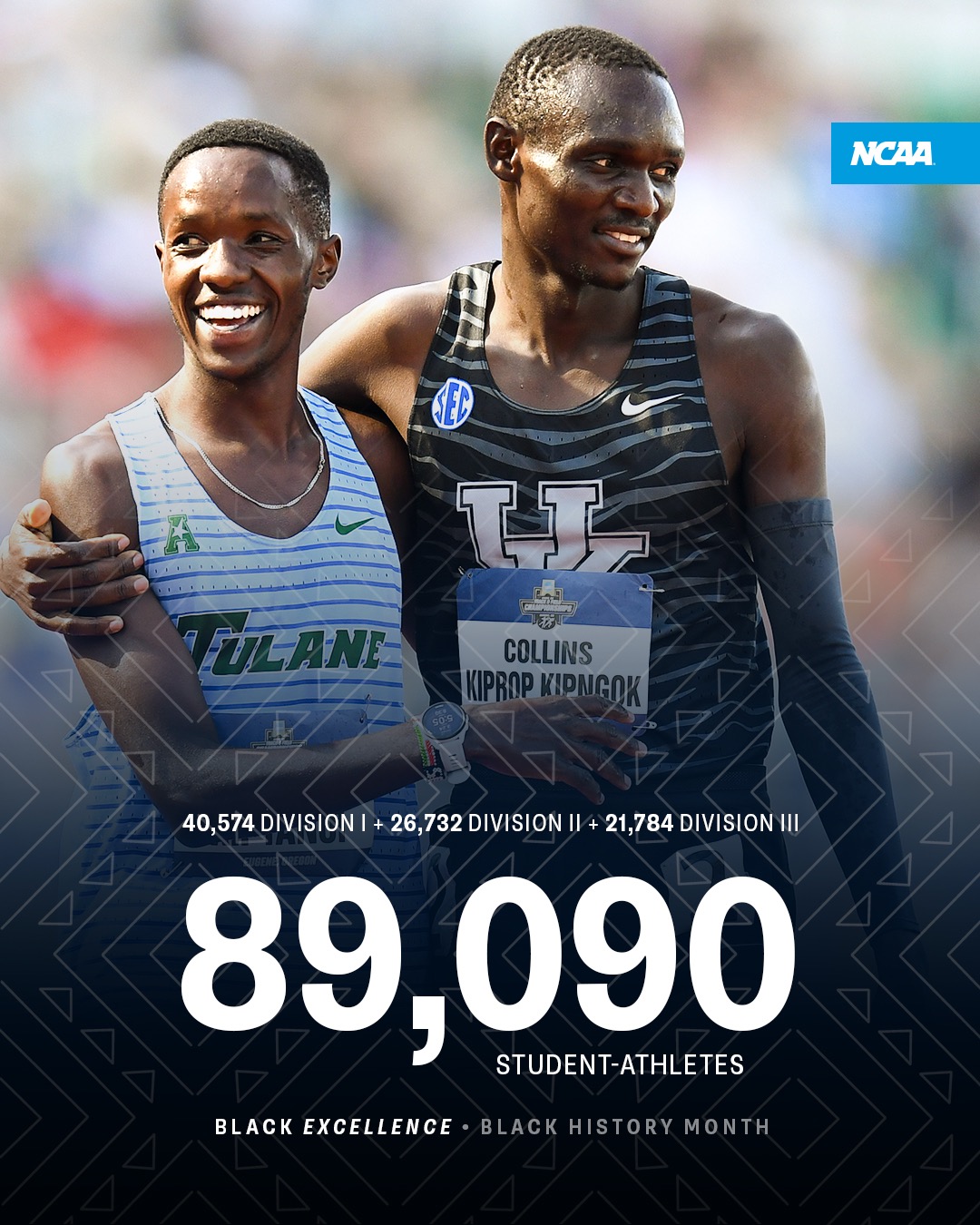
A total of 89,090 Black student-athletes competed across the NCAA’s three divisions, accounting for 16% of all student-athletes. The total is the highest on record, marking a 3.1% increase from the previous year, with 2,639 additional Black student-athletes. Over the past 10 years, numbers have increased 17% — a total of 13,222 more Black student-athletes participating in college sports.
- Division I: 40,574 Black student-athletes, 20% of all Division I participants, a 9% increase over the past decade.
- Division II: 26,732 Black student-athletes, 19% of all Division II participants, a 21% increase over the past decade.
- Division III: 21,784 Black student-athletes, 10% of Division III participation, a 33% increase over the past decade, the largest proportional growth of any division.
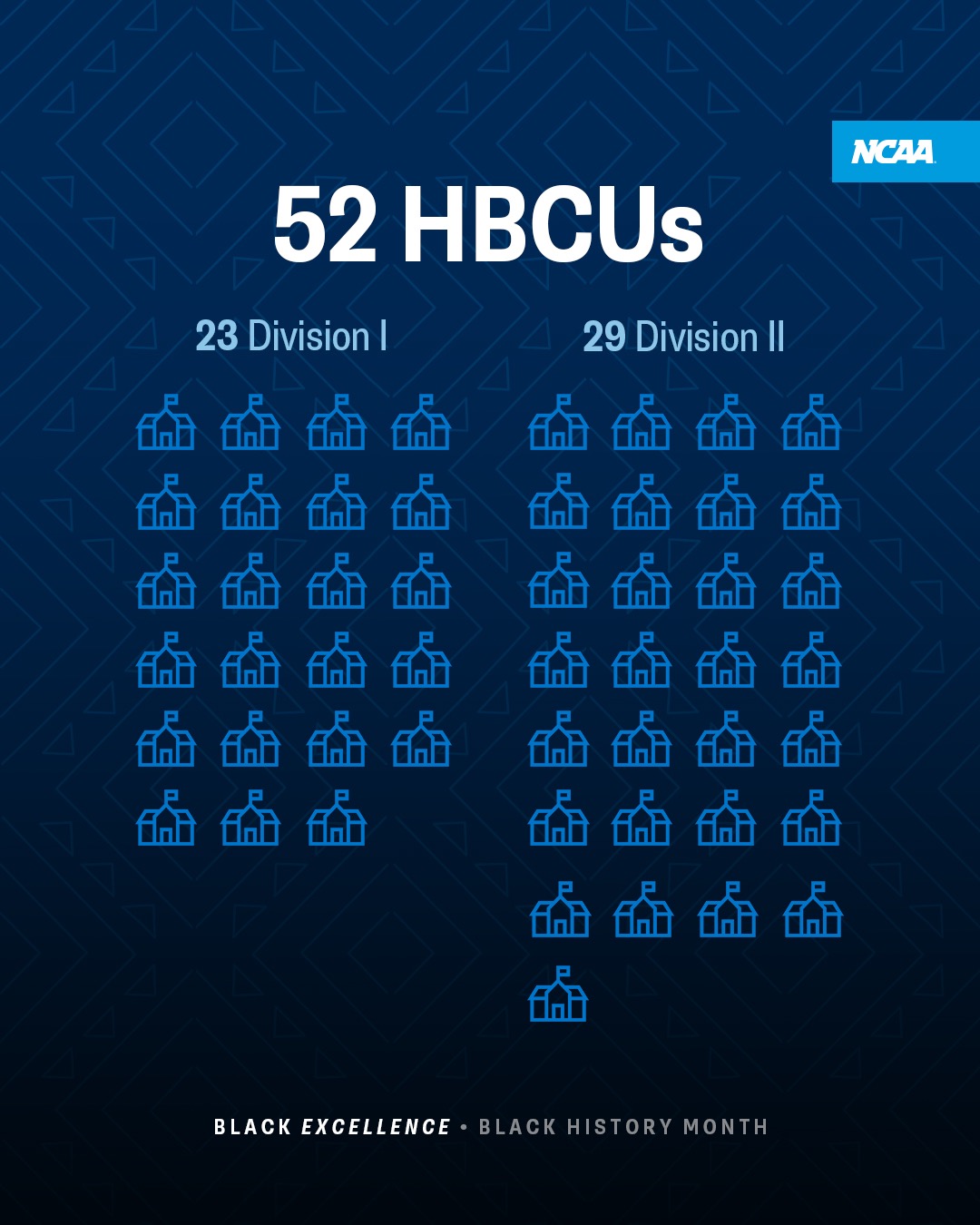
Historically Black colleges and universities continue to play a pivotal role in the NCAA landscape, providing competitive opportunities and pathways for student-athletes across multiple divisions. A total of 52 HBCUs competed within the NCAA, 23 schools in Division I and 29 in Division II.
Leading sports for Black student-athletes
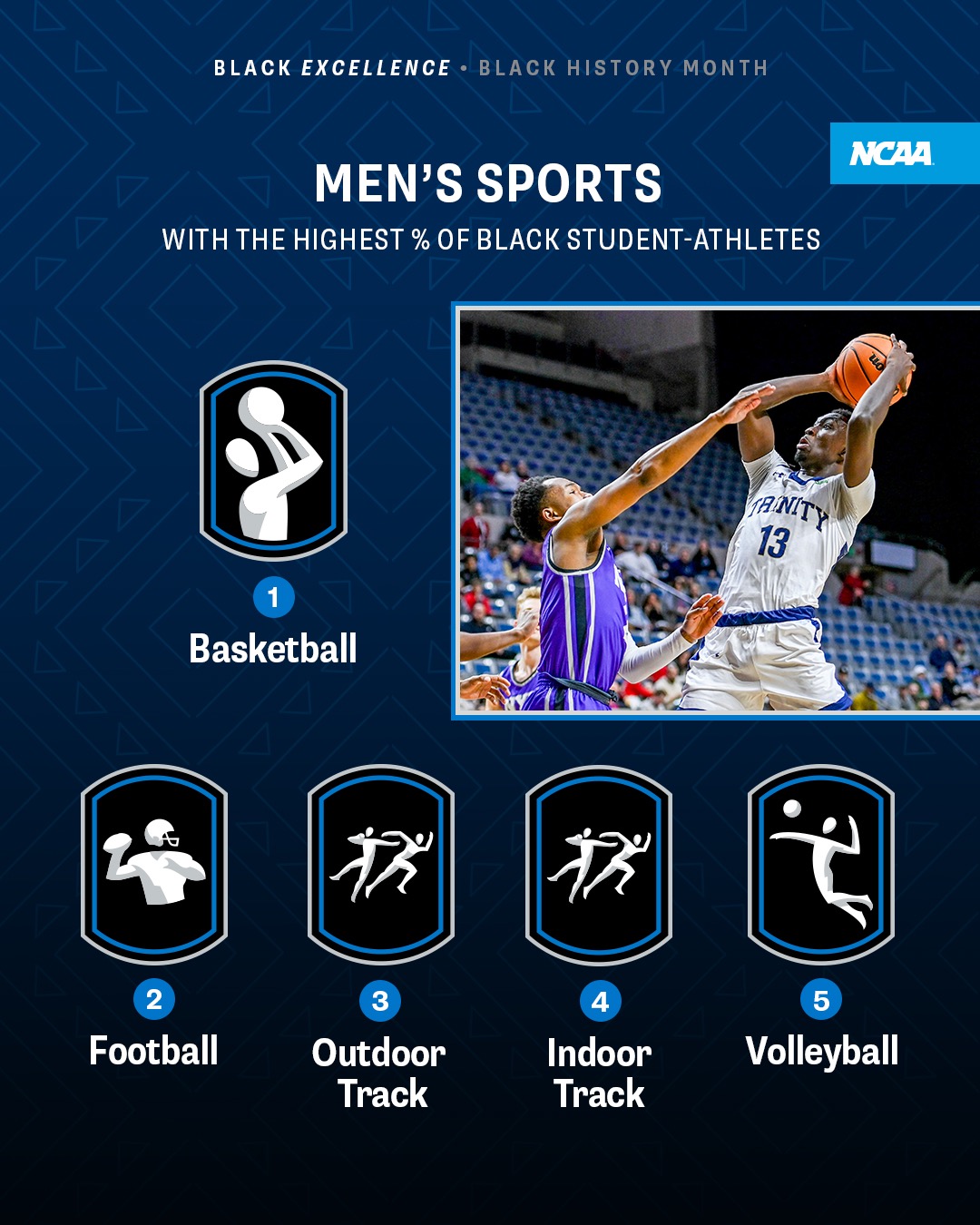
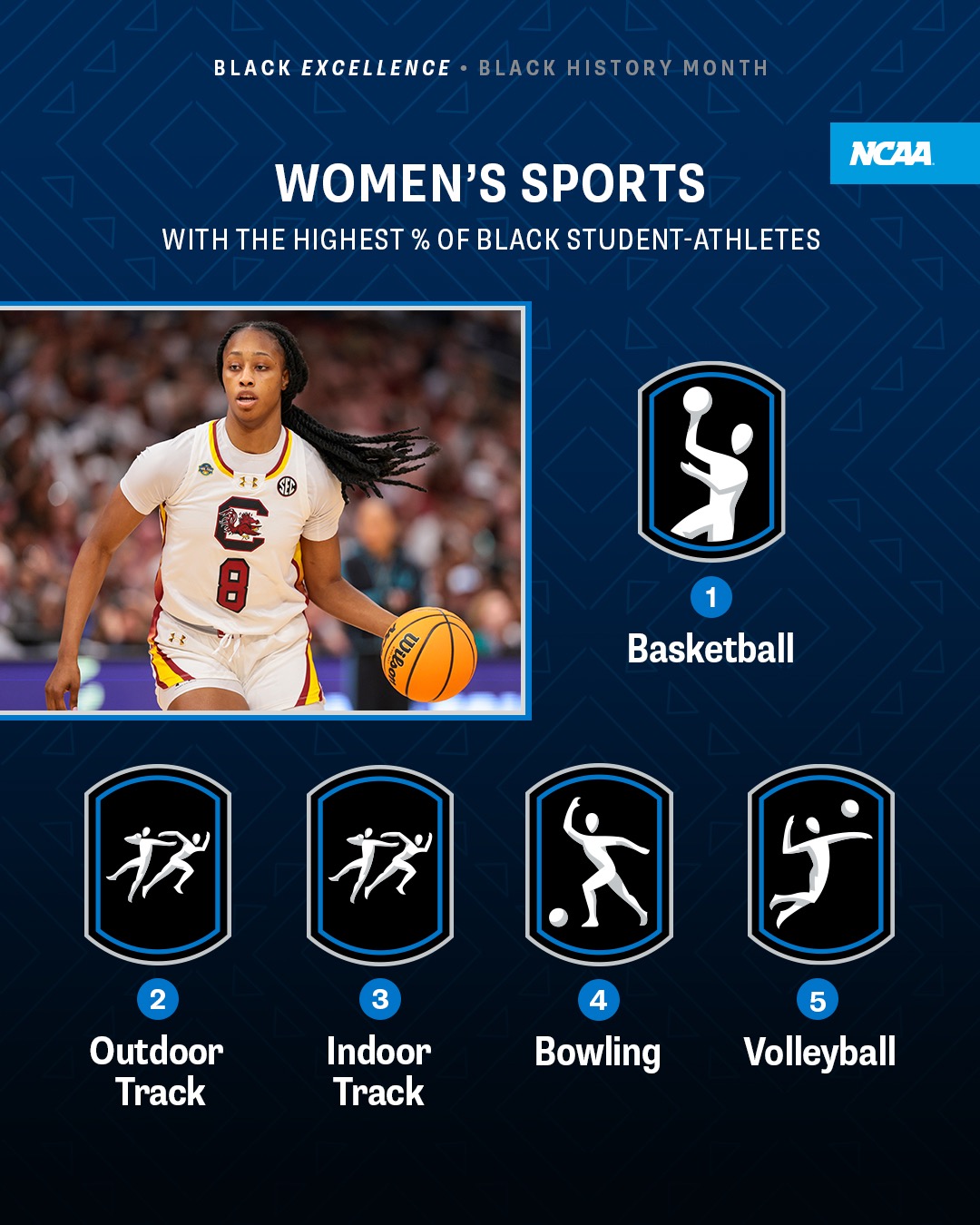
Black student-athletes are strongly represented in several sports, including basketball, as well as indoor and outdoor track and field.
- Men’s basketball: 43%.
- Football: 40%.
- Women’s basketball: 28%.
- Men’s indoor and outdoor track and field: 22%.
- Women’s indoor and outdoor track and field: 19%.
Sports with rising participation
Below is a list of sports experiencing an increase in Black student-athlete participation over the past 10 years. (Note: This list includes only sports with at least 100 Black student-athletes.)
- Men’s volleyball: Up 162%, from 116 to 304.
- Men’s soccer: Up 45%, from 1,713 to 2,489.
- Men’s lacrosse: Up 40%, from 444 to 621.
- Baseball: Up 33%, from 1,298 to 1,725.
- Women’s volleyball: Up 33%, from 1,658 to 2,209.
- Women’s lacrosse: Up 28%, from 312 to 399.
- Women’s soccer: Up 25%, from 1,127 to 1,407.
Note: Women’s wrestling saw an extraordinary rise from two in 2015 to 147 in 2025, up 7,250%.
Rising representation in leadership
The representation of Black athletics administrators and coaches continues to grow, reflecting steady progress over the past decade:
Athletics directors
- In 2024-25, there were 148 Black athletics directors, which accounts for 14% of all NCAA athletics directors, marking a 33% increase over the past decade.
- Division III has seen a 100% increase in Black athletics directors over the same period, from 20 to 40.
- The 65 Black athletics directors in Division I represent 18% of all Division I athletics directors, the highest percentage of any division and a 25% increase over the past 10 years.
 Head coaches
- The number of Black head coaches has grown by 32% in the past decade, with 2,225 serving across all divisions in 2024-25.
- Divisions II and III saw the largest percentage increases at just over 40% since 2014-15, while Division I increased by 23% in that time period.
- Division I led all divisions with 993 Black head coaches in 2024-25, accounting for 15% of all head coaches at that level.
Assistant coaches
- Black assistant coaches totaled 8,714 in 2024-25, an increase of 34% over the past decade.
- Division III has experienced the most percentage growth, with a 44% increase since 2014-15.
- Division I led all divisions with 4,689 Black assistant coaches in 2024-25, a 35% increase over the past 10 years. This number represents 23% of all assistant coaches in Division I.
Graduation rates
Graduation rates for Black student-athletes continue rise across all divisions.
- Black Division I student-athlete graduation rates increased from 56% to 81% since 2002.
- Rates for Black Football Bowl Subdivision student-athletes grew from 54% to 80%, while the rate for Black men’s basketball student-athletes increased from 46% to 81% over the same period.
- In Division II, Academic Success Rates also have improved meaningfully over the 19 years of calculating this rate:
- Black men’s ASR rose from 42% to 51%.
- Black women’s ASR increased from 61% to 74%.