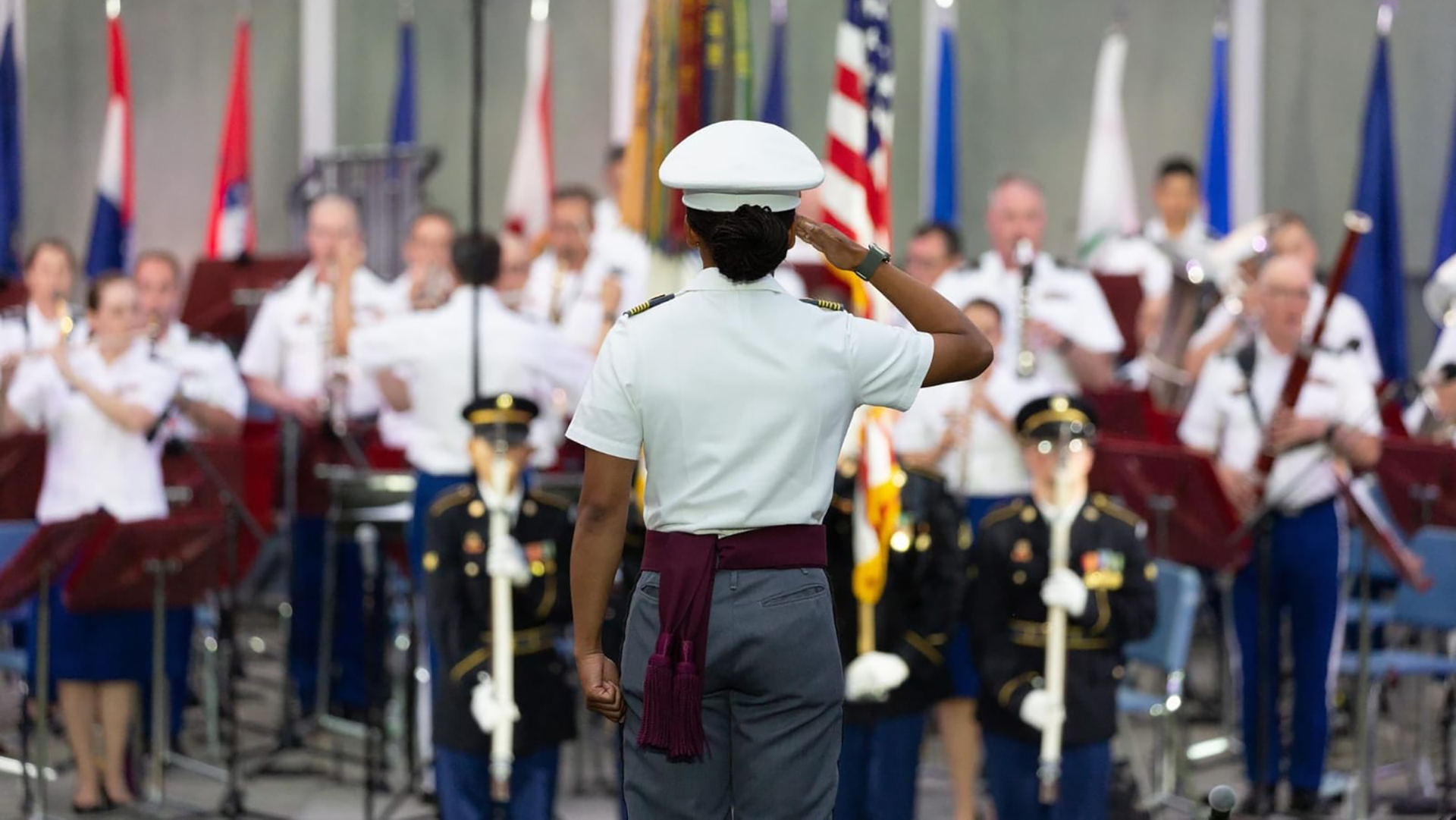

Second-highest-ranking cadet reflects on development of leadership, resilience
Before Isabella Sullivan could imagine penning an essay on how she wanted to change the world, she had to transform herself and learn what she was capable of.
Her experience as a volleyball student-athlete at Army West Point was the perfect conduit to this development and realization, leading to incredible experiences and honors. Most notably, Sullivan was selected as one of 32 American Rhodes Scholars in the 2024 class. Rhodes Scholarships provide all expenses for two or three years of study at the University of Oxford.
As part of the rigorous selection process, applicants must write a 750-word personal statement on their life story and how they want to impact the world through the program. Sullivan’s statement focused on her passion to converge two fields of study — early childhood education and public policy — to help de-escalate the rise in polarization around diversity issues.
"I think education is a huge asset," Sullivan said. "It’s so hard to try to make this intervention later in life. It’s really lofty, but Rhodes is supposed to be lofty. I’m really hopeful to be able to contribute in some way to this de-escalation of this polarized conflict that we see in so many global communities today."
Sullivan contributed in similar ways to the Army West Point community, with a focus on holistic development of her fellow cadets and teammates. She developed a cultural competency training program that was ultimately adopted into Cadet Basic Training for the class of 2025. As a two-year volleyball captain, Sullivan also facilitated team character education sessions and led the development of the team values: grace, grit and growth.
None of those contributions, Sullivan emphasized, compare with what Army West Point provided her, especially as a student-athlete.
"Being a student-athlete at West Point has had a heavy hand on fostering me into the person I am today, the leader I want to be and the values I hold," said Sullivan, whose father was an Army West Point graduate and whose mother also served in the Army. "Playing a Division I sport here at West Point, being a part of the athletics program is so cool because so much of what you learn as an athlete … really translates over into being in the Army, like the value of being on a team, how to take care of your teammates, how attentive you are, this pursuit of excellence, the resilience required."
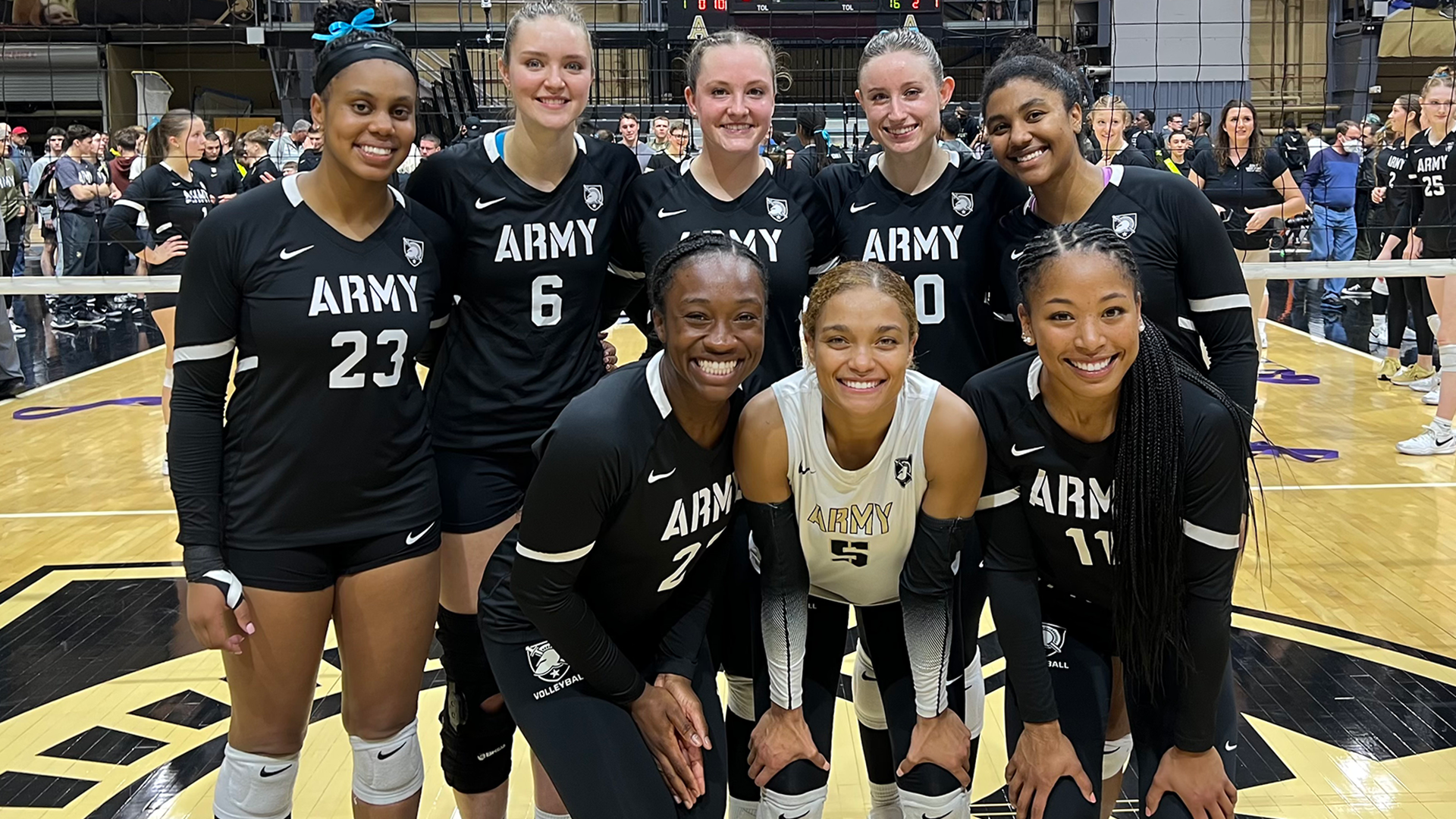
Sullivan’s examples of learned resilience at Army West Point are endless. One that stands out, however, is cadet leadership development training, which serves as a capstone exercise for cadets and can include field missions that last more than a week.
"It’s very physically demanding," she said. "Obviously as a college athlete, I feel like I’m in pretty good shape, but that was the most I pushed myself physically, and that was a huge moment of physical resilience."
On the volleyball side, Sullivan said she developed resilience through her role as a captain. She was appointed a team captain the spring of her sophomore year, which was her first real leadership opportunity at Army West Point. The experience presented a unique challenge in that Sullivan saw little playing time. Sullivan said navigating the process taught her a lot about the holistic nature of leadership.
"I was trying to step into this new leadership role, and I was very young and thinking, ‘How do I gain people’s respect? What does my authority come from, if it’s not coming from this very traditional sense of playing time?’" Sullivan recalled thinking. "Having to lead through a difficult position like that, gaining my teammates’ respect, their trust when I was never really leading on the court … that was really difficult at first, but it honestly ended up being so cool and rewarding."
Sullivan credited her volleyball coach, Alma Kovaci Lee, for helping her gain a more mature perspective as a leader and a student-athlete. Sullivan specifically recalled a period during her sophomore year when she struggled with her playing time, and Lee helped her view her contributions through a wider lens.
"The way she just helped me reframe what it means to be a successful athlete was so pivotal for me," Sullivan said. "I learned a lot about how to find value in myself outside of the amount of minutes that I played, and all the ways that someone can contribute to a team. Obviously, everybody wants to contribute to the team in a game. But you’re just as important if you contribute to the team in practice, if you’re a leader from the sidelines, if you lead by example and not just through words. There’s just so many different ways that you can impact a program, and I think she really helped me see that so early on.
"Because I got that advice from her and that one-on-one mentorship, it really helped me separate who I was as an athlete and who I am as a student, as a partner, as a daughter … to be the best performer I can be in all those different areas."
This mentality paid off in the form of several opportunities.
In the summer of 2023, Sullivan served as the regimental commander for Cadet Basic Training, overseeing cadet cadre and the training and development of 1,250 new cadets as they entered Army West Point. She also provided leadership through a historic flood that devastated West Point, ensuring the safety of all personnel under her command. Currently, she serves as the deputy brigade commander, the second-highest-ranking cadet in the corps.
Again, Sullivan credited these leadership opportunities to what she learned as a volleyball captain.
"It was a huge learning curve, but it just taught me so much. And I think it set me up so well to be able to accept the leadership positions that I had later on in the Corps of Cadets," she said. "It’s just really cool to see that what I was learning and practicing as a team captain who was in charge of 20 women in this very athletics-dominated space translated when I was in charge of 1,250 new cadets in cadet cadre over basic training this past summer."
As she approaches the end of her time as a cadet, Sullivan said it’s hard to believe some of the accomplishments and experiences she’s enjoyed She remembers early on admiring cadets like Tyrese Bender, a Rhodes Scholar and former track and field athlete, and Simone Askew, the first African American female to be selected as a Rhodes Scholar from Army West Point. Sullivan never thought something like that was possible for her, though. She’s learned that self-limitations at Army West Point can be quickly erased.
"The support we receive here at West Point is just kind of immense. You’re surrounded by people who not only pursue excellence themselves, but they also really encourage you to do the same, and they want to pull you along with them," she said. "My teammates are absolutely amazing. Without their support, I wouldn’t really be able to have the success that I do today."