Former Cedarville runner and triathlete talks NCAA impact, NIL, emerging sports
Let joy run the ship.
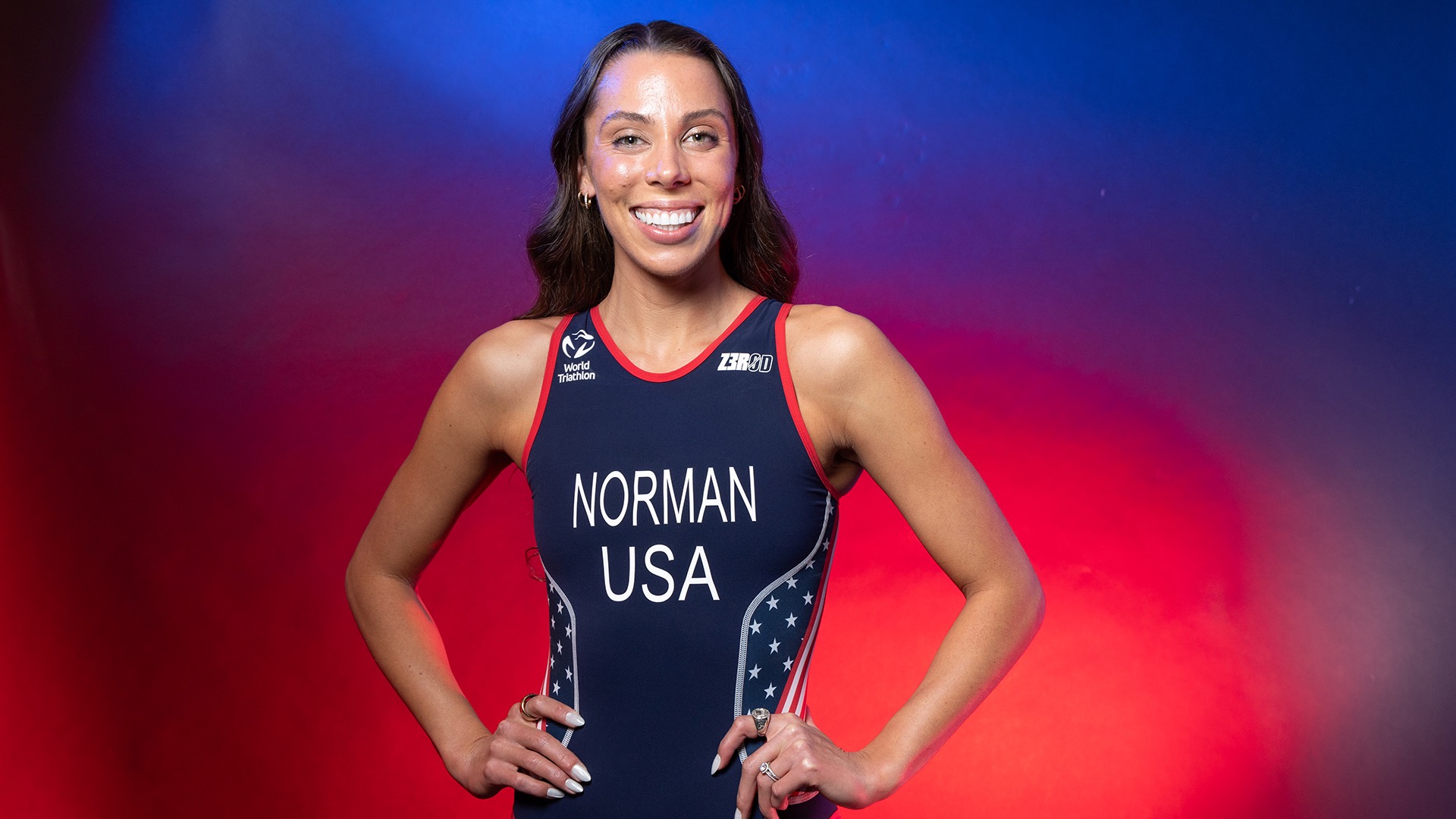
Grace Norman, Paralympic triathlete and former college runner at Cedarville, believes if you can find joy in the small moments, in the day-to-day, in the process, then you win.
Born with congenital constriction band syndrome, Norman had her left leg amputated below the knee when she was young. Norman’s parents raised her to never see her amputation as a barrier, and they encouraged her to pursue athletics and push her limits.
In high school, Norman became the first amputee in Ohio’s history to compete at the state championship meet. After high school, she earned her nursing degree at Cedarville, where she earned All-America honors in track. Now, Norman has earned four Paralympic medals, most recently winning a gold medal at the Paris Games.
Norman spoke to the NCAA about her athletic journey; balancing nursing school as a student-athlete; the name, image and likeness landscape; and more.
Question: Can you share the story of how you got into triathlon and what inspired you to pursue it at the highest level?
Answer: I started triathlon because my dad got into it. I was always a runner, and I liked the challenge of three different sports. So I tried it, fell in love with it and decided that I wanted to pursue it at the Paralympic level.
Q: Your mom also ran at Purdue, right?
A: She did! She was a runner, so running is kind of in the genes.
Q: Did you guys have any fun competition at home?
A: Yeah, I’m the middle child, so I’m very competitive. (We’re) all girls, all runners, so it was always a competition to see who could have the fastest mile time. Throughout the years, it was always an unspoken rule who had the fastest time as we climbed the ranks. I don’t think it’s really been stated, but I now have the fastest times in my family.
Q: What did it mean for you to represent Cedarville and the NCAA at the Paris Games?
A: It was a phenomenal experience to be able to represent Cedarville University and on a broader scale, Team USA. I am a small part to bringing home another gold for Team USA. Representing NCAA sports is really important in the lead-up to the Paralympics, so being able to do that in Paris with my entire family there was really cool.
Q: At Cedarville, who had the biggest impact on you?
A: Probably my track and cross country coach, coach Jeff Bolender. I still work with him today as my run coach, and he really helped me develop into the athlete I am today, both while I was at Cedarville and now as a Paralympian.
Q: What did you learn from balancing nursing school and being a student-athlete?
A: Oh, it was a lot. Nursing school took a lot of time management, prioritizing your work and sleep, figuring out how to do your workouts and staying up on everything. I think it really set me up for success postcollege, where I don’t have assignments but I still have life I have to do. I learned how to push those boundaries in my career and my personal life.
Q: The Division II slogan is "Make It Yours," so how have you made it yours?
A: I took NCAA running and have used that as a foundation to be one of the fastest Paralympians in para triathlon. So I’ve made that mine.
Q: What would it mean for triathlon, as an Emerging Sport for Women, to transition to NCAA championship status?
A: It would be huge for women’s triathlon to become an NCAA champion-status sport. I was not able to race NCAA triathlon because it wasn’t offered at my school or even an emerging sport at the time. I have been able to serve with the USA Triathlon name, image and likeness collective as their ambassador and been able to see firsthand these women receive contracts through the USA Triathlon Foundation. To see that growth and development as a collegiate athlete in triathlon would show so much more longevity in the sport and so much more excitement. I really hope they can continue to spread that joy, spread that love for triathlon and make it into a championship sport.
Q: What advice do you have for athletes navigating that NIL space?
A: It’s definitely a space I wouldn’t shy away from. My advice is just be yourself. Be authentically you. Don’t take partnerships that don’t display who you truly are. Lean into it. See what you can give to that brand because it’s a two-way street.
Q: How do you use your platform to advocate for your sport?
A: Triathlon, especially in the Paralympics, is more on the emerging side. It debuted (in the Paralympics) in 2016 for the first time. It’s been phenomenal to bring my personal side to it with my background in NCAA running. I hope to continue to keep raising the bar and standard.